Pixxel Story Inspiring India’s Space Dreams from Encyclopedias to Orbit
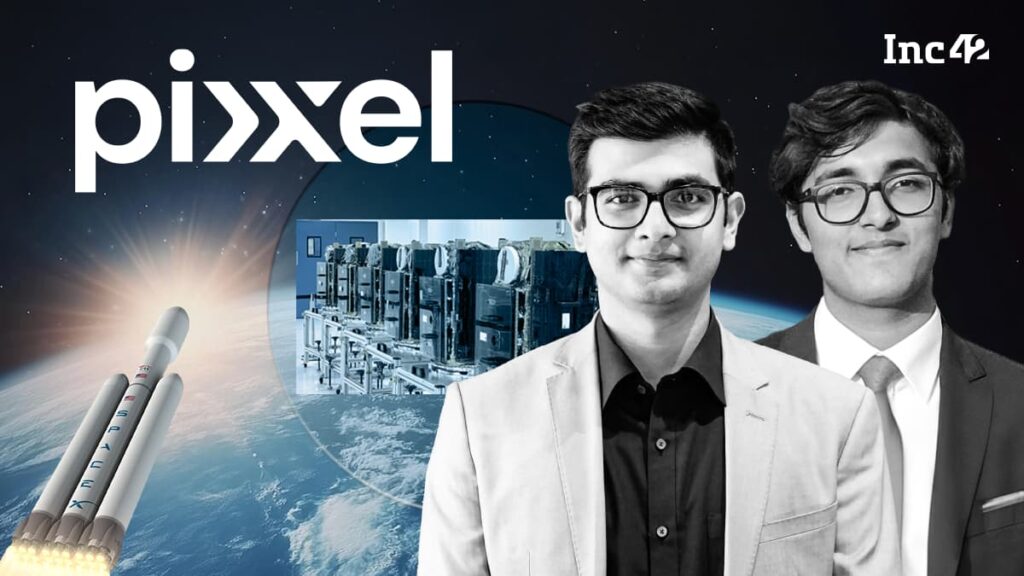
What happens when a village boy without internet grows up to build satellites for NASA?
In the small village of Aldur, Karnataka, a young boy’s fascination with space was fueled not by high-speed internet or YouTube videos, but by encyclopedias his father brought home . That boy, Awais Ahmed, is now the CEO of Pixxel, a space-tech company that has launched satellites into orbit and become the first Indian private space startup to secure a contract with NASA . His journey offers a powerful blueprint for India’s next generation of space entrepreneurs.
From Rural Roots to Global Recognition
Awais Ahmed’s path to building one of India’s most celebrated space startups has been anything but conventional. He grew up in Aldur, a village in Karnataka’s Chikkamagaluru district, nearly five hours from Bengaluru. Internet access only arrived when he was in Class 8, meaning most of his childhood was spent learning the old-fashioned way—through books .
His father, Nadeem Ahmed, who runs a pharmacy in Aldur, recognised his son’s fascination with space and regularly brought home encyclopedias on galaxies, planets, and the universe . Those books became Awais’s window to a world he could not explore online. His parents spent their earnings and even pledged gold to arrange for his education—a sacrifice that would eventually yield extraordinary returns .
By the time he reached college, his curiosity had evolved into ambition. At BITS Pilani, where he studied Mathematics and Manufacturing Engineering, Awais joined Team Anant, the institute’s student satellite programme in collaboration with ISRO . He also became the engineering lead of Hyperloop India, one of the finalist teams in the SpaceX Hyperloop Pod Competition—an experience that proved life-changing .
“My visit to the SpaceX headquarters gave me clarity about my future. That was when I decided space technology would be the field for the rest of my life.”
Building a Satellite Company from Scratch
The idea for Pixxel was born during the IBM Watson AI Challenge in 2018. Awais and his BITS Pilani batchmate Kshitij Khandelwal needed highly detailed satellite imagery to predict crop health—but the data simply did not exist . Conventional satellites capture Earth in only a limited number of broad spectral bands, making it difficult to detect subtle changes invisible to the human eye, such as early crop disease, methane leaks, or industrial pollutants .
Instead of accepting the limitation, they decided to solve it themselves. In 2019, using money borrowed from Awais’s father and living on around ₹10,000 a month, they founded Pixxel while still in their early twenties .
Today, Pixxel is a global leader in hyperspectral imaging:
The Technology Behind the Success
Pixxel’s breakthrough lies in its hyperspectral imaging technology. Unlike conventional RGB or multispectral satellites, hyperspectral satellites capture light across hundreds of narrow, contiguous spectral bands, identifying the unique “spectral fingerprint” of different materials on Earth’s surface .
What does this make possible?
- Agriculture: Farmers can detect crop stress and disease three weeks before symptoms become visible to the human eye
- Energy & Environment: Oil and gas companies can identify methane leaks from energy infrastructure and monitor pipeline health before leaks become catastrophic
- Mining: Spectral signatures help locate mineral-rich deposits and monitor tailing ponds for environmental compliance
- Disaster Response: Rapid assessment of flood or fire-damaged areas enables faster relief efforts
Beyond Orbit: The Blueprint for India’s Space Entrepreneurs
Pixxel’s success is part of a larger story—India’s New Space Economy is accelerating, with private spacetech startups emerging alongside AI and fintech as growth drivers of the innovation economy. Pixxel’s journey offers several powerful lessons:
1. Curiosity can be more powerful than resources – Awais Ahmed did not grow up surrounded by cutting-edge technology. He grew up surrounded by books, questions, and curiosity . The world’s next big space startup could come from any village, any classroom, any library.
2. Solve problems that matter – Pixxel was born because the data Awais needed for his project did not exist. Instead of pivoting, he built the solution. The most valuable startups solve real, unmet needs.
3. Build with a global ambition – From the beginning, Awais aimed to compete on the world stage. Pixxel’s NASA contract and international recognition prove that Indian startups can stand alongside the best in the world.
4. India’s ecosystem is ready – Since the opening of India’s space sector in 2020, more than 400 space startups have been established. Pixxel has leveraged this shift, working with ISRO and building indigenous capabilities while accessing global markets.
“The data we collect serves many sectors, including energy, agriculture and the environment. Through hyperspectral imaging, we collect data on soil quality, crop diseases, and resource exploration that can help in making decisions benefiting humanity in the long run.” — Awais Ahmed
The Next Frontier: Orbital Intelligence
Pixxel is not resting on its achievements. In May 2026, the company announced a strategic partnership with Sarvam to develop India’s first orbital data centre satellite—Pathfinder—scheduled to launch in Q4 2026 . This 200 kg-class satellite will host datacentre-class GPUs and Sarvam’s full-stack AI models directly in orbit, enabling real-time analysis of hyperspectral data without roundtrips to Earth .
As Awais Ahmed put it: “Ground-based data centres are facing increasing constraints around energy, land, regulation, and scale. Orbital data centres open up a new frontier, where compute can be powered by abundant solar energy, operate closer to space-based data, and move beyond some of the limits faced on Earth” .
A Call to India’s Next Generation
Pixxel’s rise is more than a success story—it is a blueprint for how Indian startups can combine ambition, innovation, and global collaboration to lead in the New Space era. For every student, every young founder, and every dreamer wondering if they can build something that matters: the answer is yes. The path from a village in Karnataka to working with NASA is now a proven path. India’s space future belongs to those who dare to build it.