
Engineering Students Tackle Menstrual Hygiene Crisis in Rural India with Affordable, Sustainable Solutions
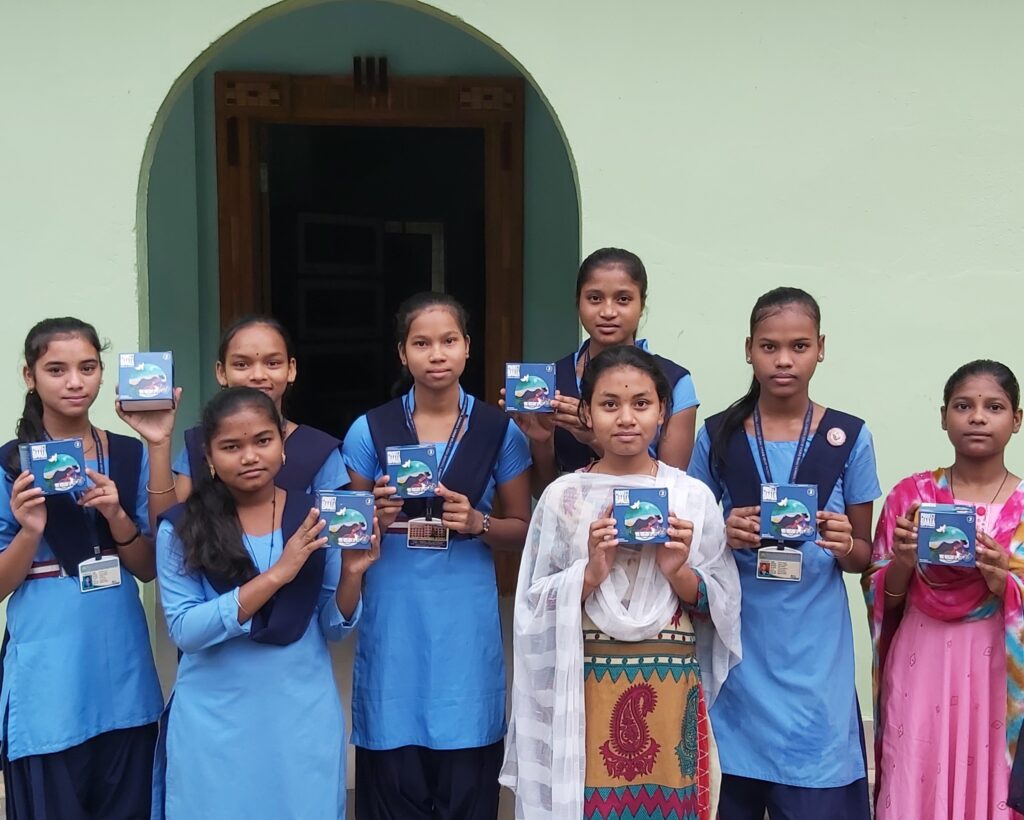
A quiet revolution is unfolding across India’s villages, led not by large corporations or government agencies, but by a new generation of engineering students and young innovators. From biodegradable sanitary pads made from agricultural waste to wearable pain relief devices, these student-led startups are tackling menstrual hygiene challenges head-on—breaking taboos, creating access, and empowering women with safe, sustainable solutions .
🌿 Turning Agricultural Waste into Eco-Friendly Sanitary Products
One of the most innovative approaches comes from Team Udaan, an all-girls student innovation team from Delhi, which has developed reusable sanitary pads from sugarcane bagasse—the dry fibrous waste left behind after extracting juice from sugarcane . The project transforms agricultural waste into a low-cost, eco-friendly menstrual hygiene product designed especially for women in rural and low-income communities .
Anupriya Nayak, who led the team, explained that the students wanted to create a product that was affordable, reusable, safe, and environmentally sustainable—something that could realistically reach women often left out of conversations around menstrual health .
The initiative received early-stage support under Samsung’s “Solve for Tomorrow” programme, which provided mentorship, technical guidance, and exposure to help turn the concept into a working product . The prototype was later refined with incubation and mentorship support at IIT Delhi, where the students worked on improving hygiene standards, product design, and manufacturing feasibility .
Similarly, Nishkaam Innovations, founded by two Marwadi University alumni from Rajkot, is converting agricultural stubble into biodegradable sanitary napkins . The team claims their product offers better absorption than existing alternatives, while also reducing environmental damage and supporting farmers by creating a new market for crop waste .
🩺 Wearable Technology for Menstrual Pain Relief
Matri, founded by engineering students Roni Mondal and Rohan Roy, took a different approach—addressing menstrual pain itself . What started as a simple exploration of wearable technology evolved into a purpose-led mission to make menstrual pain relief accessible and stigma-free through compact non-pharmacological intervention .
Their flagship product, Matri Pro, is a slim, rechargeable menstrual pain relief device using TENS (Transcutaneous Electrical Nerve Stimulation) technology to deliver controlled nerve stimulation . Designed for mobility, comfort, and consistent usability, it sits discreetly under clothes—offering women a drug-free alternative to painkillers and hot water bags .
The founders’ journey gained national attention when they appeared on Shark Tank India Season Three, securing an investment deal that provided not just funding but also mentorship, validation, and network exposure in a market still warming to femtech devices .
“What started as a simple exploration of wearable technology soon evolved into a purpose-led mission to make menstrual pain relief accessible and stigma-free” .
🧵 Grassroots Empowerment Through Pad Manufacturing
At Fakir Mohan University in Balasore, Odisha, the administration launched ‘Kalika’—an initiative where sanitary napkins are manufactured on campus and distributed free of cost to women in nearby tribal villages . Students and staff are being trained in sanitary pad manufacturing, acquiring practical skills that can lead to employment or entrepreneurship .
The project has received financial support from Emami Paper Mill, while Payal Institute of Jharsuguda has provided machines, equipment, and technical training . Each pad consists of three layers—paper, polymer, and a protective layer—and is sterilized using UV protection technology .
Vice Chancellor Dr. Santosh Kumar Tripathi explained that the initiative tackles two issues simultaneously: health awareness and vocational training . The university plans to register the initiative as a company and operate it under proper regulations to manufacture at scale while maintaining affordability .
Similarly, Project Baala, founded by Soumya Dabriwal and Aradhana Rai Gupta, has reached over a million beneficiaries across 28 states since 2017 . Their first product—a reusable sanitary pad lasting up to two years—is now part of a portfolio that includes sustainable menstrual cups and biodegradable pads . Their grassroots network of approximately 500 women from the community helps distribute products and disseminate knowledge .
🌾 Banana Fibre Innovations from the Northeast to Rajasthan
Atsikeh Trust in Nagaland launched Saukhayam pads, made from banana fiber—marking the first such venture in Northeast India . The pads are eco-friendly, budget-friendly, and reusable for 4–5 years, significantly reducing waste . The initiative, launched in 2024, aims to provide hygienic and affordable menstrual products to rural women and girls while promoting zero-waste practices .
In Rajasthan, Sunita Sharma—popularly called the “Pad Woman”—has developed eco-friendly sanitary pads from banana stem fibre and American cotton through her startup Elite . These pads are plastic-free and biodegradable, with even the protector sheet crafted from eco-friendly materials. Importantly, they decompose naturally, turning into compost .
Sharma, who conducted extensive research on women’s hygiene, noted that in many rural and tribal areas, women still rely on cloth, leaves, or unsafe materials during menstruation—primarily due to lack of education and awareness .
📚 Awareness as the First Step
Beyond product innovation, these initiatives are breaking down stigma. The “Project Ecosanitation”, founded by engineering student Sristi Bose at Manipal Institute of Technology, has organized eight awareness drives across West Bengal, Maharashtra, Telangana, Jharkhand, Rajasthan, Bihar, and Karnataka since December 2024 .
During school outreach programmes, Bose observed that several girls were frequently absent during their menstrual cycles. “At first, I thought the reason might be financial difficulties, but when I asked teachers, I learnt that many girls simply stayed away from school during their periods,” she told TOI .
The team also addresses related health issues such as PCOS and PCOD, and is working on developing biodegradable sanitary napkins made from natural materials like bamboo and hemp . Once funding is secured, the team plans to establish small-scale production units in villages, employing local women to manufacture and distribute sanitary pads at affordable prices .
💡 The Bigger Picture: Youth-Led Innovation Driving Social Change
These engineering students are proving that social entrepreneurship can drive real change. Their work shows that technical skills can be applied to solve deeply human problems:
| Focus Area | Example Initiatives |
|---|---|
| Affordable Products | Team Udaan’s sugarcane bagasse pads, Nishkaam’s stubble-based pads, Elite’s banana fibre pads |
| Awareness Campaigns | Project Ecosanitation drives across 8 states, Project Baala’s community education |
| Skill Development | Kalika’s vocational training for students, FLOW Pads’ women-run stitching units |
| Pain Management | Matri Pro’s wearable TENS device |
One student from the Kalika initiative captured the sentiment: “These pads have three layers and help prevent infections. The making process is simple and easy to learn” .
As Aanvi Kanodia, who started FLOW Pads at age 15, reflected: “FLOW Pads is my child, and I am so passionate about it. It’s really fulfilling, and any change you want to bring eventually changes you as well” .
By blending innovation with empathy, these student-led startups are inspiring a new wave of social entrepreneurs determined to solve India’s most pressing community challenges—one pad, one conversation, and one empowered woman at a time.