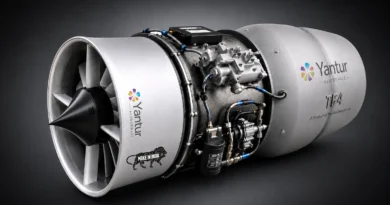
Indian DeepTech Funding Nears 2025 Levels in 2026, Crossing $1.1 Billion

India’s deep-tech startup ecosystem has demonstrated remarkable resilience and investor confidence in 2026, with funding already crossing **$1.1 billion** as of June—nearly **80% of last year’s total** of $1.55 billion . This surge signals a structural shift in India’s innovation economy, where venture capital firms are making larger, earlier bets on intellectual property-led, engineering-driven startups .
📊 The Numbers: DeepTech’s Accelerating Momentum
| Metric | 2024 | 2025 | 2026 (Jan-June) |
|---|---|---|---|
| Total DeepTech Funding | $1.4 billion | $1.55 billion | $1.1 billion |
| Share of VC-PE Activity | ~10% | 15% | Continuing to rise |
| Early-Stage Rounds | $690 million | $850 million | — |
| DeepTech Startups in India | — | 4,200+ | Growing |
Sources: Tracxn data, IDTA report via Economic Times
Deep-tech funding has nearly doubled as a share of India’s total venture capital activity—from just 4% in 2016 to 15% today . AI continues to dominate the sector, accounting for 84% of deep-tech startups and 91% of deep-tech funding in 2025 .
Notably, early-stage rounds have been the primary driver, with investors putting **$850 million** into emerging deep-tech ventures in 2025, up from $690 million the previous year . This indicates that VCs are increasingly willing to back companies at the proof-of-concept stage, before commercial traction is fully established.
🚀 Key Sectors Driving the DeepTech Surge
🤖 Artificial Intelligence & AI Infrastructure
AI remains the engine of deep-tech growth. The India Deep Tech Alliance (IDTA) has committed $2.5 billion over five years**, with **$1 billion earmarked specifically for AI deployment within three years . AI funding in India jumped 58% in 2025 to $1.22 billion across 188 deals .
Startups are now building across the full AI stack—from foundation models and infrastructure to enterprise applications—moving beyond thin “wrappers” to defensible intellectual property.
🛡️ Defence Technology
Defence-tech has emerged as a priority sector, driven by government initiatives like iDEX and increasing private-sector participation in national security innovation. Investors are backing startups developing indigenous drones, radar systems, surveillance technology, and military-grade electronics .
🛰️ Space Technology
Spacetech funding held up strongly in 2025 at **$93.7 million**, following $139 million in 2023 . The sector is now entering a commercialisation phase, with startups moving from technology demonstration to revenue-generating launch services and satellite data platforms .
🔧 Semiconductors & Chip Design
Semiconductor startups emerged as the strongest performers in 2025, raising **$191.1 million** compared to just $41.4 million in 2024 . This 4.6x increase reflects the convergence of:
- Government incentives under the India Semiconductor Mission
- Geopolitical supply-chain disruptions
- India’s push to build a domestic chip ecosystem
⚙️ Advanced Manufacturing & Robotics
Industrial automation, drones, and smart manufacturing are attracting increasing investor attention. With government support for PLI schemes and the push for Industry 4.0, startups in this segment are scaling from prototypes to production .
💰 Capital Market Maturity: New Funds, Patient Capital, and Global Interest
The current deep-tech surge is being fuelled by multiple factors.
New DeepTech-Focused Funds
| Fund | Corpus | Focus Sectors |
|---|---|---|
| IITM Unicorn Frontier Fund I | ₹600 crore (+ ₹400 crore greenshoe) | AI, robotics, space, defence, semiconductors, medtech |
| India Deep Tech Alliance | $2.5 billion (collective commitment) | Full AI stack, semiconductors, advanced manufacturing |
| South Park Commons | $40 million+ | Deeptech across semiconductors, robotics, spacetech |
Unicorn India Ventures has partnered with IIT Madras Research Park to launch a dedicated deep-tech fund, the IITM Unicorn Frontier Fund I, with a corpus of ₹600 crore (~$66.2 million) and a ₹400 crore greenshoe option . The fund will invest in more than 25 startups across robotics, space technology, defence technology, semiconductors, and medical technology, with average first cheque sizes of ₹8-10 crore .
The India Deep Tech Alliance (IDTA)—whose members include Applied Materials, CG Power, Lam Research, Larsen & Toubro, Micron Technology, and Nvidia—has collectively committed **more than $2.5 billion over five years** . Of this, $1 billion is earmarked specifically for AI deployment within three years . This corporate participation signals a shift from purely financial investment to strategic, capability-building capital, providing startups with manufacturing guidance, reliability engineering, and deployment advice .
Silicon Valley’s South Park Commons (SPC) is also ramping up its India deep-tech push, expecting at least 50% of its future investments to be in deeptech . SPC general partner Aditya Agarwal noted that investors globally are moving beyond traditional software bets: “Investors are now asking where the true alpha lies, where the defensibility is. That is why many are moving towards semiconductors, energy infrastructure, drones, robots, humanoids, and spacetech” .
Patient Capital Structure
The IITM Unicorn Frontier Fund is structured as a 12-year vehicle (10+2 years), specifically designed to accommodate the longer gestation periods of deep-tech ventures . This “patient capital” model is critical for sectors that can take 5-8 years to move from lab to market.
A significant portion of the fund’s corpus will be deployed within the IIT Madras ecosystem, with the remaining capital invested across the broader Indian deep-tech landscape .
Global Investor Appetite
South Park Commons, named after a San Francisco neighbourhood, entered India in 2024 through a collaboration with Flipkart co-founder Binny Bansal . It plans to write cheques ranging from $500,000 to $10 million and is looking to double down on India’s deep-tech opportunity .
SPC’s portfolio in India includes Meesho, Cure.fit, Arctus Aerospace, voice AI company Maya Research, and healthcare startup Cent AI .
🏛️ Government Initiatives: Creating the Enabling Framework
The government has played a pivotal role in de-risking deep-tech investments.
Formal Recognition of Deep Tech Startups
On February 4, 2026, DPIIT issued a landmark notification that, for the first time, formally recognises and defines Deep Tech Startups in India .
| Eligibility Criterion | Regular Startups | Deep Tech Startups |
|---|---|---|
| Recognition Period | Up to 10 years | Up to 20 years |
| Turnover Ceiling | ₹200 crore | ₹300 crore |
This longer runway acknowledges that deep-tech ventures typically require extended development cycles, long gestation periods, and significant time before commercialisation .
₹1 Lakh Crore RDI Fund
The government’s Research, Development and Innovation (RDI) Fund under the Anusandhan National Research Foundation (ANRF) is being operationalised, with a significant portion set aside for strategic deep-tech sectors . Industry experts expect Budget 2026 to accelerate deployment of these funds, with a focus on early-stage startups in AI, quantum computing, and semiconductors .
Strategic Autonomy as a National Priority
As noted in a Finvolve analysis, India’s deep-tech push is increasingly focused on strategic autonomy—reducing dependency on global supply chains and imported intellectual property . The global semiconductor market alone is expected to reach nearly $1 trillion by 2030, and Indian startups operating across chip design, embedded systems, and specialised hardware are attracting patient, institutionally backed capital .
🔮 What This Means for Founders and Investors
For DeepTech Founders
| Opportunity | Actionable Insight |
|---|---|
| Extended runway | DPIIT recognition now available for up to 20 years, with a ₹300 crore turnover ceiling |
| Specialised funds | Dedicated deep-tech VCs like IITM Unicorn Frontier Fund actively deploying capital |
| Corporate partnerships | IDTA members provide manufacturing guidance, reliability engineering, and deployment advice |
| Global interest | International funds like SPC actively scouting Indian deep-tech |
For Investors
| Trend | Implication |
|---|---|
| Policy tailwinds | Government incentives reducing early-stage risk |
| Strong pipeline | 4,200+ deep-tech startups, with more than 550 founded in 2025 alone |
| Exit pathways | Public markets increasingly open to deep-tech (e.g., semiconductor, space-tech companies) |
| Global demand | Indian deep-tech solutions are cost-efficient and address universal challenges |
✨ The Final Word
India’s deep-tech ecosystem is at an inflection point. As Sateesh Andra, Managing Director of Endiya Partners, noted in December 2025: “While it’s good that we celebrate milestones and announcements, if you look at the absolute numbers, deeptech funding is still relatively anaemic—though it is improving” .
The $1.1 billion raised in the first half of 2026 suggests that improvement is accelerating. With policy support, dedicated funds, and growing global investor interest, India is transitioning from a service-based IT economy to a product-led, IP-driven innovation powerhouse.
As Vishesh Rajaram, Managing Director of Speciale Invest, observed: “The capital stack is improving, and the foundation is just getting built” . For deep-tech founders and investors willing to embrace the long game, the foundation is now solid enough to build upon.