
The Customer Is King—And Karnataka’s Government Just Became One
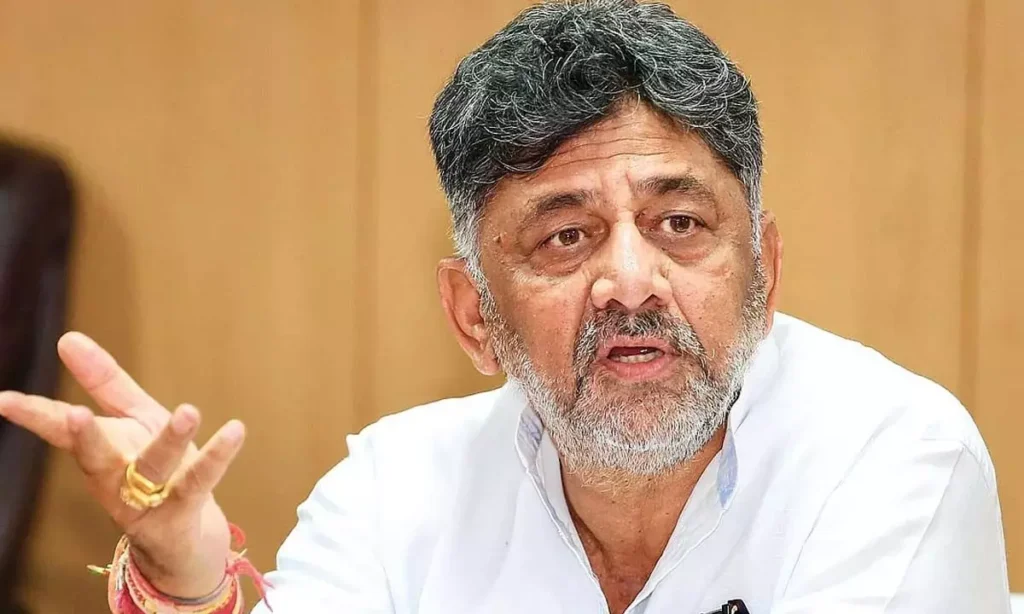
In the high-stakes world of startups, one challenge looms larger than funding, talent, or even product-market fit: finding the first customer. For deep-tech ventures building one-of-a-kind technologies, the barrier is even steeper—conventional government tenders require prior experience, established turnover, and competitor benchmarks that simply do not exist for novel innovations.
Karnataka has decided to solve this problem at its root. The state is finalising a “Government First” policy that will enable government departments to directly procure innovative solutions from startups, bypassing the procurement hurdles that have long kept young firms out of the public sector. Expected to be rolled out by September 2026, with clearance already received from the finance department, the policy is being placed before the cabinet for approval.
“We are coming up with a Government First policy. The idea is to adopt tech and innovations early so that we become one of the most progressive states.” – Priyank Kharge, Karnataka IT Minister
What Makes the Policy Different
The policy’s significance lies in its structural design. Instead of forcing startups to navigate the labyrinth of government procurement, the state is creating a dedicated mechanism for technology adoption. A committee of experts will critically evaluate startup solutions, assess their worthiness for adoption, and recommend appropriate costs. Based on these recommendations, solutions can be rolled out across government departments.
Importantly, the policy is intended to apply across all government departments, not just the IT department. This means a climatetech startup working on water quality sensors, a deeptech venture building smart materials for construction, or a healthtech company developing diagnostic tools could all find a first customer in the state government.
The policy also marks a philosophical shift: from e-governance to “I-governance”—intelligent governance. Startups will be able to use public digital datasets via a regulatory sandbox for citizen service applications, turning the government into both a customer and a living laboratory for innovation.
A Track Record of Government as Customer
The policy is not emerging from a vacuum. Karnataka has already demonstrated the power of government procurement as a catalyst for innovation. In his previous stint as rural development minister, Priyank Kharge launched a grand challenge to solve rural water quality problems. 80-90 startups participated, the government narrowed them down to 10, provided funding, and they are now conducting pilots.
The state’s ELEVATE programme has already supported more than 1,250 startups with grants of ₹50 lakh. The newly launched ELEVATE NxT programme offers milestone-based grants of up to ₹1 crore for deep-tech startups. Notably, these grants are non-dilutive—Karnataka continues to back early-stage startups without taking equity.
A Broader Ecosystem Play
The Government First policy sits within a larger vision. Karnataka’s Startup Policy 2025-30 commits over ₹570 crore to position the state as a global hub for deep-tech and science-led entrepreneurship. The policy targets the creation of 25,000 startups by 2030, with at least 10,000 emerging from clusters beyond Bengaluru.
The state is also establishing India’s first AI University, an AI Innovation Hub, and next-generation green data centres. A ₹75-crore Beyond Bengaluru Cluster Seed Fund is channeling capital into emerging innovation hubs such as Mysuru, Mangaluru, and Hubballi-Dharwad.
What This Means for Startups
For founders, the policy offers something rare: a path to the first customer without the procurement nightmare. For deep-tech startups that are original equipment manufacturers with one-of-a-kind technologies, this is transformative. They no longer need to satisfy eligibility conditions such as prior government experience, turnover thresholds, or large project execution track records.
“We are coming out as where technologies can be critically evaluated by a committee of experts who can assess whether they are worthy of adoption.” – Manjula V, IT Department Secretary
The policy is expected to significantly benefit Karnataka’s startup ecosystem by providing companies with their first government customer—something many founders have been actively seeking.
The Road Ahead
The Government First policy is a bet on a simple idea: the quickest way to scale innovation is to become its first user. By positioning itself as an early adopter of startup technologies, Karnataka is not just supporting entrepreneurship—it is accelerating the adoption of solutions that can transform public services, from water quality monitoring to traffic management to healthcare delivery.
For India’s startup ecosystem, this is a model worth watching. If successful, it could inspire other states to follow suit, creating a national procurement pipeline for deep-tech innovation. For now, Karnataka has drawn a clear line: the government is no longer just a regulator or a funder—it is a customer. And that changes everything.