
Solinas Integrity Raises $5.5 Million to Fix India’s Invisible Infrastructure Crisis
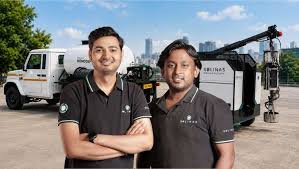
Deep beneath India’s cities—hidden from view, rarely discussed, and often lethal—lies the country’s most neglected infrastructure: the underground networks of water pipes and sewers that keep urban life functioning. Solinas Integrity, an IIT Madras-incubated robotics startup, has raised $5.5 million in a Series A1 round to bring robotics and artificial intelligence to this invisible crisis .
The Problem No One Sees
The scale of India’s underground infrastructure crisis is staggering. An estimated 38% of treated water is lost before reaching consumers—with losses exceeding 60% in some cities—costing the global economy $39 billion annually in non-revenue water . Meanwhile, despite a legal ban, more than 700,000 people remain engaged in manual scavenging, with 377 sanitation workers losing their lives between 2019 and 2023 while cleaning sewers and septic tanks by hand .
This is the world Solinas was built to change.
The Product Stack: Endobot, HomoSEP, and SWASTH AI
Founded in 2018 by IIT Madras alumni Divanshu Kumar and Moinak Banerjee, Solinas has built an integrated robotics platform for underground water and sanitation infrastructure . Its three core products work together to create what the company calls an end-to-end WASH (Water, Sanitation and Hygiene) stack:
Endobot is Asia’s first robotic pipeline inspection system capable of navigating pipes as small as 90 mm in diameter . The family of tethered robotic crawlers includes variants covering diameters from 90 mm to 1,500 mm, with camera systems and sensors that detect leakages, illegal connections, and contamination sources deep underground.
HomoSEP is a mechanised system that cleans sewers and septic tanks at depths of up to 20 meters, eliminating the need for human entry into hazardous confined spaces . Developed in partnership with Safai Karamchari organisations, the robot directly addresses the human toll of manual scavenging.
SWASTH AI transforms inspection data into GIS-mapped asset inventories, AI-driven defect classification, and predictive remaining-useful-life analytics, powered by a proprietary Indian pipeline dataset . This creates what the company calls “infrastructure intelligence”—giving municipal authorities visibility into systems that have historically been invisible.
The Funding Round
The $5.5 million Series A1 round was led by Hero Enterprise Partner Ventures and co-led by Mela Ventures, with participation from Luthra Group and continued backing from existing investors SBI Ventures, Rainmatter, and 8X Ventures Fund I . The round follows Solinas’ Series A in May 2024, led by SBI Ventures through the SVL-SME Fund (Neev II) .
Sunil Kant Munjal, Chairman of Hero Enterprise, described the investment rationale: “Solinas Integrity has taken the hardest problem in urban infrastructure—underground water and wastewater networks—and reimagined it from the ground up with robotics. Their work directly addresses water security, worker safety, and the long-term resilience of our cities” .
Krishnakumar Natarajan, Managing Partner at Mela Ventures, added: “Current methods of maintaining India’s water infrastructure are manual, hazardous, time-consuming, and costly, with virtually no visibility into what lies beneath. Solinas is changing that through a vertically integrated robotics platform that maps underground infrastructure, diagnoses issues, and delivers end-to-end solutions” .
Deployed Across India—and Beyond
Solinas’ technology is already operational at scale. The company has deployed its solutions across more than 35 cities and 15 states in India, serving municipal corporations and enterprise customers including an international deployment with Dubai Municipality .
The company has also earned significant institutional validation. It was recognised by Prime Minister Narendra Modi for its contribution to India’s water and sanitation mission . CEO Divanshu Kumar was named to Forbes India’s 30 Under 30 list in 2025 . The company was recently selected as the subject of a Harvard Business Publishing case study, now used by business schools across six continents .
The Road Ahead
The fresh capital will be deployed to scale aggressively—deepening penetration in existing markets, expanding into new states and municipal corporations across India, and building out an international footprint with a strategic focus on the Middle East and Southeast Asia . The company will also accelerate development of next-generation robotic inspection and cleaning technologies and strengthen its AI-powered software and asset management platforms .
Beyond water and sanitation, Solinas is planning to extend into adjacent sectors. “From here, we’re also planning to extend into adjacent, high-stakes sectors—starting with Oil & Gas and Defence, where the same discipline around critical, unseen infrastructure applies,” said Divanshu Kumar, Co-Founder and CEO .
The company is targeting ₹100 crore in revenue by FY28, driven by growth in its core water and sanitation business alongside continued momentum in industrial asset management . The timing is favourable: government programmes such as AMRUT, Jal Jeevan Mission, and the NAMASTE scheme are driving adoption of modern inspection and sanitation technologies through an estimated $1.5–2 billion in annual public and multilateral investment .
A Blueprint for Deep-Tech Infrastructure
Solinas Integrity represents something rare in India’s startup ecosystem: a deep-tech hardware company that has successfully navigated the labyrinth of municipal procurement, built a defensible technology stack, and proven its model at scale. The company has demonstrated that Indian startups can build world-class robotics solutions for critical infrastructure challenges—not by chasing consumer markets, but by solving problems that governments and industries desperately need addressed.
As Kumar put it: “There is no playbook for building a technology company in the water and sanitation sector. Solinas has been built through constant experimentation and learning” . The playbook, it turns out, is being written in real time—one robot at a time, one city at a time, one life saved from manual scavenging at a time.