Piyush Goyal: Innovation, Startups, and MSMEs to Drive India’s Next Growth Phase
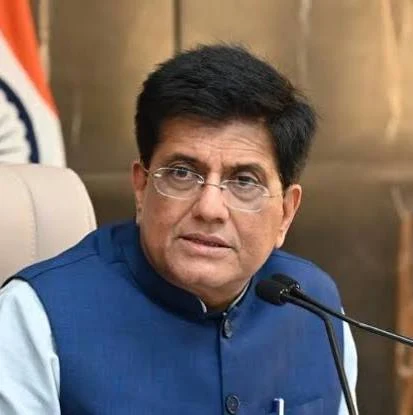
Commerce and Industry Minister Piyush Goyal has made a strong case for placing innovation, startups, and MSMEs at the centre of India’s economic future. Addressing the 22nd JRD Tata Memorial Lecture, he outlined a vision where deep technology, entrepreneurship, and globally competitive manufacturing converge to power the country’s next phase of growth .
The Deep-Tech Mandate
Goyal’s message was unambiguous: India must shift its focus from incremental gains to breakthrough innovation. “The future of manufacturing cannot just be left to producing more. It’ll have to be producing smart,” he said, calling for a focus on better technology, automation, design, and branding .
The minister identified artificial intelligence, semiconductors, quantum computing, biotechnology, robotics, and advanced materials as the priority areas for India’s technological advancement . This focus is backed by significant government commitments:
- A ₹1 lakh crore Research, Development and Innovation Fund providing long-tenure, low-cost risk capital
- The IndiaAI Mission, which has already onboarded 38,000 GPUs for startups and researchers at affordable rates
- Semicon 2.0, with a fund of approximately $12-13 billion to accelerate semiconductor manufacturing
Startups: From Consumer Apps to Global Deep-Tech
Goyal has been a vocal advocate for transforming India’s startup ecosystem from consumer-focused ventures to deep-tech leaders. He noted that the startup ecosystem has evolved “beyond consumer internet businesses” and is now increasingly focused on deep technology and innovation .
In a direct appeal to domestic investors, he said: “If I had not been in government, I would have put my money in 120 startups which were in Bharat Innovates and retired” . He urged Indian capital pools to back homegrown ventures rather than allowing successful technologies to be acquired by foreign investors .
“We need Indian pools of capital. We need Indian investors to pick up our startup ecosystem, to adopt it,” Goyal emphasised . He also asked industry to reinvest profits into R&D, skilling, deep-tech, quantum computing, and biotechnology .
MSMEs: The Backbone of the Economy
Recognising that MSMEs contribute nearly 45% to India’s exports and anchor employment-intensive supply chains, Goyal stressed the need to strengthen this sector through technology adoption and improved productivity . The government has introduced several measures to support MSMEs:
- A ₹10,000 crore SME Growth Fund to nurture future champions
- A ₹10,000 crore Fund of Funds 2.0 for startups
- Enhanced credit guarantee cover under CGTMSE, expected to unlock ₹1.5 lakh crore of incremental credit over five years
- A special credit scheme for women and SC/ST entrepreneurs, targeting 500,000 beneficiaries
The Road Ahead: Free Trade Agreements and Global Markets
Goyal highlighted India’s nine recently signed free trade agreements, covering 38 economies with a combined GDP of $60 trillion, as a significant opportunity for Indian businesses . He urged domestic industry to leverage these FTAs to convert market opportunities into market share .
“If you want to be a part of India’s growth story, the time is now,” he told investors, urging them to “get into action and start investing before it is too late” .
Goyal also called for the government to reduce regulatory burdens, noting that “the less the regulation on the industry, the more successful it will be” . He suggested that capital from insurance companies or provident funds could be used to support emerging ventures .
India, Goyal said, is “a ship that was never meant to stay anchored.” With its 1.4 billion enterprising citizens, the country is positioned to move from being “the back office of the world” to becoming a “global engine of innovation” . The minister expressed confidence that India would realise the vision of a developed nation by 2047, driven by innovation, technology, and a resilient entrepreneurial spirit .
India, Goyal said, is “a ship that was never meant to stay anchored.” With its 1.4 billion enterprising citizens, the country is positioned to move from being “the back office of the world” to becoming a “global engine of innovation” . The minister expressed confidence that India would realise the vision of a developed nation by 2047, driven by innovation, technology, and a resilient entrepreneurial spirit .