
Sniffing Out Cancer: How Dognosis Is Merging Biology and AI for Early Detection
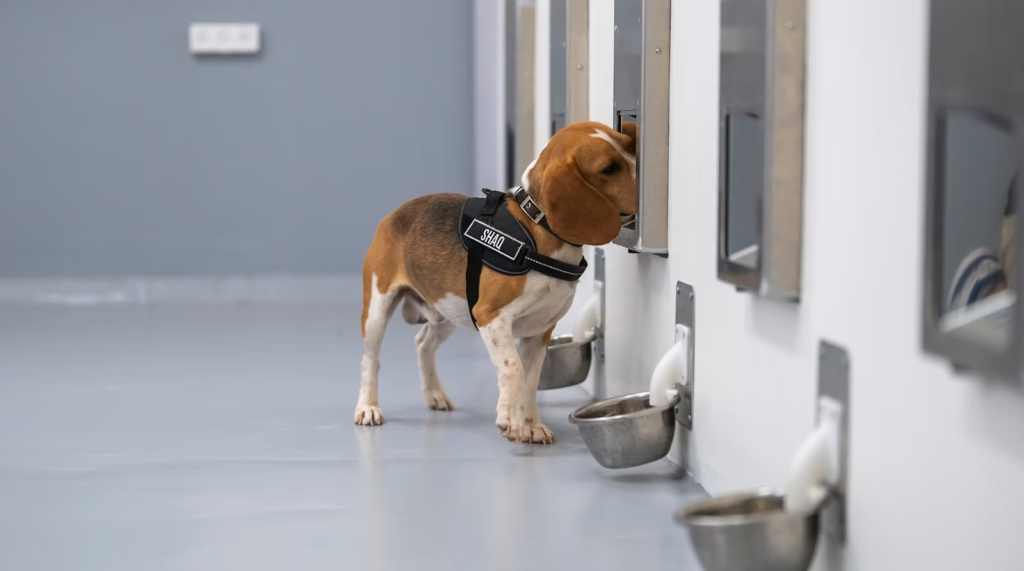
A Bengaluru-based deep-tech startup, Dognosis, is pioneering a novel approach to cancer screening that combines the extraordinary olfactory abilities of trained dogs with artificial intelligence. The company is developing a low-cost, non-invasive test that analyses human breath to flag early signs of cancer, potentially offering a solution to India’s significant screening gap where a large proportion of cases are diagnosed at advanced stages .
The Science: Dogs as Biological Sensors
The core of Dognosis’s technology leverages the fact that a dog’s nose contains up to 300 million olfactory receptors, compared to 5-6 million in humans. Tumours are believed to release specific chemical compounds known as volatile organic compounds (VOCs) into the breath. Dogs can be trained to detect these subtle chemical signatures, which can indicate the presence of cancer .
How the Dognosis System Works
The process is designed to be simple for the patient while using advanced technology to standardise the dogs’ biological responses:
- Breath Collection: A patient breathes into a specially designed face mask for about 10 minutes, which captures the VOCs present in their breath .
- Canine Analysis: The sample is sent to the lab, where it is presented to a team of trained dogs. They are evaluated using a proprietary platform that includes an EEG-based canine helmet and a sensor-equipped harness to record their reactions .
- AI Standardization: Instead of relying on a handler’s subjective interpretation, the dogs’ behavioural and physiological responses are captured by sensors and processed through AI-based algorithms. This converts the dog’s reaction into objective, measurable data for analysis . Co-founder Akash Kulgod explained, “The dogs’ reactions are captured through sensors and analysed using AI-based algorithms to create a more standardised and scientific detection process” .
Clinical Validation and Performance
Dognosis has published results from what it calls the world’s largest breath-based multi-cancer canine detection study in the highly influential Journal of Clinical Oncology . The Phase-2 study involved 1,502 participants across six hospitals in Karnataka .
The results were promising, with the system achieving over 90% accuracy:
- Sensitivity: 91.5% (ability to correctly identify those with cancer) .
- Specificity: 90.8% (ability to correctly identify those without cancer) .
- Early-Stage Performance: Sensitivity was 89.6% for early-stage cancers (Stage I-II), a critical metric for improving treatment outcomes .
The study also demonstrated the technology’s potential to detect multiple cancers, including breast, oral cavity, lung, and cervical cancers .
Funding, Backing, and the Road Ahead
Dognosis has raised approximately $1.5-2 million through seed funding rounds. Its backers include prominent investors like Accel India and Caffeinated Capital . It was also selected for the first Accel Atoms X cohort in March 2026 .
The startup has ambitious plans for the future. A Phase 3 trial has begun, aiming to enrol around 10,000 participants . The goal is to launch an at-home, multi-cancer pre-screening test in India next year, priced at a few thousand rupees, and to scale to one million tests annually .
While the results are promising, the technology is a pre-screening tool designed to flag individuals who should seek further tests rather than a diagnostic device. Dognosis’s journey showcases how “startups are thinking outside the box to tackle one of medicine’s toughest challenges… blending natural intelligence with artificial intelligence” to bring potentially life-saving technology to people who need it most.