C.R. Patil Calls for Affordable Innovation in Water & Waste Management
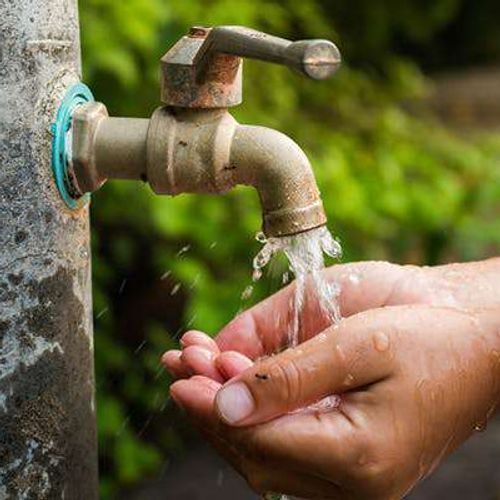
Union Jal Shakti Minister C.R. Patil has called upon innovators, startups, and researchers to develop affordable, scalable, and community-friendly technologies to tackle two of India’s most pressing challenges: safe drinking water and plastic waste management in rural areas.
Addressing the Grand Finale of the Department of Drinking Water and Sanitation (DDWS) Innovation Challenge in New Delhi, Patil emphasized that technology becomes truly successful only when it reaches people and is easy for communities to use .
🚰 Safe Drinking Water: The Next Phase of Jal Jeevan Mission
Patil highlighted that the Jal Jeevan Mission, launched under Prime Minister Narendra Modi, has transformed rural lives by providing tap water connections to crores of households . He noted that the mission must now move forward with equal focus on water safety, ensuring that every household receives not only water, but safe drinking water .
Key challenges identified:
- Timely water quality testing remains a challenge in many remote villages .
- There is a need for portable, low-cost, and easy-to-use technologies that can be operated at the village level .
- Technologies should empower Gram Panchayats, Village Water and Sanitation Committees (VWSCs), Self-Help Groups, and local youth to monitor water quality efficiently .
“The mission must now move forward with equal focus on water safety, ensuring that every household receives not only water, but safe drinking water.” — C.R. Patil, Union Jal Shakti Minister
♻️ Plastic Waste Management: Decentralised Solutions for Rural India
Patil also highlighted the growing challenge of plastic waste in rural areas. He noted that rural India is witnessing rising use of packaged products, leading to increased plastic waste, including multi-layer plastic (MLP) such as chips packets, biscuit wrappers, and pouches .
The challenge:
- Transporting such waste to distant recycling plants is often costly and difficult .
- Village-level and block-level solutions are needed to process plastic waste locally .
- Such solutions should support the circular economy by converting waste into wealth .
The Minister stressed that startup-based technologies should support local needs, be easy for communities to use, and create livelihood opportunities for village youth and local entrepreneurs—reflecting the spirit of Aatmanirbhar Bharat and Viksit Bharat .
🏆 DDWS Innovation Challenge: Recognising Grassroots Innovators
The DDWS Innovation Challenge, organised in collaboration with IIT Madras, received an encouraging response from across the country :
| Category | Applications | Complete Entries |
|---|---|---|
| Water Innovation Challenge | — | 90 |
| Plastic Waste Management | — | 66 |
| Total | 348 | 156 |
Water Innovation Winners (Jal Jeevan Mission)
Plastic Waste Management Winners (Swachh Bharat Mission – Grameen)
All six winning startups were honoured at the event by Union Minister C.R. Patil, in the presence of Minister of State V. Somanna and senior DDWS officials .
🔮 What’s Next: From Innovation to Implementation
The selected technologies will now undergo further assessment for safety, practicality, scalability, and suitability for rural areas . Based on performance, the Department of Drinking Water and Sanitation may explore pilot implementation in selected rural locations before considering wider deployment .
Speaking on the occasion, Ashok K.K. Meena, Secretary, DDWS, emphasised that technologies for rural India must be:
He also highlighted the importance of integrating portable water testing devices with mobile applications to enable real-time data capture, geo-tagging, and faster reporting, as well as shifting from collection and disposal toward decentralised circular economy models for plastic waste .
🌍 The Bigger Picture: Social-Impact Startups Driving Change
Patil’s call for affordable innovation reflects a broader push for social-impact startups to tackle public health and environmental issues while ensuring that innovation remains accessible and scalable across India. By focusing on affordability and sustainability, the initiative encourages innovators to blend technology with social responsibility, paving the way for solutions that can transform everyday life for millions .
The DDWS Innovation Challenge demonstrates the Government of India’s commitment to leveraging innovation for improving rural drinking water quality and sustainable plastic waste management—supporting the goals of Jal Jeevan Mission, Swachh Bharat Mission (Grameen), Aatmanirbhar Bharat, and Viksit Bharat .