
How Enlife’s AI Blood Test Could Change Everything for Alzheimer’s Patients
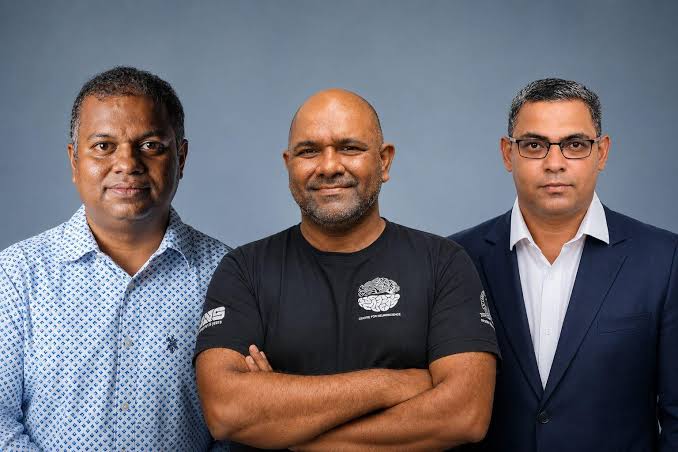
The greatest tragedy of Alzheimer’s disease is not the absence of potential treatments; it is that by the time a patient walks into a doctor’s office with symptoms, the window for meaningful intervention has often already closed. This is the stark reality that Dr Deepak Kumaran Nair, a professor at the Indian Institute of Science (IISc), has spent his career confronting. It is also the problem that his Bengaluru-based deeptech startup, Enlife Research, is now poised to solve with a simple blood test and a powerful artificial intelligence engine .
Enlife has just raised ₹6 crore in a seed funding round led by Piper Serica VC Fund to develop an AI-powered diagnostic platform capable of detecting Alzheimer’s disease up to 15 years before clinical symptoms emerge .
This is not just another incremental improvement in healthcare technology; it is a fundamental reimagining of how we approach one of the world’s most devastating neurological conditions. By shifting the focus from reactive, symptom-based care to proactive, biology-first detection, Enlife is building a bridge to a future where Alzheimer’s is no longer a sentence but a condition that can be managed from its earliest molecular stages .
The Diagnostic Gap: Why Current Methods Fail India
Today, diagnosing Alzheimer’s disease is a costly and invasive ordeal. It typically relies on expensive PET scans, MRIs, or cerebrospinal fluid (CSF) analysis—procedures that are not only financially prohibitive but are also often unavailable in India’s tier 2 and tier 3 cities . As Dr Nair pointed out, every diagnostic model currently in use was built on Western patient cohorts and designed at hospital price points that simply do not work for the Indian population . This means that millions of Indians are left without access to early diagnosis, often receiving confirmation of the disease only one to two years before symptoms appear, when it is tragically too late for early-stage interventions .
A Blood Test Powered by AI and Built for India
Enlife is closing this gap with a two-pronged approach. First, it is developing a blood-based test that analyzes a panel of biomarkers, including amyloid beta and abnormal tau proteins—the hallmarks of Alzheimer’s pathology . The company is starting with five to seven biomarkers but plans to expand this panel to between 25 and 100, allowing its AI platform to detect complex biological patterns associated with multiple neurodegenerative disorders .
This process, which previously took months of laboratory work, can now be partially simulated using AI, significantly reducing both time and cost . The test is designed to be administered at routine diagnostic centers and is expected to deliver results within two to five hours .
Second, and perhaps most critically, Enlife is building its AI models on datasets specifically tailored to the Indian population. The company is collaborating with prestigious institutions like IISc, NIMHANS, TIFR Hyderabad, and the Centre for Brain Research (CBR) Bengaluru to generate India-specific clinical data .
This is a crucial differentiator, as genetic risk profiles and lifestyle-related factors differ significantly among Indian patients compared to Western populations . As Rajni Agarwal, director at Piper Serica, noted, this is technology designed not just for a few, but for Bharat—a solution that can reach tier 2 and tier 3 cities .
A Growing Burden and a Powerful Solution
The urgency of this mission is underscored by the scale of the problem. Recent estimates indicate that over 8.8 million Indians aged 60 and above are living with dementia, with Alzheimer’s accounting for the majority of cases . With India on the cusp of having one of the world’s largest aging populations within a generation, this number is projected to nearly double over the next decade . The country is facing a neurodegenerative disease burden that it is currently ill-prepared to handle .
Enlife’s funding will be used to validate its blood-based biomarker platform, expand its R&D team, and advance its first diagnostic assay from prototype to clinical-grade validation . The company expects to begin filing patents over the next 9 to 18 months and plans to commercialize its technology through a B2B licensing model, partnering with hospital chains, diagnostic laboratories, and pharmaceutical companies .
If successful, Enlife’s platform could become a landmark in precision medicine, reshaping how neurological diseases are diagnosed and managed in India and beyond. It is a powerful testament to how India’s next generation of entrepreneurs is harnessing artificial intelligence to drive meaningful, life-changing impact .