QpiAI Open-Sources Quantum SDK to Accelerate India’s Quantum Ecosystem
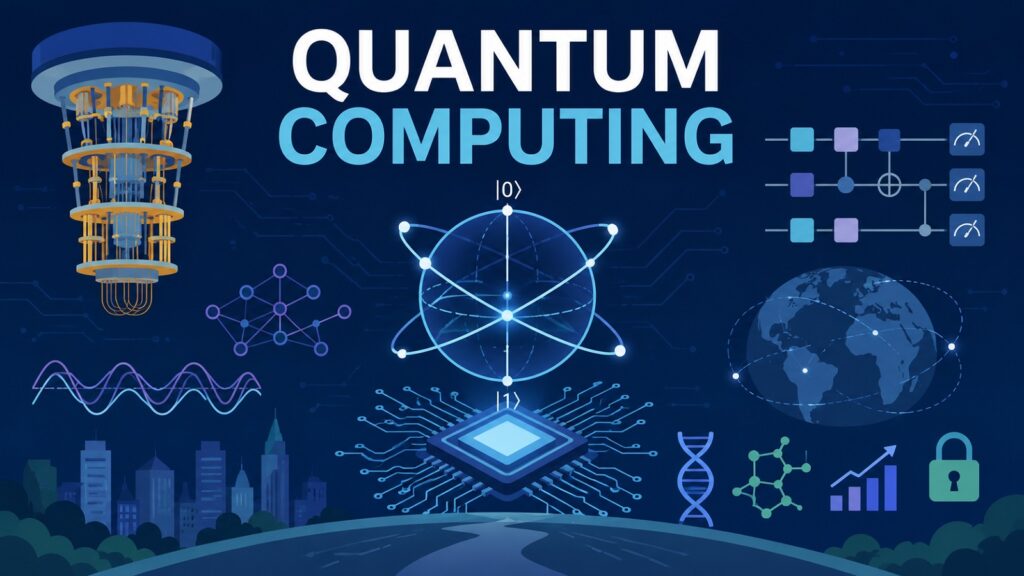
India’s quantum computing ecosystem has received a significant boost as Bengaluru-based full-stack quantum company QpiAI has officially open-sourced its Quantum SDK. Available now on GitHub and PyPI, the release gives developers, researchers, and startups around the world access to a comprehensive, developer-friendly toolkit for building and running quantum algorithms .
🔓 A Strategic Step Toward Democratizing Quantum Technology
The QpiAI Quantum SDK is released under the permissive Apache 2.0 license, the same framework used by Android, Kubernetes, and TensorFlow . This signals a deliberate strategy to build a broad developer ecosystem rather than locking users into a proprietary moat—a proven approach that has helped popularize quantum platforms like IBM’s Qiskit and Google’s Cirq .
The SDK provides a Python-based interface featuring:
- Comprehensive quantum gates: Single-qubit (H, X, Y, Z, rotations), two-qubit (CX, SWAP, iSWAP), and multi-qubit (Toffoli, Fredkin) operations
- Local simulation backends: State-vector, density matrix, and tensor network simulators for local prototyping
- Pre-built quantum algorithms: Grover’s search, Shor’s algorithm, Quantum Fourier Transform, Quantum Phase Estimation, and more
- Visualization tools: Circuit diagrams, interactive Bloch spheres, histogram plots, and state vector visualizations
- QPU integration: Direct connection to QpiAI’s Indus 8-qubit and 25-qubit quantum computers via the QpiAI-QCloud platform
“India is entering a defining decade for quantum technologies, and open-source software will be critical to building the talent, research, and innovation base that national leadership requires.” — Dr. Nagendra Nagaraja, Founder and CEO, QpiAI
🇮🇳 India’s Quantum Ambitions
The open-source announcement comes as India is rapidly positioning itself in the global quantum race. QpiAI is one of eight startups selected under the National Quantum Mission (NQM) , a ₹6,000 crore initiative launched in 2023 that aims to develop intermediate-scale quantum computers with 50–1,000 qubits and build a robust quantum ecosystem across the country .
The company has already achieved significant milestones:
- QpiAI-Indus: India’s first full-stack quantum computer with 25 superconducting qubits, launched in April 2025
- Indigenous manufacturing: 80% of machines assembled in-house, with plans to manufacture quantum hardware locally by 2026
- Revenue and growth: Over $38.5 million raised to date, with EBITDA profitability and 60% gross margins
- Patents and intellectual property: 11 patent applications filed since inception
The company is also building a dedicated 10-acre quantum research park in Devanahalli, Bengaluru, to scale its quantum manufacturing and research capabilities .
👨💻 Building India’s Quantum Workforce
Beyond hardware and software, QpiAI is actively investing in talent development. The company has trained over 40,000 individuals in quantum computing through its platform and collaborates with leading academic institutions, including the Indian Institute of Science (IISc) , and approximately 15 universities .
The plan is to create a pipeline of quantum-ready talent—not just at the application layer but at the processor level—supporting the government’s Atmanirbhar Bharat vision by building deep technical expertise in quantum hardware, firmware, and software .
🔮 The Road Ahead
The open-source SDK is expected to accelerate India’s quantum ecosystem by allowing developers to:
- Build and test quantum applications for finance, logistics, materials science, chemistry, security, AI, and optimization
- Access QpiAI’s quantum computers through the cloud
- Participate in hackathons, research projects, and academic programmes
Early institutional adopters will also be eligible to join the QpiAI Academic & Innovation Network, receiving preferential commercial terms on QCloud institutional packages .
The convergence of quantum computing, AI, and open-source development marks a defining moment for India’s deep-tech ecosystem. As Nagendra Nagaraja put it: “The convergence of quantum computing, AI, and agentic development will define the next generation of deep-tech platforms—and QpiAI is committed to building that capability from India to our global users, partners, and customers.”
#QpiAI #QuantumComputing #OpenSource #IndianStartups #InnovationEconomy #TechRevolution
For more updates on India’s quantum computing ecosystem, startup innovation, and deep-tech trends, keep it locked on StartupPoint.in.