Month: January 2026

From Unicorn to Public Company: How India’s Record IPO Wave is Reshaping the Startup Ecosystem

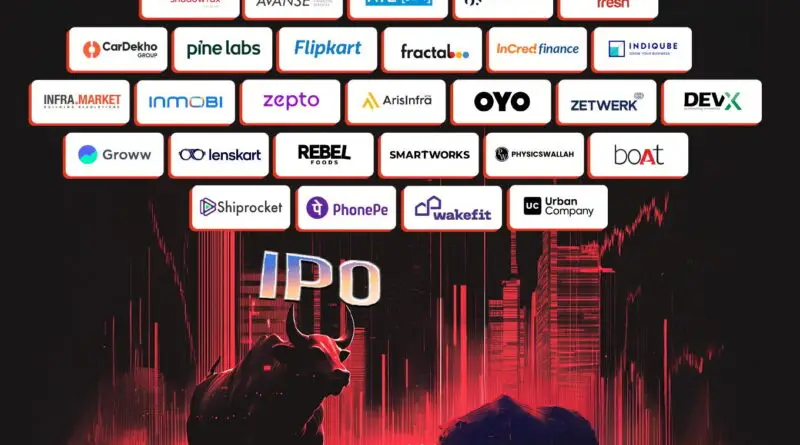
2025 will be remembered as the watershed year when India’s startup ecosystem truly went public. Moving beyond a handful of pioneering listings, a tsunami of new-age tech companies has stormed the public markets, with over 20 major startups actively preparing listings that could raise a combined $6-8 billion. This isn’t just a financial event; it’s a systemic transformation. It signals a profound maturation where liquidity is now a reality, confidence is institutionalized, and the public market exit has become the preferred—and celebrated—culmination of the startup journey. With a record 42 listings unlocking $19 billion+ in 2025 alone, the era of the Indian “startup IPO” has decisively arrived.

Read More

The Unnati-Gramophone Merger: A Landmark Consolidation Creating India’s New Agritech Powerhouse

In a strategic move set to reshape the Indian agritech landscape, Bengaluru-based financial services platform Unnati has acquired the digital farming platform Gramophone in an all-stock transaction. This merger unites two major players with complementary strengths: Unnati’s formidable reach in farmer financing and market linkages with Gramophone’s deep expertise in agronomic advisory and input commerce. Spearheaded by former Paytm CFO Amit Sinha, this consolidation is a clear signal of maturation within India’s $24 billion+ agritech sector, moving beyond a fragmented market of point solutions toward the creation of integrated, full-stack platforms capable of serving millions of farmers from “seed to sale.”

Read More

The Great Realignment: How 2025’s IPO Frenzy and Disciplined Capital Forged a Mature Indian Startup Ecosystem

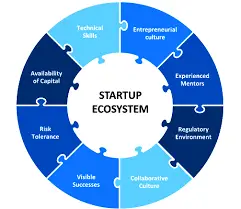
The Indian startup ecosystem didn’t just survive the “funding winter” of recent years—it used the period to forge itself into something stronger, more discerning, and strategically poised for the future. The year 2025 will be remembered as the pivotal year of the great realignment, where investor confidence returned not with a speculative roar, but with a steady, conviction-driven hum. Two parallel revolutions defined this turnaround: a historic IPO boom that unlocked unprecedented liquidity and a rebound in funding characterized by rigorous selectivity and a deep-tech focus. Together, they marked the ecosystem’s definitive transition from a growth-at-all-costs adolescence to a sustainable, impact-driven adulthood.

Read More

India’s Startup Ecosystem 2025: A Year of Resilient Evolution and Strategic Maturation

As the final chapter of 2025 closes, India’s startup narrative has decisively shifted from a tale of explosive, hype-driven growth to one of resilient evolution and strategic maturation. The ecosystem, now a formidable force of over 2 lakh (200,000) recognized startups creating more than 21 lakh (2.1 million) jobs, navigated a year of global economic uncertainty not with a retreat, but with a profound realignment. The defining story of the year was not the total amount of capital raised, but how it was deployed—with discipline, purpose, and a clear-eyed focus on the future. This year-end recap crystallizes the five pillars that have repositioned India for sustainable, global leadership in the coming decade.

Read More

JARSH Safety: The AI Helmet Protecting India’s Workforce and Redefining Industrial Deep-Tech

In the high-stakes environments of steel mills, chemical plants, and construction sites, a split-second warning can mean the difference between life and death. Bengaluru-based deep-tech startup JARSH Safety is engineering that critical advantage, transforming the humble hard hat into an intelligent, AI-powered guardian for industrial workers. Founded in 2021 by Rahul and Shikhar Jetly, JARSH is tackling one of India’s most pressing—and often overlooked—challenges: workplace safety. By fusing embedded sensors, edge computing, and machine learning into a smart helmet, the company is not just selling a product; it is pioneering a data-driven safety culture that prevents accidents before they happen, proving that Indian innovation can save lives on the factory floor.

Read More

The World’s New Startup Capital? Why Global Founders Are Flocking to Bengaluru

For decades, the global startup narrative was centered on a single strip of land in California: Silicon Valley. That story is being powerfully rewritten, with a new chapter emerging over 8,500 miles away. Bengaluru is rapidly solidifying its position as the world’s new startup magnet, attracting an unprecedented wave of international founders and companies who are choosing the city not as an outsourcing post, but as their primary hub for innovation, research, and Asia-Pacific expansion. This influx is a resounding endorsement of India’s maturing ecosystem and cements Bengaluru’s status as a truly global epicenter for entrepreneurship.

Read More

Solve for Tomorrow: How India’s Gen Z is Using AI to Build a Better Bharat

At a time when discussions about artificial intelligence often center on global tech giants and billion-dollar valuations, a quieter, more hopeful revolution is being led by India’s youth. The recent Samsung Solve for Tomorrow 2025 competition has underscored this shift, awarding ₹1 crore grants each to three student teams for designing AI-driven prototypes that tackle some of the nation’s most persistent challenges. These victories are not just about prize money; they signal a generational shift toward applied, empathetic technology and provide a powerful blueprint for how India’s deep-tech future will be built—from the ground up, by young minds who understand local problems firsthand.

Read More

How The Pickls Preserved a Dream and Built a Global D2C Brand

In a world of hyper-scaled tech startups, a quiet but powerful narrative of passion, authenticity, and culinary heritage is winning hearts—and shelves—around the globe. Bengaluru-based couple Pradeep and Priya made a life-altering pivot, walking away from secure, lucrative careers in corporate IT to launch The Pickls, a direct-to-consumer (D2C) brand dedicated to artisanal Indian pickles, chutneys, and superfoods. Their journey from a home kitchen experiment to an international brand shipping worldwide is a masterclass in how deep cultural roots, coupled with modern D2C strategy, can create a defensible and scalable business, perfectly aligned with the spirit of Atmanirbhar Bharat.

Read More

The Crucible of Youth: A Teen Founder’s Ordeal Highlights the Unseen Battles in India’s Startup Arena

A story now viral on social media has thrown a stark spotlight on the intense, often unspoken challenges facing the youngest members of India’s entrepreneurial community. A 16-year-old entrepreneur of Indian origin has publicly shared an alarming experience: an allegation that a disgruntled customer attempted to sabotage his startup. While details of the founder and the venture remain private, the incident has ignited a crucial conversation about the unique vulnerabilities, immense pressures, and resilience required of youth navigating the high-stakes world of technology startups. This is more than a personal crisis; it is a parable for India’s burgeoning ecosystem, where brilliant young minds are stepping into an arena fraught with “adult problems” from the very beginning.

Read More

Rajasthan’s ₹100 Crore Gambit: A Fund of Funds to Catalyze a Tier-2 Startup Powerhouse

In a decisive move to escalate its position on India’s innovation map, the Rajasthan government has announced the launch of a ₹100 crore Fund of Funds (FoF), strategically timed ahead of the prestigious TiE Global Summit in Jaipur in January 2026. This initiative is designed to act as a powerful catalyst, leveraging public capital to attract and multiply private investment into the state’s early-stage startup ecosystem. By focusing on high-growth sectors like AI, agritech, and cleantech, and targeting support for women-led ventures, Rajasthan is not just launching a fund; it is architecting a comprehensive strategy to become a leading hub for inclusive, impact-driven innovation from India’s Tier-2 cities.

Read More