
NPCI to Open Source UPI Technology Stack
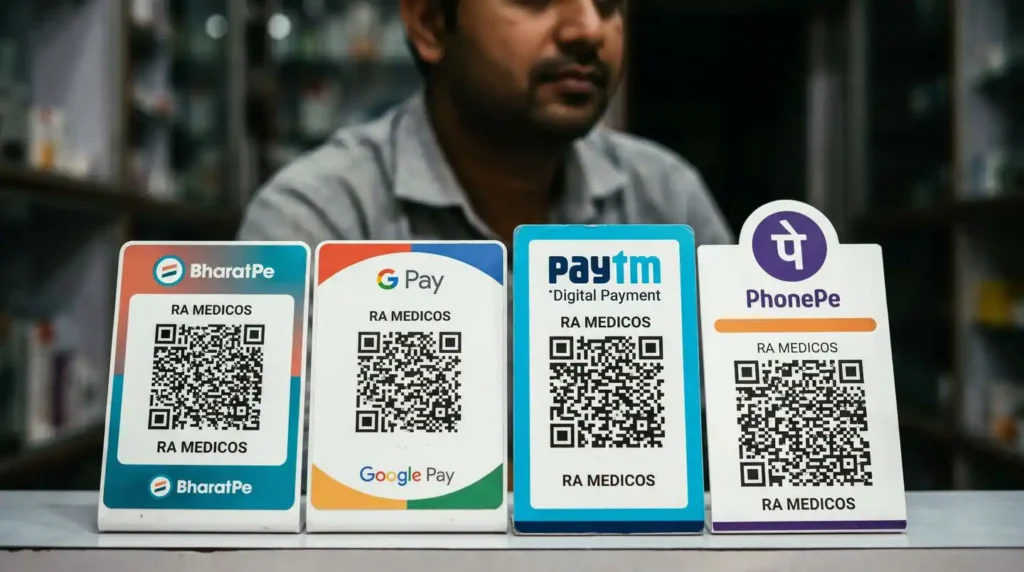
In a landmark move that could reshape the global digital payments landscape, the National Payments Corporation of India (NPCI) is planning to make the UPI technology stack open source. This decision is expected to accelerate fintech innovation, reduce development barriers, and encourage global adoption of India’s digital payments infrastructure .
🏗️ Built on Open Source from Day One
The irony of UPI’s open-source future is that it was never closed-source to begin with. UPI was built using publicly available, well-established open-source software tools including Kafka, Redis, PostgreSQL, Cassandra, Docker, and Prometheus—the same reliable tools found in thousands of companies worldwide .
This was a deliberate strategic choice. For decades, global payment systems relied on big tech companies and were quietly controlled by them. Every new update, feature, or bug fix required their permission—a form of “digital colonialism,” as some have described it . India chose a different path, building UPI using open-source software while others used open source to generate profit, India used the same tools to build something that serves its people .
NPCI’s architecture is open, scalable, and reliable, leveraging tools including Kubernetes, Cassandra, KeyDB, Kafka, Elasticsearch, Prometheus, Grafana, Go, Spring Boot, Ubuntu, YugabyteDB, Fluentbit, and Superset .
📊 The Scale That Demands Open Innovation
UPI’s scale is staggering, and open-sourcing the stack is a recognition that no single organisation can keep pace with the innovation required to sustain it :
| Metric | Value |
|---|---|
| Monthly Transactions | 17–20 billion |
| Daily API Requests | 240,000+ per second |
| P99 Latency | 100 ms |
| Fraud Detection Latency | 75 ms |
| Member Banks | 684 |
| Active-Active Data Centres | 4 |
Source: NPCI architecture data
The system processes more than double the global digital transaction volume of the top four countries combined. This is a payments system that operates at web scale—powering 0.7 billion transactions every day .
🌍 Why Open Source Now?
NPCI’s decision to formalise what was already an open architecture serves multiple strategic purposes:
1. Accelerating Fintech Innovation
Open-sourcing the stack lowers the barrier for startups and developers to build new solutions without licensing hurdles . As one observer noted, “Open source isn’t just about free software, it’s about freedom from control” .
2. Enabling Global Adoption
Countries exploring interoperable payment systems may adopt UPI as a model . The US Federal Reserve has already hailed UPI as a blueprint for global payment systems . NPCI International Payments is now exploring bilateral UPI linkages with Indonesia, Malaysia, and Thailand .
3. Building Sovereign AI Infrastructure
NPCI is also leveraging open-source principles to build foundational AI models for India’s payments ecosystem .
💡 The Open-Source AI Extension
Beyond the core UPI stack, NPCI has extended its open-source philosophy to AI. The corporation recently collaborated with NVIDIA to advance its sovereign AI model capabilities built for India’s payments ecosystem . NPCI is using NVIDIA Nemotron, a family of open models with open weights, training data, and recipes, in its model development journey .
In February 2026, NPCI released FiMI (Finance Model for India) , a domain-specific AI language model tailored for India’s digital payments ecosystem. FiMI is built in-house and understands payment-related workflows including UPI transactions, dispute handling, mandate management, and regulatory queries .
Dilip Asbe, Managing Director and CEO of NPCI, stated at the Mumbai Tech Week: “You will see a large amount of small language models because it’s very difficult for companies like us to play a capitalistic game. Rather, we will use the game for trying to solve the specific use cases, specific problems as much close to making it deterministic in that process” .
FiMI is expected to launch 3-4 small language models for different use cases in the coming months .
🔮 A Global Benchmark in the Making
By opening up UPI, NPCI is setting the stage for India’s digital finance ecosystem to become a global benchmark in inclusive, scalable, and interoperable payment technology. The move signals India’s confidence in exporting its digital infrastructure globally