
Startup Spotlights

India’s Orbital Edge: Agnikul Cosmos and NeevCloud Pioneer the World’s First Rocket-Integrated AI Data Centre

In a breathtaking fusion of New Space ambition and sovereign AI strategy, Agnikul Cosmos and NeevCloud have signed a landmark agreement to launch India’s first orbital AI data centre into low-Earth orbit (LEO). This isn’t just another technology partnership; it is a radical reimagining of computing infrastructure itself—turning discarded rocket stages into high-performance AI inference nodes and positioning India at the absolute frontier of the global space-compute economy .

Read More


The Aadhaar Startup Stack: How UIDAI’s Proposed Seed Fund Could Fuel India’s Next Tech Revolution

In a move that could fundamentally reshape the landscape of Indian deep-tech and digital public goods, the Unique Identification Authority of India (UIDAI) is considering the launch of a dedicated seed fund to nurture startups building upon the Aadhaar infrastructure. This is not merely a financial initiative; it is a strategic evolution of Aadhaar from a utility to a platform for innovation, aiming to catalyze a sovereign ecosystem of companies that can secure, enhance, and extend the world’s largest digital identity system into new frontiers.

Read More

Articulus Surgical’s Seed Funding: A Scalpel for Change in India’s Surgical Landscape

In a significant stride for India’s sovereign medtech capabilities, Bengaluru-based Articulus Surgical has secured a major seed funding round led by Kalaari Capital. The startup is developing minimally invasive robotic surgery systems specifically engineered for the unique demands and constraints of the Indian healthcare ecosystem. This investment is more than financial backing; it’s a strategic endorsement of a critical mission: to democratize access to high-precision surgical care by building affordable, adaptable, and locally relevant robotic platforms.

Read More

Clash of the Anthropics: A Bengaluru IT Firm Takes on an AI Giant in a High-Stakes Trademark Battle

A landmark legal confrontation has emerged in India’s rapidly evolving tech landscape, pitting a long-standing Bengaluru software services company against one of the world’s most prominent AI giants. Anthropic Software Private Limited, founded in 2013, has filed a suit in the Karnataka High Court against Anthropic PBC, the U.S.-based creator of the Claude AI models, alleging trademark infringement and passing off. This dispute is more than a corporate squabble; it is a microcosm of the tensions between global technological hegemony and established local intellectual property rights in one of the world’s most critical digital markets.

Read More

Jensen Huang’s AI Jobs Prophecy: Why Data Centers Are India’s New Economic Engine

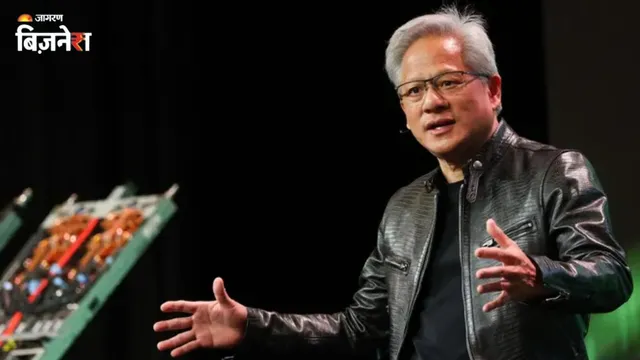
In a powerful endorsement of India’s strategic direction, Nvidia CEO Jensen Huang has framed the nation’s AI infrastructure build-out not merely as a technological necessity, but as the cornerstone of its next great employment boom. Speaking at 3DExperience World 2026 in Houston, Huang drew a direct parallel to the internet’s transformative impact, predicting that the construction and operation of AI data centers could generate job creation on an “incredible” scale. This vision, coming from the architect of the global AI hardware revolution, reframes the conversation: AI is not just a potential job displacer; it is the foundation for a massive, multi-layered jobs pyramid.

Read More

The Great Unlock: How India’s New Startup Policy Fuels the Long Game of Innovation

In a masterstroke of policy foresight, the Government of India has fundamentally redesigned its Startup India framework to nurture not just fast-growing companies, but enduring technological sovereignty. The February 4, 2026 DPIIT notification, which introduces a dedicated ‘Deep Tech Startup’ category with a 20-year horizon and a ₹300 crore turnover cap, while also doubling the limit for regular startups to ₹200 crore, is a strategic declaration. It recognizes that building a social commerce app and building a quantum computer are fundamentally different endeavors requiring distinct timelines, capital structures, and policy support.

Read More

India’s Startup Policy 2.0: A Dual-Track Framework for Scale-Ups and Deep-Tech Pioneers

The Indian government has executed a sophisticated, dual-track recalibration of its flagship Startup India initiative, unveiling a policy framework that now distinctly serves two critical constituencies: the scaling commercial startup and the frontier deep-tech pioneer. The February 4, 2026 DPIIT gazette notification, by doubling the turnover ceiling for regular startups to ₹200 crore and creating a bespoke ‘Deep Tech Startup’ category with a 20-year horizon and ₹300 crore cap, reflects a mature understanding that a one-size-fits-all approach stifles the very innovation it seeks to promote.

Read More

India’s Public Market Coming of Age: The 2026 IPO Wave and the Rise of the Profitable, Proven Startup

Following the record-shattering performance of 2025, India’s startup ecosystem is poised for an even more monumental leap. The IPO pipeline for 2026 is not just robust; it is historically deep and qualitatively superior, with over 44 companies in active preparation for a potential collective raise of ₹50,000 to ₹70,000 crore. This impending wave—featuring giants like PhonePe, Zepto, OYO, and Fractal Analytics—signals a profound maturation: India’s public markets are no longer an experimental exit route but the primary destination for scaled, profitable, and governance-ready new-age companies.

Read More

Record $12.1 Billion Dry Powder: The Rocket Fuel for India’s Next Startup Surge

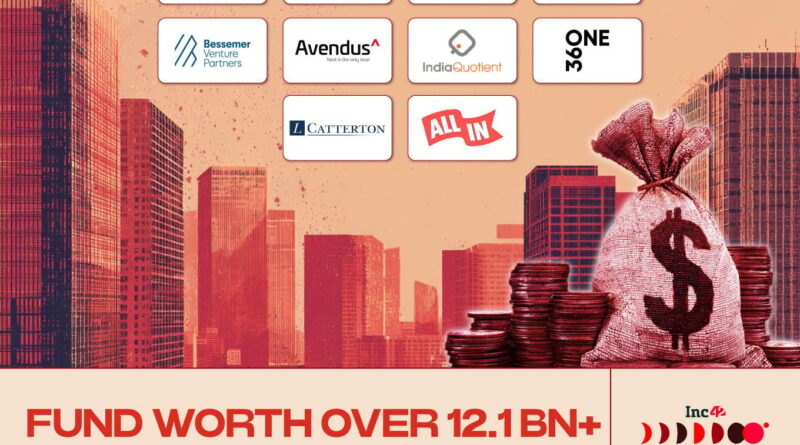
The most powerful signal for India’s entrepreneurial future just flashed on the dashboard. In 2025, investors committed a staggering $12.1 billion (approx. ₹1.01 lakh crore) to new venture capital and private equity funds dedicated to Indian startups—a 39% year-on-year surge from 2024. This isn’t money already spent; it’s record “dry powder,” a war chest of patient capital now sitting in fund managers’ accounts, actively searching for the next generation of founders. Crucially, a dominant 58% of this capital is earmarked for early-stage (seed & pre-seed) ventures, ensuring the pipeline of innovation remains robust for years to come.

Read More