
Flexible Workspace Startup Eyes Expansion & Public Listing
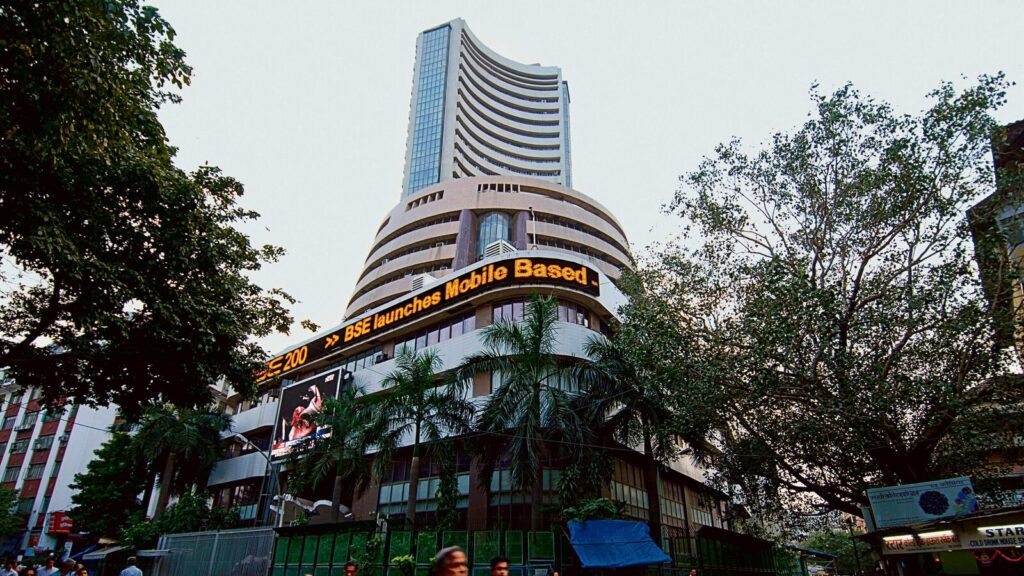
India’s flexible office market is entering a transformative phase, marked by a wave of public listings from major players. With the sector’s capacity projected to reach 140–145 million sq ft over the next two fiscal years , operators are strategically positioning themselves for long-term growth by expanding footprints, reducing debt, and preparing for public listings.
📊 The Market Context: Flex Offices Go Mainstream
The Indian flexible workspace sector has seen remarkable growth, recording a CAGR of approximately 23% over the past three fiscal years . This expansion is driven by rising demand from global capability centres (GCCs), domestic corporates, and startups seeking cost efficiency and operational flexibility .
Key Market Indicators:
- Sector capacity crossed 100 million sq ft in FY26
- Flex operators’ share of office leasing is expected to reach 25% over the next two fiscals, up from ~20% in FY26
- Listed operators (Smartworks, Awfis, WeWork, IndiQube) together hold over 30 million sq ft of operational portfolio
- At least three more IPOs are expected in the segment
The myHQ Q4 FY26 report noted that the industry is “increasingly shifting from a growth-centric phase to one focused on profitability, backed by larger enterprise contracts, longer customer tenures, and growing demand for flexible workplace solutions” . Enterprise occupiers, particularly GCCs, remain at the centre of the sector’s growth story, accounting for a record 45.5% of total office leasing in Q1 2026 .
💰 IPO Activity: A Sector-Wide Trend
The flexible workspace sector has seen a flurry of IPO activity, with four operators already listed and several more in the pipeline . This trend reflects the sector’s maturation and the need for capital to fund expansion while paring debt.
Smartworks: Debt Reduction and Expansion
Smartworks, which operates over 11.5 million sq ft across 15 cities, raised ₹582.6 crore through its IPO . A key priority was reducing high-cost debt—₹114 crore was allocated to debt repayment, with the company expected to become net debt positive post-IPO . Executive Director Harsh Binani noted that the IPO proceeds would “help us enhance profitability by retiring high-cost debt” .
The company has demonstrated strong operational leverage, with adjusted EBITDA rising from ₹35 crore in FY23 to ₹172 crore in FY25—a 3.5x jump . Smartworks has also secured 100% of its supply for FY27, with significant progress already made for FY28 .
IndiQube, Awfis, and WeWork India
- IndiQube Spaces raised ₹700 crore in its IPO, with shares subscribed 13 times . The company reported ₹354 crore quarterly revenue (up 38% YoY) and ₹28 crore quarterly profit (up 260% YoY) .
- Awfis, the first flex company to list in India, has seen its shares rise 50% since listing in May 2024 . The company reported ₹367 crore quarterly revenue and ₹16 crore profit .
- WeWork India launched its ₹3,000 crore IPO, entirely as an offer for sale . CEO Karan Virwani stated the company is “already self-sustaining, generating sufficient cash to fund both operations and expansion” .
Future IPOs
- The Executive Centre India has secured SEBI approval for its ₹2,600 crore IPO .
- BHIVE Workspace recently secured ₹400 crore in pre-IPO funding and is targeting a public listing in 2027 .
- Operators such as Table Space, Simpliwork, and WeWork India (which received SEBI approval in July) are also planning to go public .
🏗️ Expansion Strategy: Scaling Across Tier-II Cities
Flex operators are expanding beyond the top seven cities into Tier-II markets, with operational flex stock projected to nearly double to 135 million sq ft by 2028 . As IndiQube’s Rishi Das noted, “The growth will be more democratic from here on, and one has to go to tier II markets” .
Listed players are leading this expansion, with operators expected to add 15–20 million sq ft of new capacity and incur ₹4,000–4,500 crore in capex over the next two fiscals . Notably, nearly half of the upcoming capacity for the current fiscal has already secured letters of intent from tenants, indicating strong pre-leasing activity .
📈 Financial Health: Profitability and Margin Improvement
The sector is demonstrating improving financials, supporting IPO readiness:
- Occupancy levels have risen to approximately 84% .
- EBITDA margins are expected to remain stable in the 15–17% range .
- Lease renewal rates of 70–80% support revenue stability .
Awfis reported FY26 revenue of ₹1,493 crore (up 24% YoY) and profit after tax of ₹71 crore (up 66% YoY) . Smartworks is expected to be the first operator to cross 10 million sq ft of operational office space . WeWork India posted a net profit of ₹65.9 crore in Q4 FY26, the highest quarterly profit reported by a listed flex operator .
🚀 Outlook: A Transformational Phase for the Sector
The flexible workspace sector is poised for sustained expansion, driven by GCC demand, startup growth, and the shift toward hybrid work models. Industry projections estimate more than 2,400 GCCs in India by the end of the decade, generating $100–110 billion in revenue . With multiple IPOs, debt reduction, and expansion into Tier-II cities, the sector is moving beyond survival toward a mature, publicly-traded asset class.