
From Labs to Markets: Abhivyakti 2026 at IIT Kanpur Showcases 150+ Deep-Tech Startups
Deep-tech innovation in India has long faced a critical bottleneck: the chasm between groundbreaking research in academic labs and scalable, market-ready solutions. This gap—often called the “valley of death”—has been where many promising ideas go to languish, unable to secure the funding, mentorship, and industry partnerships needed to survive commercialization.
But at IIT Kanpur this March, a powerful counter-narrative emerged.
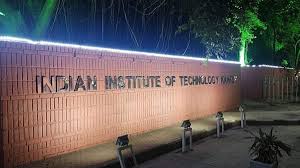
The Startup Incubation and Innovation Centre (SIIC) at IIT Kanpur hosted Abhivyakti 2026, its flagship deep-tech startup summit, on March 20–21, 2026 . The event brought together over 150 innovative startups from across India, alongside investors, mentors, policymakers, industry leaders, and researchers, creating a dynamic platform for transforming frontier research into global solutions .
The Summit at a Glance
Themed “Transforming Frontier Research into Global Solutions,” Abhivyakti 2026 was designed to accelerate the journey of research-driven innovations from laboratories to commercial markets . The two-day event transformed the IIT Kanpur campus into a vibrant hub of collaboration, featuring:
- Startup Exhibition: A showcase of cutting-edge technologies across multiple deep-tech sectors
- Thematic Panel Discussions: Conversations on bridging the gap between innovation and commercialization
- Founder Interactions: Opportunities for entrepreneurs to share their journeys and challenges
- Investor Engagement Sessions: Dedicated spaces for startups to pitch to venture capitalists and angel investors
- Networking Sessions: Informal meetups fostering connections between founders, mentors, and industry leaders
The summit was inaugurated by K. Vijayendra Pandian, Commissioner of Kanpur and Vice-Chancellor of Chandra Shekhar Azad University of Agriculture & Technology, alongside Vinay Kumar Pathak, Vice-Chancellor of Chhatrapati Shahu Ji Maharaj University, Kanpur .
The Startups: A Spectrum of Deep-Tech Innovation
The 150+ participating startups represented an extraordinary range of technology domains, reflecting the breadth and depth of India’s deep-tech ecosystem . The sectors covered included:
| Sector | Focus Areas |
|---|---|
| AI/ML | Artificial Intelligence, Machine Learning applications |
| MedTech | Medical devices, diagnostics, healthcare solutions |
| CleanTech | Renewable energy, sustainability, climate tech |
| Defence & Aerospace | Indigenous defence systems, space technology |
| Cybersecurity | Data protection, network security, encryption |
| FinTech | Financial inclusion, digital payments, insurtech |
| IoT & Semiconductors | Connected devices, chip design, hardware innovation |
| AgriTech | Precision farming, supply chain, crop management |
This diversity underscored a critical point: India’s deep-tech ecosystem is no longer confined to a few sectors. It is flourishing across the entire spectrum of scientific and engineering disciplines, with innovators tackling everything from clean energy to semiconductor design, from medical devices to space technology .
Bridging the “Valley of Death”
One of the central themes of Abhivyakti 2026 was addressing the long-standing challenge of translating research into viable businesses . Panel discussions brought together experts from academia, industry, and venture capital to explore practical strategies for:
- De-risking early-stage technologies: How to reduce the technical and market risks that make investors hesitant to back deep-tech ventures
- Improving access to capital: Exploring alternative funding models, including CSR-driven funding, that can support startups through the critical early phases
- Navigating regulatory hurdles: Particularly in sectors like MedTech, where compliance and approval pathways can be complex and time-consuming
- Building translational research frameworks: Creating systems that help move innovations from academic labs to commercial applications
As Dr. Ashutosh Agnihotri, CEO of SIIC IIT Kanpur, noted ahead of the event: “By bringing together founders, investors, industry leaders, and policymakers, the platform creates opportunities for promising technologies to move beyond research and make a meaningful impact” .
Action on Day Two: Cohorts, MoUs, and Global Ambitions
The second day of the summit shifted focus from discussion to action. New startup cohorts were introduced, several memoranda of understanding (MoUs) were signed, and hands-on workshops gave founders practical guidance to move their ideas forward .
A significant emphasis was placed on helping Indian startups think beyond domestic markets. Sessions explored strategies for preparing deep-tech ventures for global expansion, including understanding international regulatory environments, building cross-border partnerships, and positioning India-made innovations for worldwide markets .
A dedicated women-led panel also brought attention to the need for greater inclusivity in the deep-tech space, highlighting the importance of supporting female founders and creating equitable opportunities within the innovation ecosystem .
The Pitch Battle: Celebrating India’s Best Deep-Tech Talent
One of the most anticipated moments of Abhivyakti 2026 was the Pitch Battle, where selected startups presented their innovations before a distinguished jury of investors and industry experts .
The winners, announced at the conclusion of the summit, were:
- First Place: Aethrone Aerospace Pvt. Ltd. – a testament to the growing strength of India’s aerospace and defence innovation sector
- Second Place: Gofloat Technologies Pvt. Ltd.
- Third Place: Simactricals Pvt. Ltd.
These winners not only gained recognition but also demonstrated the high caliber of deep-tech innovation emerging from India’s startup ecosystem.
Beyond the Summit: The SIIC IIT Kanpur Legacy
Abhivyakti 2026 was more than a standalone event. It was the latest chapter in a long history of nurturing entrepreneurship at IIT Kanpur. SIIC, established in 2000, is one of India’s earliest and largest technology business incubators, with over 25 years of experience supporting technology-driven startups .
With a portfolio of more than 500 startups to date, SIIC has played a pivotal role in fostering innovation across sectors including defence, aerospace, fintech, healthcare, and sustainable development . Abhivyakti serves as the annual showcase of this ecosystem, bringing together the brightest minds to celebrate and accelerate progress.
The institute’s commitment to innovation was further underscored by the recent HCLTech partnership with IIT Kanpur, announced in February 2026, which aims to convert cutting-edge research into real-world pilots and scalable solutions for Global Capability Centers (GCCs) . This collaboration, focused on AI, robotics, and cybersecurity, exemplifies the kind of academia-industry partnerships that Abhivyakti seeks to foster.
The PFRDA Hackathon Connection
Abhivyakti 2026 also served as a showcase platform for winners of the PFRDA Hackathon 2026, a national innovation initiative organized by the Pension Fund Regulatory and Development Authority in collaboration with SIIC IIT Kanpur . The hackathon focused on “Digital Trust & Tech Innovation in the Pension Ecosystem,” with winning teams receiving the opportunity to present their solutions at Abhivyakti 2026 . This integration highlights how SIIC leverages its events to amplify promising innovations across domains.
Why This Matters for India’s Deep-Tech Ecosystem
Abhivyakti 2026 represents a critical piece of India’s evolving innovation infrastructure for several reasons:
1. Bridging Academia and Industry
Premier institutes like IIT Kanpur are increasingly serving as bridges between fundamental research and commercial application. Abhivyakti provides a structured platform for this translation, ensuring that the intellectual capital developed in academic labs does not remain confined to journals and patents but instead evolves into scalable ventures .
2. Creating a Self-Sustaining Innovation Cycle
By bringing together startups, investors, policymakers, and industry leaders, Abhivyakti helps create a virtuous cycle: research excellence feeds startup innovation, which attracts investment, which enables commercialization, which generates returns that can be reinvested in further research .
3. Strengthening Regional Innovation Ecosystems
Events like Abhivyakti are not just about IIT Kanpur. They draw participation from across India, connecting founders from diverse regions with the capital and mentorship they need to scale. This helps decentralize innovation, ensuring that deep-tech excellence can emerge from any corner of the country .
4. Aligning with National Ambitions
The sectors showcased at Abhivyakti—defence, aerospace, semiconductors, AI, clean energy—align directly with India’s strategic priorities under missions like the India Semiconductor Mission, National Green Hydrogen Mission, and the push for defence indigenization . By nurturing startups in these areas, Abhivyakti contributes directly to the goal of Atmanirbhar Bharat.
The Road Ahead
As Abhivyakti 2026 concluded, the conversations it sparked, the partnerships it forged, and the deals it initiated will continue to reverberate through India’s deep-tech ecosystem. The startups that exhibited, the investors who listened, and the mentors who advised will carry forward the momentum, working to ensure that India’s most promising research-led innovations achieve their full commercial and societal potential.
For the founders who participated, the summit offered not just visibility but validation—a recognition that the hard work of building deep-tech ventures is essential to India’s future.
The Final Word
Abhivyakti 2026 at IIT Kanpur was more than a two-day summit. It was a powerful demonstration of India’s deep-tech potential. By bringing together over 150 startups, leading investors, and key policymakers, the event showcased the extraordinary diversity of innovation emerging from the country’s research institutions.
More importantly, it addressed the critical challenge of moving from lab to market, offering practical pathways for startups to navigate the valley of death and scale into globally competitive enterprises. As India positions itself as a leader in deep-tech innovation, platforms like Abhivyakti will play an increasingly vital role in ensuring that the ideas born in its laboratories find their way into the world, creating impact, jobs, and economic growth.
The spirit of innovation that Dr. Ashutosh Agnihotri spoke of—the spirit that IIT Kanpur has long championed—was on full display. And if Abhivyakti 2026 is any indication, the future of Indian deep-tech is extraordinarily bright.