
The Ultimate Edge: Agnikul and NeevCloud Forge India’s Orbital AI Future
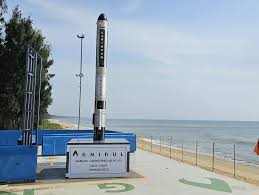
What was once the domain of science fiction is now a concrete, fast-tracked engineering reality. Agnikul Cosmos, the Chennai-based rocket innovator, has deepened its path-breaking partnership with NeevCloud to launch India’s first orbital AI data centre, with a proof-of-concept mission targeted before the end of 2026. This is not an incremental step in India’s space journey; it is a paradigm leap. By transforming a traditionally discarded rocket upper stage into a sovereign, reusable AI compute node, these two Indian startups are challenging the fundamental architecture of global cloud computing—proving that the next frontier of the internet will be fought in orbit, and India intends to be a primary architect.
This collaboration represents the confluence of two powerful Indian tech narratives: the democratization of space access through frugal, innovative rocketry, and the pursuit of sovereign AI infrastructure free from terrestrial constraints and foreign dependency. The result is a potential new asset class—orbital edge compute—that could redefine latency, security, and scale for the entire global AI industry.
The Technical Masterstroke: From Orbital Debris to Sovereign Asset
Agnikul’s patented extendable upper stage is the linchpin of this mission. Traditionally, a rocket’s final stage is single-use; it delivers its payload and becomes space debris. Agnikul has reimagined this component as a long-duration, configurable satellite bus with its own power, telemetry, and attitude control. By integrating NeevCloud’s AI inference modules directly onto this stage, the companies achieve something unprecedented:
- Shared Infrastructure Economics: The cost of the “satellite” is effectively absorbed by the launch vehicle itself. This eliminates the need for a separate, expensive satellite build and deployment, making the unit economics of an orbital data centre radically more viable than traditional models.
- Optimized Payload Integration: NeevCloud’s sovereign AI stack is being hardened and miniaturized to operate in the extreme thermal and radiation environment of low-Earth orbit (LEO), a significant engineering challenge that the teams are actively solving.
- Scalable Constellation Blueprint: The pilot mission will validate the core systems—power management, thermal control in vacuum, radiation-tolerant computing, and low-latency data downlink—paving the way for a planned constellation of hundreds of such nodes by 2027-28.
The Strategic Imperative: Why AI Needs the High Ground
The partnership’s value proposition rests on three pillars that address critical gaps in the current AI infrastructure paradigm:
1. Sovereign Security for Sensitive Intelligence:
For applications in defence, border surveillance, maritime domain awareness, and critical national infrastructure, transmitting vast datasets to a foreign-owned terrestrial cloud is a non-starter. An orbital node under Indian control, where data is processed and never leaves the spacecraft, offers unparalleled security. It creates a sovereign, shielded processing layer for the nation’s most sensitive AI workloads.
2. The Latency Arbitrage for a Billion Users:
NeevCloud’s data points are stark: over 80% of the world’s population lives more than 200 milliseconds from the nearest major terrestrial AI data centre. This latency excludes vast populations from real-time, immersive AI applications. An orbital layer at 500km altitude can dramatically collapse this distance, delivering AI inferencing to remote regions, ocean-going vessels, and airborne platforms with previously impossible speed.
3. The Economics of Energy and Cooling:
Terrestrial AI data centres are voracious consumers of power and water. A single large training cluster can use as much electricity as a small city. Space offers 24/7 solar power (in sun-synchronous orbits) and the ultimate heat sink—the vacuum of space itself. This structural advantage, once qualified, could make orbital inference significantly cheaper and greener than its earthbound counterpart for specific high-volume, low-latency tasks.
The Global Context: India’s Asymmetric Entry
Globally, concepts for space-based data centres are being explored by entities like Microsoft (Project Natick for underwater), Google, and the European Commission’s ASCEND project. However, these remain largely conceptual or are focused on simple storage. Agnikul and NeevCloud are moving directly to operational AI inferencing in LEO, with a hardware demonstration scheduled within the year. This is a decisive, asymmetric move.
By leveraging Agnikul’s indigenous semi-cryogenic, 3D-printed engine technology and NeevCloud’s deep expertise in building sovereign cloud stacks, India is effectively leapfrogging the decades of infrastructure build-out that terrestrial AI compute has required. It is a direct application of the “frugal innovation” and “bottom-up AI” principles that have defined India’s most successful tech missions, applied to the final frontier.
The Roadmap: From Proof-of-Concept to Perpetual Constellation
The coming months are critical. The teams are engaged in:
- Payload Qualification: Subjecting commercial-off-the-shelf (COTS) and custom AI accelerators to rigorous radiation and vacuum testing.
- Orbital Manoeuvring Validation: Demonstrating the extended upper stage’s ability to maintain precise attitude and orbit for sustained periods, not just a single deployment.
- Commercial Model Definition: Moving beyond the pilot to a viable, scalable business model where AI inference is sold “as-a-service” from orbit to enterprise and government clients globally.
India’s Orbital Compute Moment
The Agnikul-NeevCloud partnership is the most potent symbol yet of India’s transition from a technology consumer to a technology architect for the 21st century. It demonstrates that Indian deep-tech startups are no longer satisfied with building components of a global system; they are redesigning the system itself.
By embedding sovereign AI into the infrastructure of space, they are staking a claim to the ultimate high ground of the information age. The 2026 pilot mission will not just be a test of hardware and software; it will be a test of India’s ambition to build, own, and operate the intelligent layer of our planet’s future. If successful, the answer to “where is the cloud?” will no longer be a distant server farm in Virginia or Singapore. It will be a constellation of Indian ingenuity, circling the globe, bringing intelligence to the edge of everywhere.
Stay tuned to Startup Point for mission-critical updates as Agnikul and NeevCloud race toward their 2026 launch window.