
Jensen Huang’s AI Jobs Prophecy: Why Data Centers Are India’s New Economic Engine
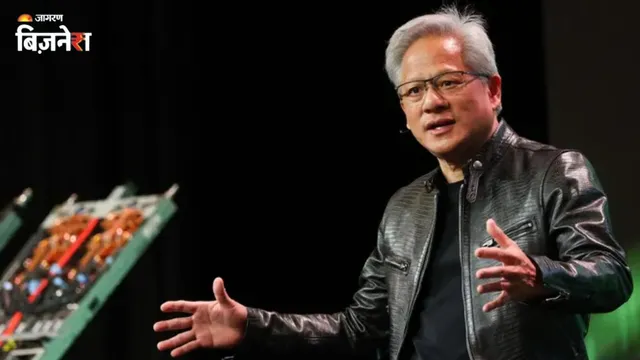
In a powerful endorsement of India’s strategic direction, Nvidia CEO Jensen Huang has framed the nation’s AI infrastructure build-out not merely as a technological necessity, but as the cornerstone of its next great employment boom. Speaking at 3DExperience World 2026 in Houston, Huang drew a direct parallel to the internet’s transformative impact, predicting that the construction and operation of AI data centers could generate job creation on an “incredible” scale. This vision, coming from the architect of the global AI hardware revolution, reframes the conversation: AI is not just a potential job displacer; it is the foundation for a massive, multi-layered jobs pyramid.
Huang’s analysis cuts to the core of modern economic development. He highlighted that a single large data center directly employs 5,000–10,000 people in construction—electricians, plumbers, steelworkers, and engineers. But the profound impact lies in the upstream and downstream ripple effects, creating a vast “derivative workforce” across supply chains, operations, and the innovation ecosystem it enables.
Deconstructing the AI Jobs Pyramid: From Concrete to Code
Huang’s prediction outlines a multi-tiered employment ecosystem:
1. The Construction & Hardware Layer (The Foundation):
- Direct Jobs: Tens of thousands in skilled construction, electrical work, and HVAC installation for data center campuses.
- Upstream Manufacturing: Boosting demand for Indian-made server racks, power distribution units, cooling systems, and cabling, revitalizing ancillary manufacturing sectors.
- Logistics & Supply Chain: Creating jobs in transportation, warehousing, and supply chain management for the massive components required.
2. The Operations & Sustainment Layer (The Engine Room):
- Facility Management: High-skilled roles in data center operations, energy management, security, and network maintenance.
- Hardware Maintenance & Upgrades: Technicians for servicing advanced computing hardware (GPUs, servers) and managing intricate cooling systems.
- Renewable Energy Integration: Jobs in building and managing the solar/wind farms and energy storage required to power these energy-intensive facilities sustainably.
3. The Innovation & Application Layer (The Value Creation):
This is where Huang’s internet analogy shines brightest. The data center is the digital factory. Its output (compute power) fuels:
- AI Research & Development: Thousands of AI researchers, data scientists, and ML engineers to build foundational models and applications.
- The Startup Ecosystem: Affordable, scalable compute access enables a new wave of AI-native startups in healthcare, agriculture, education, and finance, creating product, sales, and marketing roles.
- Enterprise Transformation: Every major Indian corporation will need teams to integrate and manage AI, creating roles for AI strategists, ethicists, and implementation specialists.
The Policy Catalyst: Budget 2026’s 20-Year Tax Holiday
Huang’s comments gain immense weight when paired with India’s recent policy move. Budget 2026’s 20-year tax holiday for foreign data center operators (extending to 2047) is a strategic masterstroke. It directly addresses Huang’s call to “welcome global providers while building domestic capacity.” This incentive, projected to attract over $200 billion in investment, creates a virtuous cycle: global capital builds infrastructure, which creates jobs and lowers compute costs, which fuels domestic innovation (by companies like Yotta, Reliance, and Adani), which in turn creates more high-value jobs.
The Sovereign Imperative: AI Factories as Strategic Assets
Huang rightly identifies AI infrastructure as essential as “water or electricity.” For India, this isn’t just about economic growth; it’s about technological sovereignty. Building “sovereign AI factories” ensures that:
- Critical Data Stays Onshore: Sensitive data in healthcare, defense, and finance is processed within national jurisdiction.
- Innovation is Not Bottlenecked: Domestic researchers and startups aren’t constrained by foreign cloud costs or access restrictions.
- India Shapes Global AI: With control over its own compute base, India can influence the development of AI standards and ethics, particularly for the Global South.
Implications for Regions Like Uttar Pradesh
For states like Uttar Pradesh, aggressively pitching itself as an investment destination, this is a clarion call. Attracting even one major AI data center campus (imagine in Prayagraj or the Noida-Greater Noida belt) could be a regional economic catalyst, creating thousands of local jobs and positioning the state as a hub for downstream AI applications in its strong sectors like agriculture and logistics.
The Challenge: Skilling for the AI-Infra Economy
The looming question is skilling. Can India rapidly produce enough data center technicians, AI engineers, and GPU programmers to meet this demand? This requires a national effort, blending ITI curricula updates, industry-academia partnerships, and large-scale upskilling programs.
Conclusion: Building the Physical Internet of Intelligence
Jensen Huang has provided a powerful, tangible vision for India’s AI future. He has moved the discussion from abstract algorithms to concrete, job-creating infrastructure. The AI revolution, in this framing, will be built not just in software, but in steel, silicon, and sweat.
India now has a historic opportunity: to leverage its demographic dividend to construct the physical backbone of the intelligent world. By doing so, it can capture the jobs of building, operating, and innovating upon this new utility, ensuring that the wealth generated by AI is widely shared and foundational to its developed nation aspirations. The blueprint is clear. The capital is incentivized. The race to build the AI-powered economy—one data center, and one job, at a time—is on.
Stay tuned to Startup Point for analysis of specific data center investments, their regional impact, and the rise of the AI infrastructure workforce.