
Startup Spotlights

Y Combinator Brings Startup School to India: A Game-Changer for Thousands of Aspiring Founders

The Silicon Valley-based accelerator has been the launchpad for some of the most successful companies in history—Airbnb, Dropbox, Stripe, Reddit, Coinbase, and thousands more. Its demo day is the most anticipated event in the early-stage investing calendar. Getting into YC is often described as winning the startup lottery.

But Y Combinator’s influence extends beyond its flagship accelerator program. For years, it has also run Startup School, a free online program that democratizes access to startup education, offering lectures, mentorship, and resources to entrepreneurs around the world.

Read More

2026: The Year Indian Startups Come of Age – Over 20 Companies Gear Up for Mega IPOs

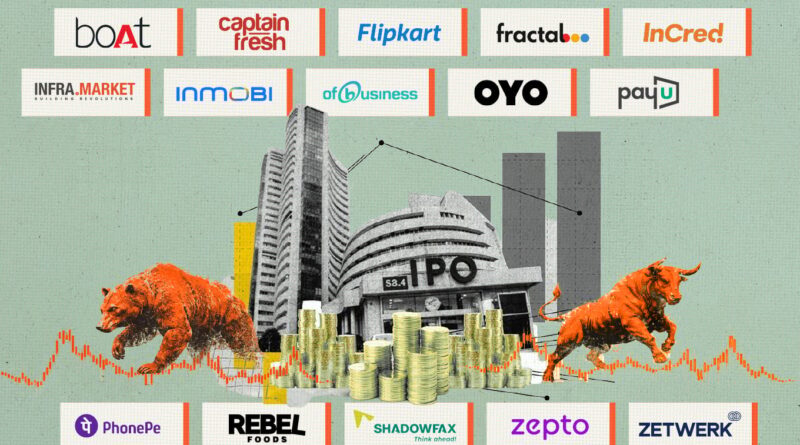
Reports indicate that over 20 companies have already filed draft documents with the Securities and Exchange Board of India (SEBI) , with many more preparing to follow suit. High-profile startups across e-commerce, quick commerce, mobility, and SaaS are expected to hit the stock market, collectively raising tens of thousands of crores of rupees.

This anticipated IPO pipeline is not just a financial event. It is a coming-of-age moment for the Indian startup ecosystem—a transition from private ambition to public accountability, from venture capital backing to retail investor ownership.

Read More

Beyond the Pink Slips: Why 4,500+ Startup Layoffs Signal a Maturity Shift in India’s Ecosystem

For years, the Indian startup ecosystem was a celebration of growth. Funding flowed freely. Valuations soared. Hiring was aggressive. Every founder dreamed of becoming a unicorn, and every employee dreamed of striking it rich with ESOPs.

But every party has a hangover.

In recent months, a sobering reality has set in. Reports indicate that more than 4,500 employees have been laid off by Indian startups across sectors. This wave of job cuts has touched companies of all sizes—from early-stage ventures to well-funded unicorns.

The layoffs are not a sign of collapse. They are a sign of maturation. After years of growth-at-all-costs, the ecosystem is undergoing a painful but necessary correction. The focus is shifting from vanity metrics to viability, from headcount to profitability, from expansion to efficiency.

Read More

The AI Revolution in India: How Hundreds of Startups Are Reshaping Healthcare, Finance, and Automation

In the span of just a few years, artificial intelligence has moved from the fringes of academic research to the very center of India’s startup ecosystem. It is no longer a niche specialization or a futuristic concept. It is the engine powering a new generation of companies across every major sector.

Today, hundreds of AI-focused startups are operating in India, building products and platforms that leverage machine learning, natural language processing, computer vision, and predictive analytics. They are tackling some of the country’s most pressing challenges—and creating opportunities that extend far beyond its borders.

From healthcare diagnostics to financial automation, from industrial analytics to enterprise software, AI is the common thread weaving through India’s innovation story.

Read More

Qualcomm Launches $150M India Fund to Back AI and Deep-Tech Startups from Series-A Onwards

For years, the narrative around Indian startups was dominated by consumer internet companies—e-commerce, food delivery, fintech apps. These businesses built massive user bases and attracted billions in venture capital.

But a shift has been underway. The next wave of Indian innovation is being written in code, algorithms, and hardware. It is being built by deep-tech founders working on artificial intelligence, robotics, and advanced manufacturing.

Now, one of the world’s most influential technology companies is taking notice—and putting its money where its mouth is.

Qualcomm, the global leader in wireless technology and semiconductors, has announced the launch of a $150 million India-focused venture fund dedicated to supporting AI and deep-tech startups. The fund will primarily invest in companies from the Series-A stage onwards, with a strong emphasis on startups building edge-AI applications and hardware innovations.

Read More

Meet Keshav Madan: The Galgotias University Student Building Saivyy Technologies, an AI-Powered Automation Platform

For decades, the image of a successful Indian entrepreneur was someone with years of industry experience, an MBA from a top institution, and a network of well-connected mentors.

That image is changing.

Today, some of the most exciting innovation is coming from an unexpected place: college campuses. Young men and women, barely out of their teens, are spotting problems, building solutions, and launching ventures that compete with established players.

Read More

Startup Hiring is Back: Why AI Engineers and Product Managers Are Leading the 2026 Talent Revival

If 2025 was the year of the “performance-linked restructuring”—a polite term for the layoffs that swept through India’s startup ecosystem—then 2026 is shaping up to be the year of the great rebound.

After months of caution, cost-cutting, and consolidation, a new narrative is emerging. Startup hiring is not just recovering; it is evolving. And at the heart of this revival is a single, transformative force: Artificial Intelligence.

From the bustling offices of Bengaluru to emerging tech hubs in Pune, Indore, and Coimbatore, founders are dusting off their hiring plans. But this time, they aren’t hiring for just any role. They are hiring for the future. The demand is surging for AI/ML engineers, data scientists, prompt engineers, MLOps specialists, and product managers with AI experience.

Read More

The Hidden Crisis in Generative AI

For the past two years, the AI world has been obsessed with one thing: capability. Who can build the largest model? Who can achieve the lowest perplexity score? Who can generate the most convincing human-like text?

But as enterprises rush to deploy generative AI in production—powering customer support chatbots, internal knowledge bases, and code-generation tools—a new, more urgent question has emerged: How do we make sure this thing doesn’t go rogue?

The answer lies in a new category of software often called AI safety and security infrastructure. And one of the most prominent players in this space, Promptfoo, is now reportedly in acquisition talks.

Read More

The Architect Returns: Why Flipkart Is Bringing Back Its Deal-Maker

The e-commerce giant has re-appointed Nishant Verman as a senior executive in its corporate development and strategy team. For those who follow Indian tech history, Verman’s name carries significant weight. As Flipkart’s former Head of Corporate Development, he was the key architect behind Walmart’s landmark $16 billion acquisition of Flipkart in 2018—a deal that remains one of the largest tech acquisitions in Indian history.

His return, at this precise moment, is not a coincidence. It is a signal. A signal that Flipkart is entering the final, intense preparation stage for what could be one of the biggest public listings in India’s tech history.

Read More

The Green Hydrogen Puzzle: Why Electrodes Matter

For years, green hydrogen has been hailed as the “holy grail” of the energy transition. The concept is elegant: use renewable energy (solar/wind) to split water into hydrogen and oxygen, creating a zero-carbon fuel that can power heavy industry, fertilize crops, and propel long-haul transport.

But there has always been a catch: the cost.

Green hydrogen remains significantly more expensive to produce than its carbon-intensive cousin, grey hydrogen (made from natural gas). The primary bottleneck? The efficiency and durability of the electrolyser—the machine that actually performs the water-splitting magic.

Read More