Haryana Is Planting a Startup in Every District
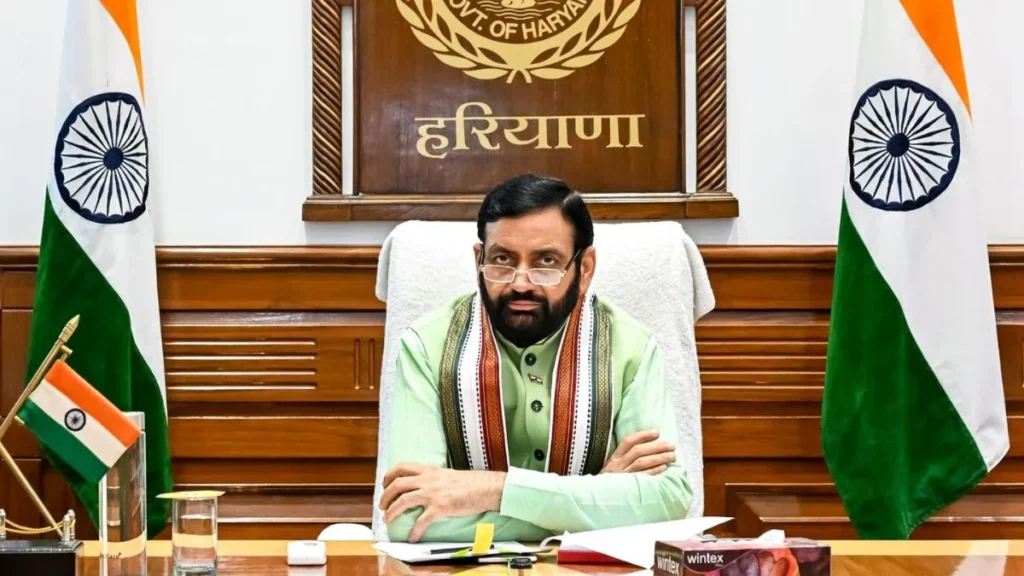
For years, the Indian startup story has been a metropolitan affair. Bengaluru, Delhi NCR, Mumbai—the geography of innovation was predictable, concentrated, and exclusionary. Haryana is challenging that narrative. In July 2026, Chief Minister Nayab Singh Saini unveiled a comprehensive vision to extend the state’s startup ecosystem to every district, backed by a multi-layered strategy of policy reform, capital deployment, and institutional expansion .
From 45 to 30: Simplifying the Bureaucracy
The most immediate change is structural. The state is revamping its single-window clearance system to reduce business approval timelines from 45 to 30 days initially, with a target of halving the process over time . But beyond speed, the government is institutionalising support at the grassroots level. Dedicated Startup Nodal Officers are being appointed in every district to provide “handholding support”—guiding entrepreneurs through registration, permissions, financial assistance, and government schemes . An 18-member district-level clearance committee under the deputy commissioner has been constituted for MSME units, ensuring that approvals are expedited at the local level rather than stuck in state headquarters .
The Capital Engine: ₹2,000 Crore Fund of Funds
Haryana is backing its ambition with serious financial commitment. The state is establishing a ₹2,000 crore Haryana Startup Fund of Funds to improve access to capital for emerging enterprises, building on an existing ₹250 crore Atmanirbhar Startup Venture Fund . The government is also encouraging private investors to co-invest through a fund of funds structure, aiming to position Haryana as a major hub of innovation and entrepreneurship .
This financial architecture has already generated momentum. The state’s incubator network, under the Startup Haryana umbrella, has invested in over 2,200 startups across sectors and recorded 272 exits as of mid-2026 . The incubator ecosystem has catalysed over 170 startups, generated revenue of nearly ₹7 crore, and sensitised over 54,000 students to choose entrepreneurship as a career .
Skill Centres in 100 Rural Clusters
The district-level push is not limited to urban centres. Haryana will identify 100 high-potential rural clusters to establish specialised skill centres aligned with local industries . These centres will cater to sectors such as bead manufacturing in Hisar, handloom in Panipat, agricultural equipment and dairy in Karnal, and pottery in Yamunanagar .
Under the PM SETU Scheme, Industrial Training Institutes (ITIs) will introduce new courses, and at least 25 ITIs will be adopted by private companies to improve industry linkages, with a target of ensuring employment for over 70% of trainees . The government will also incentivise over 2,000 MSMEs adopting rooftop solar systems, integrating sustainability into the industrial growth agenda .
Decentralising the IT Ecosystem
To prevent Gurugram from becoming the sole beneficiary of Haryana’s technology ambitions, the government has identified Kurukshetra, Hisar, and Rohtak as alternative IT hubs . The plan is to develop them on the lines of Technopark, Thiruvananthapuram, creating a distributed technology infrastructure that attracts investment and talent to non-metro districts.
This is complemented by the Haryana AI Mission 2026, backed by approximately ₹470 crore from the World Bank, which includes establishing the Global Artificial Intelligence Centre in Gurugram and the Haryana Advanced Computing Facility in Panchkula . The mission aims to train 50,000 youth over three years in emerging technologies, further strengthening the talent pipeline across the state.
The Numbers So Far
The results of this multi-year effort are visible. Haryana now ranks as the 7th largest state in India in terms of startups, home to over 9,100 DPIIT-registered ventures and 19 unicorns out of the country’s total 117 . What is particularly notable is the gender composition: approximately 45-50% of these startups are led by women founders, reflecting the government’s commitment to raising women’s participation in entrepreneurship to 60% .
A Blueprint for Distributed Innovation
Haryana’s district-level startup push reflects a broader understanding: innovation does not need to be centralised to thrive. By simplifying approvals, deploying capital, building rural skill infrastructure, and decentralising its IT ecosystem, the state is creating conditions for entrepreneurship to flourish beyond its metropolitan core.
The challenge now is execution. The transition from policy announcements to on-ground outcomes—ensuring that Startup Nodal Officers are effective, that rural skill centres deliver quality training, and that capital reaches the right founders—will determine whether this becomes a template for other states or remains an ambitious but underutilised programme. For now, the signal is clear: the startup story is no longer just about Gurugram—it is about every district in Haryana.