
The $9.5 Crore Question: Why This IIT Bombay AI Researcher Left Meta to Build His Own Future
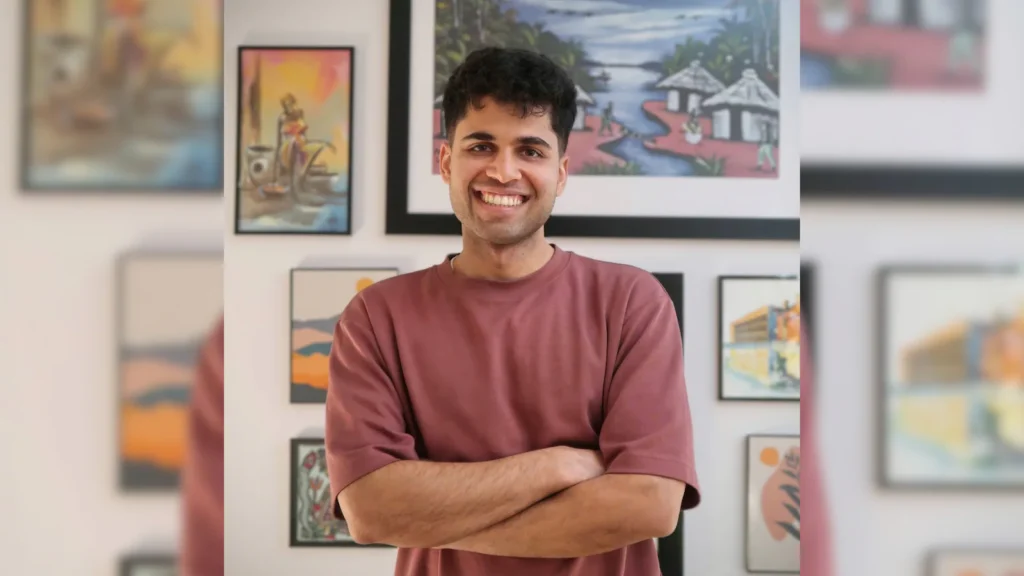
When an IIT Bombay graduate with offers from the world’s most elite AI labs chooses to walk away from a compensation package worth significantly more than $1 million, it is not just a career decision. It is a signal. Rishabh Agarwal, a researcher with a PhD in artificial intelligence from Mila and a résumé that includes Google Brain, DeepMind, and Meta, has become the latest symbol of a fundamental shift in India’s talent landscape: the brightest minds are increasingly betting on entrepreneurship over even the most lucrative corporate roles .
The Offer That Wasn’t Enough
Agarwal joined Meta’s Superintelligence Labs in April 2025, enticed by the promise of working on reinforcement learning scaling and reasoning for large language models . The compensation package was staggering. While initial social media posts claimed he had turned down a $1 million (approximately ₹9.5 crore) annual offer, Agarwal himself corrected the record: “Meta’s offer was an order of magnitude higher than $1 million” .
And yet, he walked away.
“After 7.5 years across Google Brain, DeepMind, and Meta, I felt the pull to take on a different kind of risk,” Agarwal wrote on X when announcing his departure . He quoted Meta CEO Mark Zuckerberg’s own words: “In a world that’s changing so fast, the biggest risk you can take is not taking any risk” .
A Career Built at the Frontier of AI
Agarwal’s credentials are the kind that make recruiters at tech giants compete fiercely. After securing an All India Rank of 33 in the JEE, he completed his B.Tech in Computer Science from IIT Bombay with a GPA of 9.67 . He then earned a PhD in Artificial Intelligence from Mila—one of the world’s premier AI research institutes—under the mentorship of renowned researchers Aaron Courville and Marc Bellemare .
His industry career reads like a tour of the AI world’s most prestigious institutions: Google Brain (2018–2023), where he advanced deep reinforcement learning and won a NeurIPS Outstanding Paper Award; Google DeepMind (2023–2025), where he worked on self-improvement techniques for large language models; and finally, Meta Superintelligence Labs . He also contributed to Google’s flagship AI models, Gemma and Gemini . Alongside his industry roles, he has served as an Adjunct Professor at McGill University .
Building an AI Scientist
Instead of continuing at Meta, Agarwal joined Periodic Labs as a founding member . The startup is not building another chatbot or AI tool. It is attempting something far more ambitious: creating an “AI scientist” capable of generating hypotheses for real-world scientific experiments .
Periodic Labs pairs its AI models with autonomous physical laboratories. The AI reads scientific literature, generates a hypothesis, and commands robotics to run chemical synthesis or materials testing. It learns from both successes and failures—what the company calls a “physical reward function”—allowing it to iterate faster than humanly possible . The goal is to accelerate breakthroughs in materials science, medicine, and physics . Backed by investors including NVIDIA and Jeff Bezos, the startup has raised a substantial seed round, reportedly in the range of $300 million .
A Pattern of Bold Choices
Agarwal is not alone. Across India’s tech ecosystem, a growing number of top-tier engineers are choosing the uncertainty of entrepreneurship over the security of Big Tech. In 2024, Akshat Prakash left what he called his “dream job” at Apple’s Siri team to co-found Camb.ai, a speech and translation AI startup, with his father . “I could’ve continued to work at Apple, but I would’ve become and remained a cog in the system,” he said . His startup later raised around $4 million in seed funding .
Earlier this year, Aashna Doshi, a 23-year-old Indian-origin software engineer at Google, quit to build Bounty, an outcome-based AI marketplace . She described her decision in stark terms: “Financial security is comfortable, but it can also be a trap” . “The scarier version of this decision wasn’t leaving Google. It was staying and always wondering what could have been” .
The Broader Shift
Agarwal’s choice reflects a maturation of India’s startup ecosystem. Top talent from premier institutions like IIT Bombay are no longer viewing entrepreneurship as a risky fallback but as a preferred path to impact and ownership . The availability of venture capital, the success of unicorn exits, and the growing recognition that Indian-origin founders can build globally competitive deep-tech ventures have all contributed to this shift.
In a world where AI is reshaping industries at breakneck speed, the engineers who build the platforms—not just the ones who work for the platforms—are the ones who will define the future. For Rishabh Agarwal, the math was simple: a nine-figure salary could buy comfort, but it could not buy the chance to build something that might change the world .