
The Great Indian IPO Pipeline: Why Zetwerk and Rentomojo’s Sebi Approvals Signal a New Era for Startup Exits
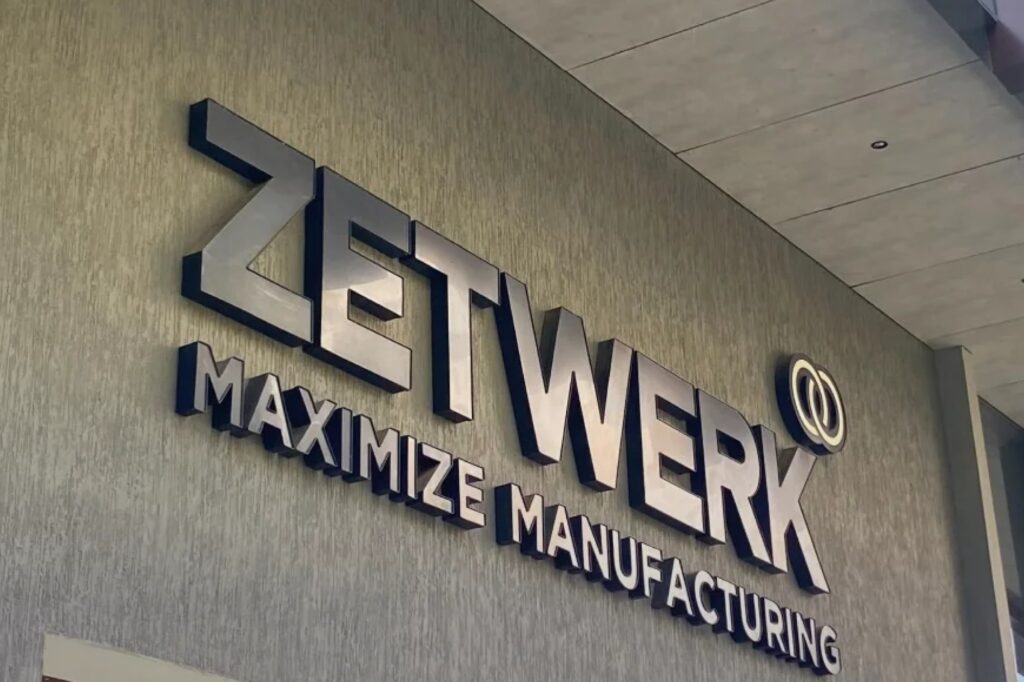
When a contract manufacturing unicorn and a furniture rental platform receive regulatory approval to go public on the same day, it means something bigger is happening. On July 9, 2026, Zetwerk and Rentomojo both secured final observations from the Securities and Exchange Board of India (Sebi), clearing the way for their initial public offerings . These are not just two isolated listings; they represent an accelerating pipeline of venture-backed startups preparing to test the public markets in what could become a landmark year for India’s innovation economy.
Zetwerk: A ₹5,000 Crore Manufacturing Pivot
Zetwerk’s journey from a 2018 startup connecting enterprises with manufacturing suppliers to a public-bound company with over $2 billion in projected revenue is a case study in what happens when deep operational technology meets scale . The Bengaluru-based platform has built a proprietary operating system that manages sourcing, production planning, supplier coordination, and project execution across a network spanning India, the United States, Mexico, and Europe . Its clients include names like Samsung, Volvo, and Honeywell, and its business now extends into end-to-end industrial manufacturing, laptops, wearables, and printed circuit boards .
The proposed IPO is expected to raise between ₹4,000 crore and ₹5,000 crore, comprising both a fresh issue and an offer for sale by existing investors . Investors including Peak XV Partners, Accel, Lightspeed, Khosla Ventures, Baillie Gifford, and IndiGo co-founder Rakesh Gangwal are poised to partially exit . The company’s performance has improved sharply: gross merchandise value stood at ₹12,798 crore in FY25, and its net loss narrowed to ₹371 crore from ₹918 crore the previous year . Co-founder and CEO Amrit Acharya expects revenue to cross $2 billion in FY26, driven in part by manufacturing contracts linked to AI data centres . The issue is being managed by Kotak Mahindra Capital, Goldman Sachs, Morgan Stanley, HSBC, and JM Financial .
Rentomojo: The ₹150 Crore Subscription Economy Test
Rentomojo’s approval is equally significant, though its scale is more modest. The furniture and home appliances rental platform, founded in 2015, has filed for an IPO comprising a fresh issue of ₹150 crore and an offer for sale of about 2.84 crore shares by its founder Geetansh Bamania and investors .
The numbers reveal a business that has built real operational density: as of September 2025, Rentomojo had 2.28 lakh live subscribers across 22 cities, supported by 21 warehouses, 67 experience stores, and a portfolio of more than 7.28 lakh live products . The fresh issue proceeds will be used for repayment of borrowings and lease rentals for warehouses and experience stores, as well as general corporate purposes . Major investors including Accel, Chiratae Ventures, Madison India Capital, Edelweiss Private Equity, and several Japanese investors—GMO Payment Gateway and Mitsui Sumitomo Insurance Venture Capital—plan to pare their stakes . Motilal Oswal Investment Advisors is managing the issue .
A Pipeline Unlike Anything We’ve Seen
What makes these approvals noteworthy is the context. According to a recent Redseer report, approximately 210 new-age companies are preparing to launch IPOs in the next 24 months . Over 150 already have Sebi’s approval . The market capitalization of listed new-age companies is expected to grow from $150 billion in July 2026 to $1 trillion by 2030, increasing their share of India’s equity market from 3% to 11.5% . The second half of 2026 alone is projected to see $19–22 billion in IPO proceeds, surpassing the entire previous year .
This matters because the bar has shifted. As the Redseer report notes, the IPO market no longer rewards pure growth; it demands profitable growth . Domestic institutions have become the primary buyers of new-age company listings, and 14 out of 20 recent listings have been priced profitably . This suggests a maturation of both the startup ecosystem and the public market’s appetite for tech-driven business models.
A Confidence Signal for the Innovation Economy
The Zetwerk and Rentomojo approvals come as other startups like Zepto, Cultfit, and Oyo’s parent PRISM are gearing up for potential listings . After a subdued first half of 2026 amid geopolitical uncertainty and valuation concerns, these clearances signal that the IPO market is rebounding . They also demonstrate that India’s capital markets regulator is willing to approve a diverse set of business models—from manufacturing platforms to subscription rental services—provided they meet listing standards.
For India’s innovation economy, the message is clear: the startup-to-public-market pipeline is no longer aspirational; it is operational. The question is not whether these listings will succeed, but how many more will follow.