Can AI Unlock India’s $30 Trillion Economy by 2047? Experts Weigh In
As India charts its course toward Viksit Bharat 2047, the ambition is clear: a $30 trillion economy that would place the country among the world’s most prosperous nations . The path to that destination, however, is contested. Will India achieve this through traditional manufacturing, demographic dividends, and infrastructure investment? Or will technology—specifically artificial intelligence—act as the multiplier that turns ambition into reality?
For an increasing number of policymakers, technologists, and international institutions, the answer is unequivocal: AI is the key.
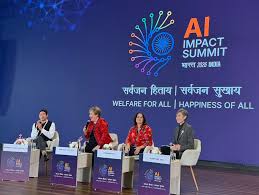
At the AI Impact Summit 2026 in New Delhi, International Monetary Fund (IMF) Managing Director Kristalina Georgieva made a powerful case. She said that India’s goal of becoming a developed nation (Viksit Bharat) can be achieved with AI-driven innovation and expansion, and that the country could harness AI to achieve its target of a $30 trillion economy by 2047 .
“Faster economic growth is fantastic for creating more opportunities and more jobs.”
— Kristalina Georgieva, IMF Managing Director
The Window of Opportunity: Three to Five Years
While the 2047 target is two decades away, technologists warn that the critical decisions must be made much sooner. Umakant Soni, CEO of Bengaluru-based Bharat1.AI (a company building a humanity-centric AI ecosystem with Nvidia as a partner), argues that India’s path to the $30 trillion goal hinges not on manufacturing or demographics alone, but on getting its AI strategy right in a narrow three-to-five-year window—before global platforms consolidate their dominance .
Soni’s warning is stark: without the right AI strategy, India’s economy could plateau at $8–10 trillion by 2047 even as its population grows to around 1.6 billion—a scenario in which the demographic dividend fades rather than compounds . He was blunt about the competitive threat: “If we don’t get this right in the next three to five years, we could be subsumed by either China or the US” .
This sense of urgency is driving a coordinated push across government, industry, and academia to build what Soni calls a “distinctly Indian playbook for AI development”—one shaped by India’s linguistic diversity (22 official languages), its 600,000+ villages, and its fragmented healthcare system, rather than imported wholesale from Silicon Valley or Shenzhen .
The Education Imperative: Building a Future-Ready Workforce
The single most significant barrier to AI-led growth is not compute or capital—it is talent. According to NASSCOM, India had an AI talent pool of 600,000–650,000 in 2024, but needs over 1.25 million AI professionals by 2027, at a 15% CAGR .
The government is responding with a comprehensive strategy spanning school education, higher education, and skilling.
School Education Initiatives:
- CBSE offers a 15-hour AI skill module from Class VI onwards and AI as an optional subject in Classes IX-XII .
- NCERT has incorporated AI content in Class XI Computer Science and Informatics Practices textbooks and used AI/ML to translate Grade 1-2 textbooks into 22 Indian languages .
- The SOAR initiative (Skilling for AI Readiness) by the Ministry of Skill Development and Entrepreneurship offers three 15-hour student modules and a 45-hour “AI for Educators” teacher module .
Higher Education:
- The UGC has included AI in the 2022 undergraduate curriculum, alongside 3D machining, big data analysis, machine learning, drone technologies, and deep learning .
- AICTE has incorporated AI components in all IT-related courses and conducts hackathons to promote AI awareness .
- Perplexity has partnered with AICTE to provide support to 40 million students across 14,000 institutions .
Skilling at Scale:
| Programme | Target/Scale | Key Features |
|---|---|---|
| PMKVY 4.0 | 36,584 trained in AI (as of June 2025); 45% women | AI Career for Women Initiative targeting 8,000 girls |
| SkillSaksham (MSDE + Microsoft) | 200 ITIs; 10,000+ candidates | 1,200 hours AI training + 400 hours Advanced AI |
| FutureSkills PRIME (NASSCOM) | 16.29 lakh+ enrolled | 500+ courses in AI, Big Data, Cloud Computing |
| YUVA AI For All (IndiaAI Mission) | Target: 1 crore citizens | Free, self-paced foundational AI course (4-4.5 hours) |
The government has also announced India’s first AI-enabled state university pilot at Chaudhary Charan Singh University (CCSU), Meerut, in collaboration with Google Cloud. Union Minister Jayant Chaudhary described the project as a “living laboratory” for AI-led reforms, with personalised AI tutors, skill-gap analysis tools, and automated administrative systems that will be scaled across affiliated colleges .
Georgieva emphasised that countries must focus on revamping education to emphasise “learning how to learn” and supporting workers in rapidly changing labour markets. “When I look at the Indian economy, what bodes well is that you have undertaken deep structural reforms in tax, in labour markets — to make India more competitive, more prepared for this world of AI,” she said .
The Governance Frontier: AI in Public Service Delivery
The integration of AI into governance is moving from pilot projects to mission-mode deployment. The government’s DIKSHA platform (Digital Infrastructure for Knowledge Sharing) already uses AI for inclusivity: AI-based keyword search in videos and a read-aloud feature for visually impaired students .
The iGOT Karmayogi Bharat Platform offers government officials digital learning courses in AI, data analytics, and digital transformation, preparing the civil service for an AI-augmented future .
More significantly, the IndiaAI Mission (launched in March 2024 with a budget of ₹10,371.92 crore over five years) is funding specific application development projects across priority verticals, including:
- DeepFlood (IIT Delhi): Rapid flood inundation mapping using SAR data and deep learning models
- Voice Fusion AI: Assistive support for individuals with Specific Learning Disabilities in multiple Indian languages
- Responsible AI projects across machine unlearning, synthetic data generation, bias mitigation, and explainable AI frameworks at IITs and NITs
The Education to Employment and Enterprise Standing Committee, proposed in Budget 2026, will identify priority areas with potential for high services-sector growth, employment, and exports, while also gauging the impact of emerging technologies, including AI, on jobs and skill requirements .
The Industrial Imperative: AI-Driven Productivity
For India to reach a $30 trillion economy, industrial productivity must increase dramatically. Former Niti Aayog CEO and G20 Sherpa Amitabh Kant argues that growth will be powered by technology, innovation, and improved governance . “Embracing technological disruption, promoting entrepreneurship, and investing in human capital will drive productivity across manufacturing, healthcare, and agriculture,” he said .
The government’s industrial AI strategy is visible across multiple sectors:
Semiconductors: The India Semiconductor Mission (ISM) 2.0, announced in Budget 2026-27 with a provision of ₹1,000 crore for FY26-27, focuses on producing equipment and materials, developing full-stack domestic chip intellectual property, and strengthening supply chains . Indian engineers are now designing chips at advanced nodes, including 2nm technology, contributing to cutting-edge semiconductor development for global markets.
Electronics Components: The allocation for the Electronics Components Manufacturing Scheme has been increased from about ₹22,000 crore to ₹40,000 crore in Budget 2026-27 .
IT Services: India’s IT services exports exceed USD 220 billion. To provide tax certainty and support industry growth, the Budget proposes grouping software development services, IT-enabled services, knowledge process outsourcing, and contract R&D services under a single category with a common safe harbour margin of 15.5%, while raising the threshold for availing safe harbour from ₹300 crore to ₹2,000 crore .
The IMF’s Georgieva noted that India is “creating opportunities” across the board. Digital public infrastructure and digital IDs (Aadhaar) are so beneficial that the country has become “a different country – dynamic and open for economic opportunities” .
The Infrastructure Backbone: Cloud and Data Centres
AI at scale requires massive computational infrastructure. Budget 2026-27 introduced a landmark policy: a tax holiday till 2047 for eligible foreign cloud service providers operating through India-based data centre infrastructure .
Under this framework:
- Income of foreign cloud service providers from global cloud operations routed through India-based data centres will not be subject to Indian taxation
- Services to Indian customers must be delivered through an Indian reseller entity, ensuring domestic transactions remain within the tax net
- The exemption applies from Tax Year 2026-27 to Tax Year 2046-47
This long-term policy certainty is designed to attract the massive capital investments required for AI infrastructure. According to UNCTAD, data centres accounted for more than one-fifth of global greenfield project values in 2025, with announced investments exceeding USD 270 billion .
Major commitments already in place:
| Company | Investment | Focus |
|---|---|---|
| $15 billion | AI hub and data centre infrastructure | |
| Microsoft | $17.5 billion (by 2029) | AI and cloud footprint |
| Amazon | $35 billion (additional) | Cloud and retail operations |
| Digital Connexion (Reliance-Brookfield-Digital Realty) | $11 billion (by 2030) | 1-gigawatt AI-focused data centre in Andhra Pradesh |
| Adani Group | Up to $5 billion | AI data centre project with Google |
Industry estimates indicate that India’s cloud data centre capacity has reached around 1,280 MW and is projected to grow four to five times by 2030, driven by capital investments of more than $30 billion .
However, scaling up data centre capacity in India may prove difficult, as patchy power availability, high electricity costs, and water scarcity pose key constraints for energy-intensive AI workloads . These challenges could slow construction and raise operating costs for cloud providers. Rohit Kumar, founding partner of New Delhi-based The Quantum Hub, noted that while the push is likely to attract more private investment, “execution challenges around power availability, land access, and state-level clearances remain” .
The Deep-Tech Trinity: AI, Quantum Computing, and Semiconductors
Amitabh Kant argues that three technologies will supercharge India’s growth: AI, quantum computing (QC), and semiconductors . By 2030, AI is projected to contribute a staggering $15.7 trillion to the global economy. QC will bring a paradigm shift in problem-solving capabilities, and advancements in semiconductor manufacturing are platforming digital transformations .
To achieve Viksit Bharat by 2047, Kant argues, India must drive innovation in these three critical technologies and shift to a product-driven economy—or risk falling behind globally .
Current challenges in deep-tech commercialisation:
| Metric | Value |
|---|---|
| Patent applications filed (2023) | 90,300 |
| Patents granted | Over 1 lakh |
| IPR payments (2014-24) | $14.3 billion |
| IPR receipts (2014-24) | $1.5 billion |
The imbalance—India pays approximately 10 times more for IP usage than it receives—indicates a broader difficulty in translating domestically generated knowledge and innovation into commercially viable products and services .
Kant proposes a two-track programme to attract top-tier scientific talent:
- Track 1: Attract 250 distinguished academics from the top 100 global universities over five years, requiring them to spend at least six months annually at an Indian host institution, with a one-time research budget of up to $1 million
- Track 2: Create 1,000 research sabbaticals for academics from the top 200 global universities, supported by a one-time $100,000 budget
He notes that other countries like China have succeeded at this task. Through initiatives like the Young Thousand Talents (YTT) programme, China successfully enticed 20,000 scientists of Chinese descent to return by offering substantial financial incentives and research support .
The Job Displacement Risk: A Counterweight
For all the optimism about AI-driven growth, the IMF’s Georgieva offered a sobering counterweight. She cautioned that AI poses significant risks for employment. Nearly 40 per cent of jobs could be affected by AI. Referring to IMF-backed studies, she said this number could shoot up to 60 per cent in advanced economies .
Entry-level and routine jobs are particularly vulnerable. Several top tech leaders have cautioned that entry-level white-collar jobs are vulnerable in the next couple of years due to the expansion of superior AI models which can think on their own .
This is why the government’s emphasis on skilling, reskilling, and upskilling is not merely an educational policy—it is an economic necessity. The Budget 2026’s proposed high-powered panel on services will specifically gauge the impact of emerging technologies, including AI, on jobs and skill requirements .
Georgieva emphasised that “countries must focus on revamping education to emphasise learning how to learn and supporting workers in rapidly changing labour markets” .
The Strategic Choice: Build or Consume?
The central question underlying India’s AI strategy is whether the country will be a creator of AI technologies or a consumer of AI platforms developed elsewhere.
Soni of Bharat1.AI is emphatic: “We have to build a different ecosystem — there’s no two ways about it. And we have to build it fast. Otherwise, we will get drowned in this wave of innovation and capital backing it. Just like we lost in social networking, we could lose here as well” .
He argues that India’s approach to AI should be structurally different from Western or Chinese models—shaped by the country’s own context rather than imported wholesale. That context includes 22 official languages, over 6 lakh villages, and a fragmented healthcare system that differs sharply from the environments in which dominant AI models were trained .
On infrastructure, Soni cautions against replicating the US model of massive, centralised GPU clusters, arguing it is both energy-intensive and ill-suited to India’s conditions. He favours a distributed model instead: “Instead of centralising massive GPU clusters, we should focus on distributed intelligence — humans plus AI at the edge” .
The Final Word: A Defining Decade
India’s $30 trillion economic vision by 2047 is not guaranteed. It requires sustained policy execution, massive infrastructure investment, and—most critically—a workforce equipped for an AI-augmented economy.
The window of opportunity, as Soni warns, is narrow: three to five years before global AI platforms consolidate their dominance . If India succeeds in building its own AI ecosystem—one tailored to its linguistic diversity, its developmental challenges, and its distributed population—the payoff could be transformative. If it fails, it risks becoming a consumer of technologies built elsewhere, capping its growth potential at $8–10 trillion .
Georgieva’s assessment is that India is well-positioned due to its “youthful, innovative population and strong public digital infrastructure, which has lowered barriers to entrepreneurship and adoption of new technologies” . But she also notes that the country must revamp education, support workers through transitions, and maintain the structural reforms that have made it more competitive.
The next three to five years will determine which path India takes. As Kant noted, “With adaptive leadership and a focus on turning challenges into opportunities, India can realise this vision” . The pieces are in place—the policy framework, the talent base, the digital infrastructure, and the investor interest. The question is whether India can execute with the speed and coordination that the moment demands.