Swish Raises $38 Million in Series B, Valuation Doubles to $139 Million as Quick Food Delivery Heats Up
In the fast-paced world of Indian quick commerce, 10-minute delivery has become the new battleground. From groceries to electronics to fashion, the promise of ultra-fast fulfillment has reshaped urban consumption habits. But one category has proven particularly challenging: fresh, cooked food.
While snacks and beverages have found their place in quick delivery models, full meals—prepared fresh, delivered hot, and consistently high-quality—have remained a difficult puzzle to solve. Larger platforms like Swiggy, Zepto, and Zomato have experimented with and scaled back their ultra-fast food offerings due to operational complexity and cost pressures .
Yet, in this challenging landscape, one Bengaluru-based startup has not only survived but thrived. Swish has just announced a $38 million Series B funding round, more than doubling its valuation in just one year and signaling strong investor confidence in its vertically integrated, hyperlocal food delivery model .
The Funding Round: $38 Million Led by Global Investors
The Series B round was jointly led by Hara Global Capital and Bain Capital Ventures, with continued participation from existing investor Accel India . The round also included venture debt participation from Alteria Capital and Stride Ventures .
The funding values Swish at approximately $139 million post-money, more than double the $60 million valuation at which it raised its Series A round in March 2025 . With this latest infusion, Swish’s total funding since its inception in 2024 now stands at $54 million across three rounds in just 14 months .
Speaking about the round, Saanya Ojha, Partner at Bain Capital Ventures, highlighted the broader opportunity: “India’s quick-commerce adoption has reset consumer expectations around speed, reliability, and convenience. Swish is targeting a much larger, more frequent surface area: breakfast, snacks, tea, late-night, and solo meals. The opportunity is not just to take share within food delivery, but to expand the market by bringing more daily consumption online” .
The Swish Model: Owned Kitchens, Hyperlocal Delivery
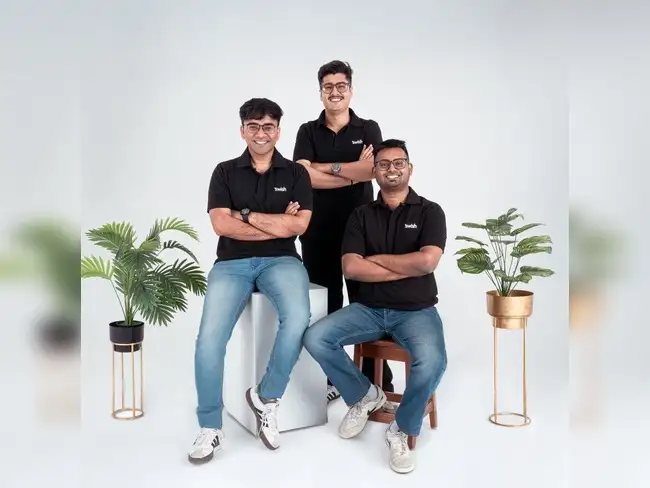
Founded in 2024 by Aniket Shah (CEO), Ujjwal Sukheja, and Saran S. , Swish operates a fundamentally different model from traditional food delivery platforms .
Unlike aggregators like Zomato or Swiggy that connect consumers with third-party restaurants, Swish is a vertically integrated operator. The company:
- Owns and operates its own cloud kitchens located within a 1-2 kilometer radius of customers
- Manages its own supply chain and sourcing of fresh ingredients
- Controls the last-mile delivery through its own fleet
- Develops its own technology platform for ordering and kitchen operations
This end-to-end control allows Swish to maintain quality, consistency, and margins that aggregators struggle to achieve. As Aniket Shah explained, “Owning every part of the decision in the food supply chain is the only way to serve high-quality, fresh food in 10 minutes to consumers at scale” .
The company’s delivery promise is built around hyperlocal clusters—dense urban neighborhoods where kitchens can be strategically positioned to serve a concentrated customer base. Swish currently operates across multiple Bengaluru neighborhoods, including HSR Layout, Bellandur, Koramangala, and Sarjapur, with a delivery radius of approximately 1 kilometer .
Growth Trajectory: From 5,000 to 20,000 Daily Orders
Swish’s growth metrics have been impressive. The startup now processes over 20,000 orders daily, a significant increase from approximately 5,000 orders just four months ago .
The company’s menu has expanded beyond its initial focus on snacks and beverages to include breakfast, mini meals, protein-rich options, festive specials, and desserts—over 200 items in total . The average order value ranges between ₹200 and ₹250 (approximately $2–$3 USD), making it accessible to a broad urban consumer base .
Perhaps most notably, Swish has achieved high repeat usage. The company reports that its top customers order more than 10 times per month, with the primary user demographic being urban consumers aged 20–35 who order across multiple daily occasions—from breakfast and afternoon snacks to late-night cravings .
Importantly, Swish has also achieved profitability at the cluster level for its established kitchens, though the company has not disclosed specific margin figures .
The Competitive Landscape: A Challenging Market
Swish’s funding success comes at a time when the ultra-fast food delivery segment has proven challenging for even the largest players .
Zomato discontinued its 15-minute offering, Quick, within months of launch due to operational challenges. While it continues to operate Bistro, a separate quick food delivery vertical, the service has incurred significant losses in recent quarters .
Zepto Cafe has scaled down its operations due to challenges around sourcing products and a shortage of trained staff to run its kitchens following increased competition from rivals .
Swiggy recently shut down Snacc, its dedicated 10-minute snacking app, after almost a year due to profitability pressures. It continues to operate Bolt, which partners with select restaurants to deliver snacks and beverages in approximately 15 minutes .
Yet, despite these challenges, Swish has found favor with investors. The company competes directly with Blinkit’s Bistro, Swiggy’s Bolt, and Zepto Cafe, as well as larger cloud kitchen operators like Rebel Foods and Curefoods . Its ability to raise substantial capital while incumbents struggle suggests that investors see value in Swish’s focused, vertically integrated approach.
The Broader Quick Commerce Context
Swish’s funding is part of a larger story unfolding in India’s quick commerce sector. According to brokerage firm Bernstein, the quick commerce industry is projected to expand by approximately 80% in 2026, driven by continued dark store additions, deeper discounting, and wider category offerings .
The sector has become a three-horse race between Blinkit (owned by Eternal), Swiggy Instamart, and Zepto, with new entrants like Flipkart Minutes, Amazon Now, and JioMart also making aggressive moves . Bernstein predicts Blinkit will maintain its market leadership in 2026, citing stronger operating metrics and lower cash burn .
However, the food delivery segment specifically has seen slower growth in recent years. The overall food delivery space has shown green shoots over the last few quarters, with listed players Zomato and Swiggy reporting higher-than-anticipated increases in their gross order value (GOV) .
What’s Next for Swish?
With $38 million in fresh capital, Swish has ambitious expansion plans. The company will use the funds to :
- Scale operations across more neighborhoods in Bengaluru, going deeper and denser in existing markets
- Enter new cities, with Delhi-NCR and Mumbai as priority targets
- Invest in kitchen automation to support faster, more consistent delivery
- Strengthen supply chain infrastructure to ensure fresh ingredients reach kitchens efficiently
- Expand the team across operations, technology, and management
“We are live in some parts of Bengaluru. We will continue to go deeper and denser here while expanding across other cities like Delhi NCR,” said Aniket Shah . The company also plans to continue investing in automated equipment used in its kitchens to cook fresh food efficiently .
The Road Ahead
Swish’s $38 million Series B round represents a significant vote of confidence in the 10-minute fresh food delivery model. While larger platforms have struggled to make the economics work, Swish’s vertically integrated, hyperlocal approach appears to be resonating with both customers and investors.
The company’s focus on daily consumption occasions—breakfast, lunch, snacks, late-night—rather than just special-occasion meals positions it to capture a larger share of the food delivery market. And with proven cluster-level profitability and strong repeat usage metrics, Swish has demonstrated that the model can work.
As the quick commerce sector continues to evolve and consolidate, Swish’s ability to execute its expansion plans while maintaining quality and unit economics will determine whether it can emerge as a lasting player in India’s competitive food delivery landscape.