The Art of Managing Hype: Deepinder Goyal’s “Temple” Clarification Highlights a New Era for Indian Hardware

In a masterclass of community engagement and expectation management, Zomato co-founder and CEO Deepinder Goyal has officially addressed the swirling online frenzy around his enigmatic new venture, codenamed “Temple.” On December 30, 2025, Goyal took to X to clarify a crucial point: despite rampant speculation and viral “leaks,” the product is not for sale, not available for pre-order, and still deep in active development.
His statement was a calibrated blend of transparency and tantalizing restraint:
“Temple is still under active development. It’s not ready for sale, and there are no pre-orders open. A lot of the excitement is based on early prototypes and speculation. We’re working hard to get it right — more updates when it’s actually ready. Thank you for the love and patience!”
This move does more than just quell premature excitement; it strategically resets the narrative, transforming uncontrolled rumor into curated anticipation.
Decoding the “Temple” Phenomenon
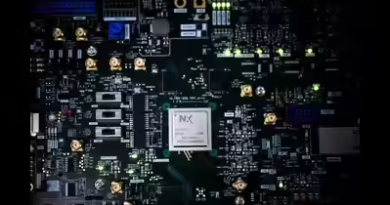
The “Temple” saga is a modern case study in organic, founder-led marketing. Goyal’s cryptic social media posts, teaser images of sleek, unfamiliar hardware, and the subsequent emergence of convincing-looking “leaked” pre-order pages created a perfect storm of speculation. The internet, armed with scant details, collectively theorized that “Temple” could be anything from an AI-powered wearable and a smart productivity accessory to a revolutionary personal health device.
This viral cycle underscores a significant shift: Indian tech founders, particularly those with massive public profiles, can now command global attention for projects far outside their established domains. Goyal, synonymous with food delivery, has successfully pivoted public curiosity toward a mysterious hardware moonshot.
The Founder’s Tightrope: Harnessing Hype Without Getting Burned
Goyal’s clarification is a strategic necessity in today’s hyper-connected market. Unchecked hype can be a liability, leading to community backlash if expectations are not met. By stepping in, he:
- Maintains Trust: He establishes honest communication, ensuring that when “Temple” does launch, the audience remembers his integrity.
- Controls the Timeline: He reclaims the narrative, ensuring the product will be judged on its actual merits and launch readiness, not on speculative benchmarks.
- Sustains Engagement: The message doesn’t shut down curiosity; it fuels it. The phrase “working hard to get it right” promises future value, keeping the community invested in the journey.
This balance—“patience + hype control”—is a powerful combo for founders navigating the long, challenging road of product development, especially in hardware.
The Bigger Signal: India’s Hardware + AI Inflection Point
Beyond the PR playbook, the “Temple” phenomenon reinforces a substantive trend defining the 2025-26 tech landscape: Indian innovators are moving decisively into AI-native hardware. After years of software dominance, founders are now leveraging advances in manufacturing, supply chain maturity, and embedded AI to build tangible, world-class products.
This shift is evident across the ecosystem:
- Rising Investment: As part of the broader deep-tech surge, hardware-software convergence is attracting serious capital.
- Founder Ambition: Seasoned entrepreneurs like Goyal are betting their reputations and capital on complex physical products, signaling confidence in the sector’s viability.
- Global Attention: The international buzz around “Temple” demonstrates that the world is watching, ready to consider Indian startups as originators of must-have consumer tech, not just service apps.
This aligns with the Atmanirbhar Bharat vision of fostering comprehensive product innovation and building manufacturing and design prowess.
What “Temple” Represents for the Ecosystem
“Temple” is more than a device; it’s a symbol of a maturing ecosystem. It represents:
- Founder Freedom: Successful entrepreneurs are exploring bold, passion-driven “second acts” beyond their initial ventures.
- Consumer Tech Ambition: The ambition to create aspirational, brand-defining hardware for global consumers.
- The Long Game: A public commitment to the painstaking process of hardware development—where getting it right trumps getting it out fast.
As we await genuine updates, the “Temple” episode has already delivered valuable lessons in community building, hype management, and the exciting, uncharted direction of Indian tech innovation. When the veil finally lifts, the product will enter a market primed by a story expertly told.