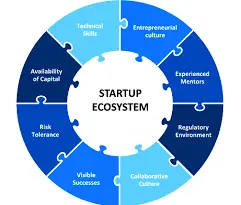

India’s Startup Ecosystem in 2025: A Mosaic of Maturity, Deep Tech, and Resilient Growth

As 2025 draws to a close, India’s startup ecosystem stands transformed. The breakneck, hype-driven growth of past years has given way to a more deliberate, resilient, and mature phase. The narrative has shifted from chasing unicorns at any cost to building sustainable ventures that solve hard problems, leveraging deep technology, and fostering inclusive growth. This evolution—marked by disciplined capital, AI-led innovation, and a powerful geographic and sectoral diversification—positions India not just as a large market, but as a foundational player in the global technology landscape of the future.
The New AI Blueprint: From Hype to Hard-Tech Application
Artificial Intelligence remains the dominant theme, but its story in India has matured significantly. The funding numbers are telling: deep-tech and AI startups attracted a record $1.55 billion across 264 deals in 2025. However, capital is no longer chasing buzzwords. It is flowing decisively into applied AI—solutions that leverage machine learning to tackle specific, large-scale challenges in healthcare diagnostics, precision agriculture, logistics optimization, and enterprise productivity.
This shift is amplified by an unprecedented infrastructure push from global tech leaders. Commitments exceeding $55 billion from Google, Microsoft, and Amazon are building the hyperscale data centers and cloud regions that will serve as India’s digital nervous system. This influx does two critical things: it dramatically slashes latency for domestic AI applications, and it embeds India into the global AI supply chain, moving the country from a consumer to a co-creator of sovereign AI capabilities.
Concurrently, a theme of diversification is emerging. Echoing warnings from figures like Bill Gates on overvaluation, savvy investors are broadening their horizons. Significant capital is now targeting robotics, quantum computing, climate tech (cleantech), and biotechnology—sectors where India’s engineering talent and scientific prowess can create globally competitive, defensible businesses.
The Funding Landscape: Discipline, Decentralization, and Dry Powder
The overall funding dip to $10.5 billion (down 17% year-on-year) is not a sign of weakness, but of strategic correction. The era of “spray and pray” investing is over. Capital is now concentrated in fewer, higher-quality startups, with investors demanding clearer paths to profitability and robust unit economics.
| Funding Trend | 2025 Manifestation & Implication |
|---|---|
| Selective, Larger Cheques | Capital is focused on proven models. Late-stage funding remained resilient for scaling winners, while early-stage stayed steady for validated ideas. |
| The Rise of State Power | Karnataka (₹518 Cr policy), Maharashtra (MATRIX), Rajasthan (iStart), and Uttar Pradesh (18,500+ startups) are actively building regional hubs, decentralizing innovation beyond Bengaluru/Mumbai. |
| Massive Dry Powder | A 39% year-on-year rise saw $12.1 billion committed to new India-focused funds (e.g., Pontaq ₹700 Cr, Speciale Invest ₹1,400 Cr), ensuring ample fuel for 2026’s best ventures. |
This regional spread is perhaps the most underrated story of 2025. States are competing not with subsidies alone, but with smart capital, sector-specific incubators (Maharashtra’s 200+ planned incubators), and grassroots programs (Tamil Nadu’s rural startup communities). This creates a national network of innovation, reducing systemic risk and tapping into unique local talent and problem sets.
Ecosystem Health: Wealth Creation, Governance, and Resilience
The markers of a maturing ecosystem are visible beyond the balance sheet.
- Real Wealth Creation: The record 42 startup IPOs in 2025 did more than provide exits for founders and VCs; they unlocked life-changing ESOP wealth for early employees at companies like Zepto, Meesho, and Groww. This “wealth creation for the many” is crucial—it rewards risk-taking, retains talent, and creates a new generation of angel investors who understand the startup journey.
- Executive Churn for Scale: A noticeable wave of leadership changes at mature unicorns is not a sign of crisis, but of evolution. Companies are bringing in seasoned professionals with global scale-up experience to navigate the complex shift from hyper-growth to sustainable, profitable enterprise—a positive sign of strategic maturity.
- The Resilience Metric – Fewer Failures: The estimated ~730 startup shutdowns in 2025 represent a significant decline from previous years. This isn’t due to a lack of ambition, but to better-prepared founders, stronger incubator support, and a capital environment that weeds out weak ideas earlier. Failure is becoming more graceful and less frequent.
The Sectoral Surge: Building for Impact and the Future
Investment is flowing into mission-critical areas that align with both global trends and India’s national needs.
- Cleantech & Sustainability ($1.95B funding): Startups in solar tech, green hydrogen, EV infrastructure, and circular economy models are booming, driven by net-zero commitments and the immense commercial opportunity in India’s energy transition.
- HealthTech & MedTech: Beyond telemedicine, innovators are achieving FDA clearances (e.g., Biomoneta’s air disinfection tech) and building advanced platforms for diagnostics, mental wellness, and biopharma.
- Space & Defence Tech: With Digantara’s $50 million raise for space situational awareness and Skyroot’s launch preparations, India’s private space sector is moving from dream to reality, attracting strategic capital and talent.
- Inclusive & Rural Innovation: Nearly half (48%) of recognized startups have a woman director, and hubs in Gujarat, Uttar Pradesh, and beyond are proving that billion-dollar ideas can originate in Tier-2 and Tier-3 cities, solving problems for the next half-billion users.
Conclusion: Building for Endurance in a New Era
India’s startup ecosystem, now a formidable force of over 2 lakh (200,000) recognized startups creating 21 lakh (2.1 million) jobs, has entered its adulthood. The playbook has changed. It is no longer about blitzscaling to a billion-dollar valuation on narrative alone. It is about endurance—building companies with deep technological moats, sustainable business models, and a positive impact on society.
The convergence of the Atmanirbhar Bharat vision for self-reliance and the IndiaAI Mission for strategic capability provides a powerful tailwind. As we look to 2026, the outlook is for deeper AI integration across all sectors, a continued healthy pipeline of IPOs providing liquidity, and the rise of the first generation of unicorns from India’s emerging regional hubs. For founders, the mandate is clear: build with depth, purpose, and resilience. The foundation is set, and the best is indeed yet to come.