India Tightens Digital Governance: 3-Hour Takedown Rules, AI Labeling Mandates, and What It Means for Startups

India’s digital governance framework has entered a new phase. On February 10, 2026, the Ministry of Electronics and Information Technology (MeitY) notified the Information Technology (Intermediary Guidelines and Digital Media Ethics Code) Amendment Rules, which came into force on February 20, 2026 . The changes are sweeping:
- Takedown timelines compressed from 36 hours to 3 hours for unlawful or government-flagged content
- For non-consensual intimate imagery or certain deepfake content, the deadline may be shortened to 2 hours
- Mandatory labelling of AI-generated or synthetically altered content
- Permanent markers required to trace origin of synthetic content
A closed-door meeting with tech giants including Google and Meta lasted barely 30 minutes. MeitY Secretary S. Krishnan left within roughly 20 minutes after reiterating that the government would not reconsider the notified provisions . When industry participants raised concerns about feasibility and freedom of speech, officials pushed back strongly, stating that “private companies must not moral-police the government on this” .
This is not merely a policy adjustment. It is a fundamental shift in how digital platforms will operate in India, with direct implications for startups building AI, social media, and content platforms.
The 3-Hour Takedown Mandate: A New Standard
The reduction from 36 hours to 3 hours is perhaps the most consequential change. For context, the European Union’s Digital Services Act allows for “without undue delay” takedowns, typically interpreted as 24–48 hours. India’s new standard is among the most stringent in any democracy .
What this means for platforms:
Operational Pressure
Platforms must now have 24/7 monitoring and response mechanisms. The compressed timeline eliminates room for contextual analysis, human review, or legal vetting . As one industry representative noted, meaningful compliance requires time—especially where nuance is involved.
Automation vs. Human Oversight
The Internet Freedom Foundation warned that the compressed timeline would transform platforms into “rapid fire censors,” forcing them toward automated over-removal . Anushka Jain, a research associate at the Digital Futures Lab, noted that companies are already struggling with the 36-hour deadline because the process involves human oversight. “If it gets completely automated, there is a high risk that it will lead to censoring of content,” she told the BBC .
Legal Accountability
The rules are now legally binding. Platforms cannot claim advisory status or treat government notices as suggestions. As MeitY officials clarified, “If a takedown order has been given, it is simple—one must take it down” .
For startups, this creates a compliance burden that scales with user volume. A content platform with limited legal and moderation teams now faces the same statutory deadline as Meta or Google—but without the same resources.
AI Content Rules: Labelling, Traceability, and Deepfakes
The amendments also introduce, for the first time, a formal definition of “synthetically generated information” (SGI) , including audio and video that has been created or altered to appear real .
Key mandates for AI platforms:
Mandatory Labelling
Platforms that allow users to create or share AI-generated material must clearly label it. Where technically feasible, they must also add permanent markers to help trace its origin. Companies cannot remove these labels once added .
Automated Detection
Platforms must use automated tools to detect and prevent illegal AI content, including deceptive or non-consensual material, false documents, child sexual abuse material, explosives-related content, and impersonation .
Scope of SGI
The final rules narrowed the definition of SGI largely to audio-visual content, dropping prescriptive watermark size mandates in favour of flexible but prominent labelling .
Industry concerns have centred on the potential for over-moderation affecting satire, parody, journalistic reporting, and political commentary. ShareChat, an Indian social media company, raised concerns about watermarking requirements and sought clarification on cross-posted content. Officials clarified that the obligation remains straightforward: if a takedown order is given, it must be followed .
For AI startups, these rules fundamentally change product design. Any platform that generates or hosts synthetic content must now build labelling and detection mechanisms from the ground up—not as an afterthought.
DPDP Timeline Pressures: The Compliance Squeeze
Beyond the IT Rules, the proposed fast-tracking of the Digital Personal Data Protection (DPDP) Act implementation is adding another layer of pressure .
The government’s reported intention to compress the implementation timeline from the originally assumed 24 months to as little as 12 months, with some provisions signalled for immediate enforcement, has alarmed businesses .
Why this matters for startups:
Disproportionate Costs
Shriram Subramanian, Founder of InGovern Research Services, warned that “mandatory data and log retention requirements, when paired with accelerated timelines, impose high recurring costs that are difficult for both large enterprises and young companies to absorb” . The risk is an uneven playing field where scale eclipses innovation.
Investment Uncertainty
Empower India warned that compressed timelines could disrupt funding flows. Indian startups are expected to attract more than USD 20 billion in funding over the next 12 months, and these investments are premised on regulatory stability . Any sudden changes could hinder progress across sectors including technology, fintech, e-commerce, and healthcare.
Architectural Changes Required
Compliance is not a paperwork exercise. It requires changes to technology architecture, data governance models, internal controls, and organisational culture . For startups that have built systems around a longer runway, a compressed timeline forces rushed adjustments—diverting resources away from growth, hiring, and innovation.
The bright spot: The compliance burden is also creating new opportunities. According to Vinayak Godse, CEO of the Data Security Council of India (DSCI), approximately 30 Indian startups are now working specifically on privacy technologies—building systems for privacy management, governance, anonymisation, and encryption .
The Innovation vs. Regulation Debate
The tightening of digital governance has sparked a sharp debate within India’s startup ecosystem.
The case for stricter rules:
Trust as a Competitive Advantage
A regulated digital ecosystem can build user trust. For startups, this trust translates into higher conversion rates, lower churn, and stronger brand equity. As the government argued, safeguarding users from harmful synthetic content is “a legitimate regulatory objective within India’s constitutional framework” .
Clarity Reduces Ambiguity
Godse argues that the DPDP framework removes ambiguity—and at Indian scale, ambiguity is often more dangerous than constraint. “Data now carries responsibility,” he notes. “And responsibility carries cost. But by forcing companies to define purpose, obtain consent and justify processing, the law provides a clearer legal foundation for using data” .
Global Competitiveness
Higher standards of governance could make Indian startups more attractive to international partners and investors who prioritise compliance and data protection.
The case for caution:
Compliance Costs Could Slow Innovation
Industry associations, including the Internet and Mobile Association of India (IAMAI), the US-India Strategic Partnership Forum (USISPF), and the Broadband India Forum (BIF), have echoed concerns over definitional clarity and implementation timelines . Smaller AI firms allege that compliance costs might add to operational expenses and slow product introductions .
Automated Over-Removal Risks
The 3-hour timeline, combined with mandatory automated detection, raises the risk of over-censorship. Technology analyst Prasanto K Roy described the new regime as “perhaps the most extreme takedown regime in any democracy” .
Early-Stage Ventures at Disadvantage
Unlike large tech firms that can absorb compliance costs, early-stage startups may struggle. The 20 February enforcement deadline offered little time for companies to recalibrate moderation systems, build automated labelling mechanisms, or restructure compliance workflows .
What This Means for Startups
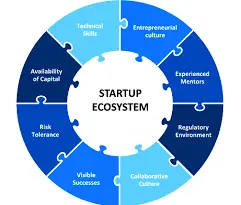
The tightening of digital governance creates both challenges and opportunities for India’s startup ecosystem.
For AI and Content Startups:
- Build compliance in from day one. Labelling, detection, and takedown mechanisms cannot be afterthoughts. They must be architected into the product.
- Invest in automated moderation. The 3-hour timeline makes human-only review impossible for volume platforms. AI-assisted moderation is no longer optional.
- Document everything. The ability to demonstrate compliance will be as important as compliance itself.
For Deep-Tech and Enterprise Startups:
- DPDP compliance is coming. Startups handling user data should begin transitioning to DPDP-aligned architectures now, not later.
- Privacy tech is an opportunity. The 30 startups already building privacy solutions are early movers in what will become a significant market.
- Partnerships with incumbents may require compliance. Larger enterprises will expect their startup partners to meet compliance standards.
For Founders:
- Regulatory risk is now a business risk. Due diligence must include assessment of compliance readiness.
- Fundraising may require compliance proof. Investors are increasingly asking about data governance and regulatory preparedness.
- Differentiate through trust. In a tightly regulated environment, startups that can demonstrate robust compliance will have a competitive advantage.
The Bigger Picture: Balancing Governance and Innovation
The government’s message from the February 2026 meetings was unequivocal: no amendments will be made and no extension of compliance timelines is under consideration .
Yet, as Budget 2026 demonstrates, the government is simultaneously making massive investments in AI infrastructure, semiconductors, and digital public infrastructure . The contradiction is not lost on the ecosystem. The government wants Indian startups to lead in AI, but it also wants them to operate within a tightly governed framework.
The challenge for founders is to navigate this tension. Compliance is not optional; the rules are binding and enforcement is imminent. But within those constraints, there is room for innovation—particularly in privacy-preserving technologies, automated moderation tools, and compliance-as-a-service platforms.
As Godse noted, India’s distinctive advantage lies in scale. Aadhaar, UPI, and the wider India Stack created interoperability at scale. The harder task is pairing that scale with credible privacy protection . Startups that solve this problem will not only survive the new regulatory environment—they will define it.
The Final Word
India’s move toward stricter digital governance is not a temporary policy shift. It is a structural change in how technology platforms will operate in the country. The 3-hour takedown mandate, the AI labelling requirements, and the accelerated DPDP timeline are here to stay.
For startups, this means a higher compliance burden, increased legal risk, and the need to invest in moderation and governance infrastructure. But it also means a more trusted digital ecosystem, clearer rules of the road, and opportunities to build solutions for the compliance challenges that every platform now faces.
The startups that thrive in this environment will be those that treat governance not as a constraint but as a design principle—building products that are safe, transparent, and compliant from the ground up.