Claude’s India Surge: Why Anthropic Sees Bharat as Its Next Great AI Playground
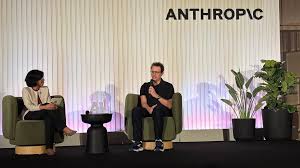
In a powerful validation of India’s accelerating AI momentum, Anthropic has declared the country its second-largest global market, trailing only the United States. Speaking at the company’s Builder Summit in Bengaluru on February 16, 2026, President Daniela Amodei painted a picture of explosive growth, driven by a uniquely Indian combination of deep technical engagement, enterprise ambition, and a developer ecosystem hungry for cutting-edge tools.
This milestone, coinciding with the official opening of Anthropic’s Bengaluru office led by Managing Director Irina Ghose, is far more than a corporate expansion update. It is a strategic signal that India is transitioning from a proving ground for consumer AI to a critical theater for enterprise AI transformation and a core source of global AI talent and innovation.
Decoding the Claude Boom: Why India is Different
The metrics shared by Amodei reveal a usage pattern that sets India apart from other international markets:
1. Developer-First, Deep-Tech Intensity:
Nearly half of Claude’s usage in India involves “computer and mathematical tasks”—coding, debugging, algorithm design, and modernizing legacy systems. This isn’t casual, experimental usage; it’s professional, high-leverage engagement. India’s vast pool of developers (the world’s second-largest) is treating Claude Code as an essential productivity multiplier, not a novelty. This technical intensity is a “much higher share than in most other markets,” positioning India as a global hub for AI-augmented software engineering.
2. Enterprise Adoption at Breakneck Scale:
The list of Indian enterprise partners is a who’s who of transformative, high-volume use cases:
- Air India is integrating Claude Code to accelerate custom software development and weave agentic AI into its complex operations—a critical move for a company in the midst of a massive modernization drive.
- Cognizant is deploying Claude to 350,000 employees globally, leveraging it to modernize legacy infrastructure for its massive client base. This is a template for how AI will reshape the entire IT services industry from its Indian epicenter.
- CRED is reporting 2x faster feature delivery and improved test coverage, demonstrating the tangible ROI of AI-powered development in the fintech sector.
3. Sectoral Breadth, From Fintech to Farming:
Beyond tech and IT, Claude is finding traction in legal tech, healthcare, and even education pilots with nonprofits like Pratham. This indicates a broad-based belief that AI can tackle India’s diverse, large-scale challenges—from personalized learning to agricultural advisory.
The Strategic Play: Bengaluru as the Nerve Center
Anthropic’s decision to establish its Indian headquarters in Bengaluru, with a focus on local hiring, applied AI support, and tailored solutions, is a bet on co-creation, not just consumption.
- Product Feedback Loop: The intense, technical usage by Indian developers creates a rich feedback loop for Anthropic to improve Claude’s coding and reasoning capabilities for global deployment.
- Indic Language & Context Expertise: India’s linguistic diversity and unique use cases (code-mixing, vernacular content, complex document structures) will force Anthropic to innovate in multilingual AI, making its models more robust for the entire Global South.
- A “Huge Playground” for Responsible AI: Amodei’s framing of India as a “playground” for responsible AI experimentation is significant. It suggests that India’s diverse demographics and regulatory framework (DPDP Act) offer a stress-test environment for building AI that is both powerful and ethically aligned.
The Convergence: India’s AI Moment
Anthropic’s surge in India is not an isolated phenomenon. It is occurring at a confluence of powerful national trends:
- Sovereign AI Infrastructure: The government’s $200 billion data centre push is building the compute bedrock.
- Homegrown Model Momentum: Startups like Sarvam AI are proving that world-class, Indic-first models can be built here, creating a competitive and collaborative ecosystem.
- Enterprise Digital Urgency: Companies across sectors are racing to integrate AI, recognizing it as a survival imperative, not just a competitive advantage.
- Talent Density: India’s unmatched pool of STEM graduates provides the human capital for this AI-augmented future.
From Consumer to Co-Creator
Anthropic’s India story is a powerful metaphor for the country’s broader AI trajectory. India is no longer just a massive market where global AI products are consumed. It is becoming a co-creator and a critical testing ground for the next generation of intelligent systems.
The fact that nearly half of Claude’s usage here is deeply technical—developers building, enterprises modernizing, startups iterating—signals that India is powering the AI revolution from within. For Anthropic, this is not just user growth; it is the cultivation of a strategic asset. For India, it is further proof that the path to becoming an AI superpower is being paved with code, by its own builders. The playground is now a construction site, and the future is being engineered in Bengaluru.
Stay tuned to Startup Point for ongoing coverage of Anthropic’s India journey, enterprise AI adoption stories, and the evolution of the domestic developer ecosystem.