From Nature to Code: How Mandrake Bio Is Rewriting Gene Editing with Generative AI
Gene editing has long been constrained by a fundamental limitation: scientists have been working with nature’s tools. Even CRISPR-Cas9, the revolutionary breakthrough that earned a Nobel Prize, relies on enzymes that evolved millions of years ago. Bengaluru-based deep-tech startup Mandrake Bio is challenging this status quo by using generative AI to design gene-editing enzymes from scratch, and it has just raised ₹16 crore to prove its approach works .
A Ground-Up Approach to Gene Editing
Founded in 2025 by Tanay Lohia and ICAR scientist Kutubuddin Molla, Mandrake Bio is building what it calls the “next generation of programmable gene-editing enzymes” . The startup’s key differentiator is its computational-first strategy: instead of modifying naturally occurring enzymes, it designs entirely new proteins using generative AI combined with first-principles biophysics .
The technical approach involves several layers. The company uses open-source protein language models trained on biological sequences, then fine-tunes them using its own metagenomic database . The AI narrows thousands of potential protein candidates, selecting the most promising ones for laboratory validation—significantly reducing the number of expensive wet-lab experiments required . Each design is subsequently validated in the company’s wet lab, creating what the company calls a “tight DBTL (design-build-test-learn) cycle” .
The results have already attracted international recognition. Earlier this year, Mandrake won the global GEM × Adaptyv RBX1 Protein Design Competition at ICLR 2026 in Rio de Janeiro, with its AI platform delivering the only design to receive the competition’s highest “Strong” rating among more than 12,000 submissions .
The Funding Round
The ₹16 crore pre-seed round was co-led by early-stage venture firms Activate and Antler India, with participation from Spectrum Impact, DeVC, and angel investors including biotech veteran Vijay Chandru, entrepreneur Paras Chopra, Sanjiv Rangrass, and Vatsal Dusad .
The capital will be deployed to:
- Expand the AI protein-design platform
- Strengthen the core research team across AI, computational biology, and biophysics
- Scale wet-lab validation of designed editors
The company expects its first wet-lab validation results within the next two months .
Agriculture: The First Frontier
Mandrake is initially focusing on agriculture, where current gene-editing workflows can take seven to eight years to develop an improved crop variety . The startup’s purpose-built editors could potentially reduce that timeline to around two years .
Dr Kutubuddin Molla, the scientific co-founder, is a senior scientist at ICAR-Central Rice Research Institute recognised for pioneering work on compact gene-editing systems in plants . This agricultural expertise is complemented by the team’s work on compact, highly precise gene-editing enzymes that could help develop crops requiring fewer pesticides and fertilisers or better equipped to withstand climate change .
The Medical Opportunity
The same technology could also make gene-editing therapies more accessible. While existing therapies can cost between $2 million and $2.5 million for a single gene edit, better-designed enzymes could eventually bring those costs down to approximately ₹50-60 lakh while also reducing treatment timelines . The business model involves licensing proprietary enzymes to seed companies and therapeutic developers .
Investor Confidence in India’s Biotech Frontier
Pratyush Choudhury, co-founder of Activate, noted: “The next wave of AI breakthroughs won’t come from software alone—they’ll come from applying AI to disciplines such as biology, chemistry, and materials science. Mandrake combines frontier AI with deep biological science to build entirely new gene-editing tools, and we believe India has the talent to build companies at that frontier” .
Nitin Sharma, partner at Antler India, added that the startup is tackling “one of biology’s biggest bottlenecks” by redesigning the gene-editing enzymes themselves rather than building applications on top of existing technologies .
A Model for the Deep-Tech Era
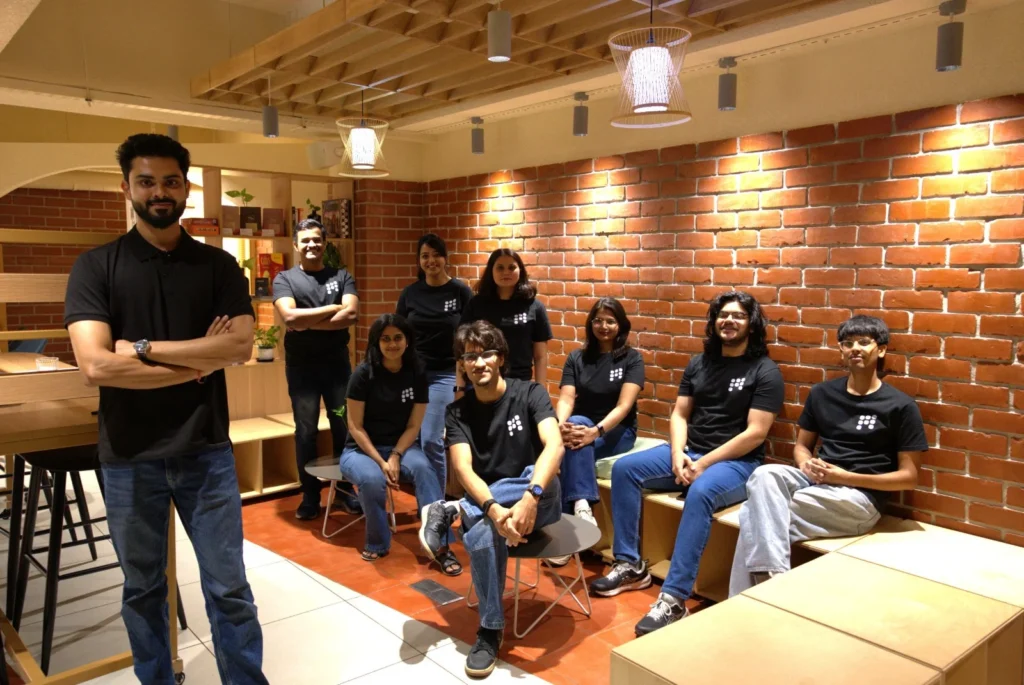
Mandrake’s approach illustrates a broader trend in India’s startup ecosystem: founders are increasingly building foundational technologies that create entirely new capabilities rather than simply applying existing tools to new problems. As co-founder Tanay Lohia put it: “This is the chapter where we start writing biology, not just reading it” . With a 10-member team of AI researchers, computational biologists, and molecular scientists, Mandrake is positioning itself at the intersection of AI and biotechnology—a frontier where India’s next generation of deep-tech companies could compete globally .