I/O Connect India 2026: How Google Is Powering India’s Agentic AI Future
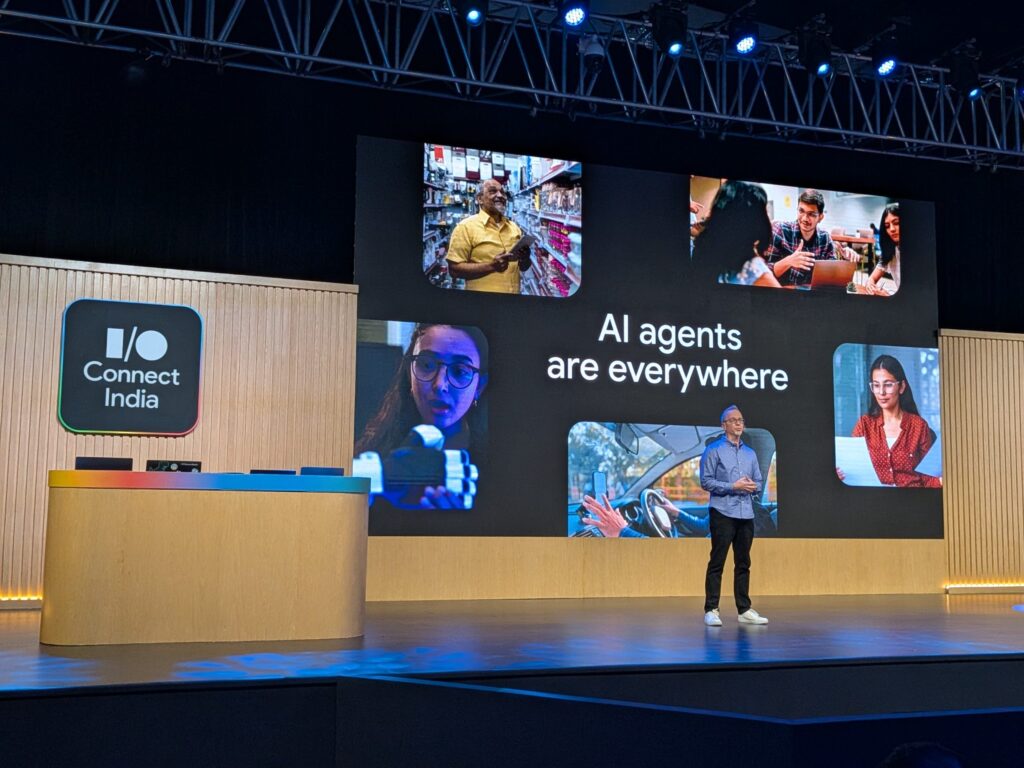
At the Google I/O Connect India 2026 event held in Bengaluru in July, Google unveiled a comprehensive suite of AI tools, startup programs, and educational initiatives designed to accelerate India’s position in the global AI landscape. The announcements reflect Google’s deepening commitment to India’s innovation economy, where AI is being deployed faster than almost anywhere else in the world .
Enterprise and Sovereign AI Infrastructure
A cornerstone of Google’s announcement was the expansion of its sovereign AI offerings tailored for India’s regulated sectors. Google is enabling Indian enterprises, including those in highly regulated industries such as defence, government, and critical infrastructure, to deploy Gemini on Google Distributed Cloud entirely within their own infrastructure and Indian data centres, with supporting services operating without a connection to the public internet . This “air-gapped” deployment capability addresses growing concerns around data residency, compliance, and security as organisations adopt generative AI .
Complementing this, Gemini 3.5 Flash is now available with in-country machine learning processing commitments for Indian enterprises and startups through the Gemini Enterprise platform . Richard Seroter, Chief Evangelist at Google Cloud, noted that India has become central to Google’s global AI strategy, stating, “I don’t think of India as an emerging market anymore. It has already emerged” .
Security and Safety in the Agentic Era
As AI moves from answering queries to executing tasks autonomously—what Google terms the “agentic era”—security has become paramount . Google introduced several initiatives to build trust and safety:
- Sec-Gemini v3, Google’s specialised AI-powered cybersecurity agent, is being extended to trusted government and enterprise testers in India, including Flipkart. This tool can reason across complex security data and help teams investigate incidents at machine speed .
- CAPSEM (Capabilities Security for Agents) , an open-source secure runtime environment that isolates AI agents inside virtual machines, ensuring that if an agent is compromised, the wider system remains protected .
- New open standards including Device Bound Session Credentials (DBSC) for stronger session security and Agents-to-Payments, which enables authorised, low-value AI-led financial transactions alongside the Agent2Agent (A2A) protocol .
- Research partnerships with IIT Delhi and IIT Madras to drive research in agentic safety, including early threat detection and the development of next-generation Guardian Agents .
Startup Accelerator: The 2026 Cohort
Marking the 10th anniversary of its accelerator programmes in India, Google selected 20 AI-first startups from nearly 2,500 applications for the Google for Startups Accelerator: India 2026 cohort . This reflects the deepening technical maturity of the ecosystem, with startups building next-generation AI products that bring artificial intelligence into physical environments and enterprise workflows .
The 2026 cohort represents a shift from traditional LLM-based applications to agentic and multimodal AI systems, with startups developing solutions across healthcare, climate technology, finance, legal services, manufacturing, cybersecurity, and developer tools . Notable startups include:
| Sector | Startups Selected |
|---|---|
| Healthcare | Aikenist, FlexifyMe |
| Climate Tech | Aurassure, Fitsol |
| Legal Tech | Adalat AI |
| Finance | Binocs, Dodo Payments, OnFinanceAI |
| Developer Tools | CraftifAI, H2Loop AI, CreateOS, Pipeshift, TartanHQ |
| Manufacturing | Jidoka |
| Cybersecurity | Zeron |
| Fashion Tech | Ayna |
| Wearables | Proxgy |
| Voice AI | SuperBryn |
| Music AI | Soundverse AI |
As part of the three-month programme, startups receive access to Google’s AI technology stack, technical guidance, product development support, and go-to-market mentorship to help them scale globally . Preeti Lobana, Vice President and Country Manager at Google India, noted: “India’s startup ecosystem is moving into a new frontier of agentic workflows and physical AI systems engineered to solve high-stakes, real-world challenges” .
AI Education and Skills Development
Google DeepMind launched the AI Research Foundations curriculum, a free 56-hour programme that equips learners to build and fine-tune Large Language Models and drive high-impact AI research. Participants can earn industry-recognised Google Cloud Skill badges and certificates upon completion. The programme is being rolled out in partnership with NASSCOM, the Indian Institute of Science (IISc) Bengaluru, and other institutions .
In schools, Google introduced ATL Saathi, a Gemini-powered desktop web application that assists teachers in delivering the Atal Tinkering Labs’ curriculum and curating hands-on experiments for students. The initiative will initially roll out to 100 schools, with plans to eventually reach 10,000 schools .
Google also announced plans to bring its Google Play Academy curriculum to 10,000 developers and app creators, partnering with the state governments of Rajasthan, Odisha, and Madhya Pradesh . The curriculum will help participants leverage advances in agentic AI and gain skills for building, launching, and scaling successful app and game businesses.
Healthcare Innovation and Language Inclusion
In healthcare, researchers at AIIMS Delhi are using Google’s MedGemma open models to develop India-specific AI applications focused on leprosy and sexual and reproductive health. The resulting clinical models will be made available to the broader Indian developer ecosystem .
To make AI more accessible, Gemini Live has been expanded to support over 25 Indian languages and dialects, including Sanskrit, Bhojpuri, and Maithili . This reflects Google’s commitment to ensuring that AI serves India’s diverse linguistic population.
Economic Impact
Google also highlighted the economic impact of its ecosystem in India, citing third-party research that estimates Google Play and Android generated ₹5.3 lakh crore (approximately $60 billion) in revenue for Indian app publishers and the wider digital economy in 2025—a 28% increase over the previous year .
Conclusion
Google I/O Connect India 2026 demonstrated that India is no longer just a market for global technology companies but a central hub for AI innovation. With sovereign AI infrastructure, robust startup support, comprehensive education programmes, and a strong focus on security, Google is positioning India at the forefront of the agentic AI era. As Preeti Lobana noted, “We want to ensure that the next wave of Indian innovation is secure, trusted, and built on locally relevant foundations” .