Rapido Emerges as Uber’s Biggest Challenger in India!
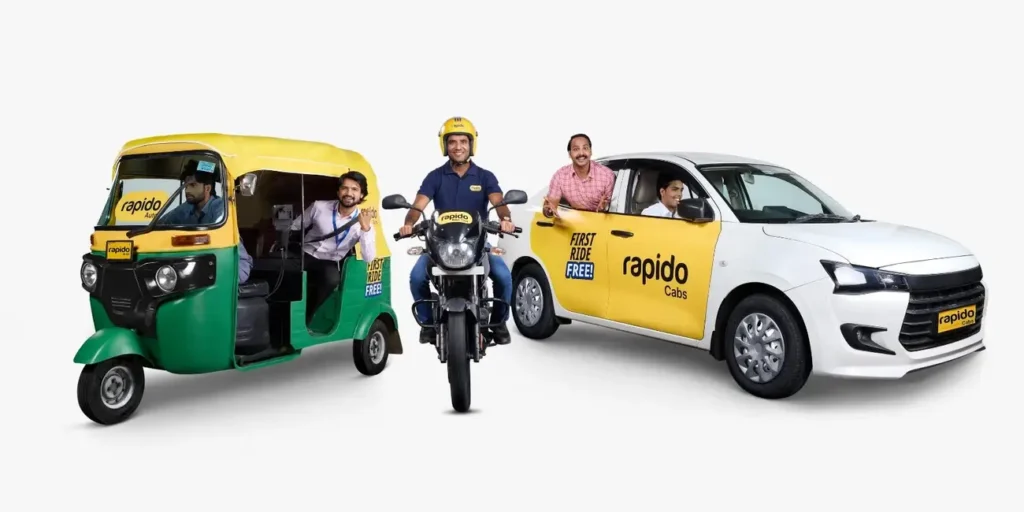
Bengaluru-based ride-hailing startup Rapido has officially become one of the strongest competitors to Uber in the Indian mobility market. With over 70 million monthly active users and nearly 3 million drivers, Rapido has not only caught up to its rivals but has surged ahead of both Uber and Ola in user engagement .
Uber CEO Dara Khosrowshahi himself acknowledged the shift, stating on a podcast last year: “Ola used to be our main competitor. I see now that the tougher competition in India is Rapido” .
Let’s break down how this homegrown startup pulled ahead.
📊 The Numbers: How Rapido Stacks Up
Data from app intelligence firm Sensor Tower reveals the scale of Rapido’s lead:
| Metric | Rapido | Uber | Ola |
|---|---|---|---|
| Monthly Active Users (Jan-Feb 2026) | 73.96 million | 39.05 million | 28.15 million |
| Weekly Active Users | 40.07 million | 20.56 million | 11.63 million |
Source: Sensor Tower via Moneycontrol
Rapido has nearly doubled Uber’s monthly user base while maintaining a significant gap over Ola. The platform now operates in over 400 cities across India, with more than 9 million driver and delivery partners on its network .
💡 The Winning Formula: Why Rapido is Outpacing Its Rivals
1. Affordability First: The Two-Wheeler Focus
Unlike Uber and Ola, which entered the Indian market with a traditional car-focused model, Rapido identified a crucial gap: the need for affordable, short-distance urban mobility .
“We knew that India is a price-sensitive market and affordability has to be the key for ride-sharing compared to premium,” Rapido CEO and cofounder Aravind Sanka told Business Insider .
The average cost of a two-wheeled ride is just 60 to 70 cents, and bikes and three-wheelers now make up about 70% of total rides on the platform. This focus forced the company to operate with a leaner cost structure, allowing it to pass savings directly to customers .
2. Game-Changing Driver Model: The ‘Zero-Commission’ Revolution
Perhaps the most significant differentiator is Rapido’s subscription-based SaaS model for driver partners (referred to as “captains”).
Instead of taking a 25-30% commission on each ride, Rapido charges drivers a flat daily fee of ₹19 to ₹29. Drivers keep 100% of their earnings .
Why this matters:
- Lower Costs for Riders: The absence of commissions allows for more competitive pricing
- Higher Driver Retention: Captains earn more, making the platform more attractive
- Reduced Company Expenses: Rapido no longer needs to spend heavily on driver incentives to attract supply
This model has proven incredibly effective. Rapido’s driver base has grown from 1 million to nearly 3 million in just two-and-a-half years . In comparison, Uber has approximately 1.4 million drivers in India .
“Now, we do not spend on captains to come and join, they themselves come, wanting to join our platform. That has definitely reduced our expenses as well.” — Pavan Guntupalli, Co-founder, Rapido
3. Tier-2 & Tier-3 Expansion: India’s Next Growth Engine
While Uber and Ola have long focused on metropolitan hubs, Rapido is aggressively expanding into smaller cities and towns. The company recently raised $240 million at a $3 billion valuation to accelerate this push .
“The true measure of mobility is not only the rides completed but also livelihoods created,” Sanka said. “We are going deeper into markets where demand exists but supply remains fragmented” .
Rapido now operates in over 400 cities, with a significant portion of its growth coming from non-metro regions. The capital is being deployed to expand the driver network, strengthen first and last-mile connectivity, and build out multi-modal offerings at greater pace .
📈 From Losses to Profitability
Rapido is not yet profitable overall, but the trajectory is encouraging. The company’s operating revenue rose 44% in fiscal 2025, while its net loss narrowed 30% .
At a segment level, the fundamentals are already solid:
The company is making “conscious investment decisions” to fuel expansion and brand-building in new categories, which temporarily impacts overall profitability .
🚀 Beyond Rides: Food Delivery, Quick Commerce, and Fintech
Rapido is rapidly evolving from a pure-play mobility platform into a comprehensive logistics and consumer services provider.
Ownly (Food Delivery): Rapido launched a standalone food delivery app called Ownly in March 2026, featuring a disruptive zero-commission model for restaurants (incumbents charge 16-30%). The platform has already onboarded 2,300 restaurants in Bengaluru .
Quick Commerce: The company is leveraging its two-wheeler fleet for hyperlocal deliveries, currently processing about 20,000 deliveries daily across India for quick-commerce players .
EV Financing: Rapido is exploring partnerships with banks and NBFCs to help captains purchase electric vehicles, accelerating the transition to sustainable mobility .
Women Empowerment: The “Bike Pink” initiative aims to create more opportunities for women captains and riders, with plans to create 25,000 jobs for women in Karnataka alone .
🎯 The Road Ahead
With a $240 million war chest, a rapidly growing driver network, and a proven business model that resonates with both drivers and riders, Rapido is poised to capture an even larger share of India’s mobility market.
Uber continues to hold the overall market leadership position (45-50% share) in cabs, but Rapido’s relentless expansion across categories—from two-wheelers to autos to cabs to food delivery—positions it as a formidable challenger .
The competition also highlights a broader trend: local startups can outperform global giants by tailoring services to India’s unique needs, offering affordable, flexible, and scalable solutions that legacy players struggle to match.