SpaceX Lands $60 Billion Option to Acquire AI Coding Powerhouse Cursor

In what could be one of the largest acquisitions in tech history, SpaceX announced it has secured an option to purchase the artificial intelligence coding startup Cursor for a staggering $60 billion. The April 21, 2026 announcement also includes an alternative option, where SpaceX could opt for a $10 billion working partnership instead .
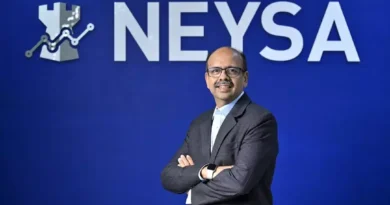
This isn’t your typical startup exit. The agreement—an “option” rather than a done deal—is structured as a giant bet on the future of software development. For the Indian startup ecosystem, it puts a global spotlight on Aman Sanger, the Indian-origin co-founder of Cursor, whose journey from coding as a teenager to the cusp of a multi-billion dollar exit adds another remarkable chapter to the Indian diaspora success story.
“Cursor’s rise and Sanger’s role in it reflect the growing influence of artificial intelligence on the future of work.”
— Times of India
As part of the agreement, if SpaceX ultimately decides not to buy Cursor, the aerospace giant will still owe the startup a $10 billion termination fee . This unusual deal structure underscores the intense premium being placed on AI talent and tools in the race to dominate software engineering.
The Indian-Origin Visionary: Aman Sanger
Aman Sanger is the Indian-origin co-founder of Cursor who maintains a relatively low public profile, but his fingerprints are all over the company’s strategic and operational scale-up .
Key Details of Aman Sanger:
- Education: Studied Computer Science at MIT, where he co-founded Cursor in 2022.
- Early Start: He reportedly began coding at the tender age of 14 .
- Family Background: He is the son of Arvind Sanger, an IIT Bombay alumnus and hedge fund professional, and Shilpa Sanger, an orthodontist and entrepreneur .
Sanger is one of four co-founders—alongside Michael Truell, Sualeh Asif, and Arvid Lunnemark—who met while at the Massachusetts Institute of Technology . While CEO Michael Truell often handles the public narrative, Sanger has played a key operational and strategic role in scaling the company .
Cursor: The Unicorn Factory
To understand why SpaceX is willing to pay a $10 billion breakup fee just to lock in an option, one has to look at Cursor’s staggering growth metrics.
Cursor is an AI-powered code editor—a fork of Microsoft’s VS Code—that integrates artificial intelligence at every level of the development workflow . It has evolved from a simple autocomplete tool into an autonomous agent that can write, edit, debug, and test entire codebases based on natural language prompts .
The Cursor Rocket Ship (2024-2026):
| Date | Valuation | Annual Recurring Revenue (ARR) |
|---|---|---|
| Aug 2024 | $400 Million (Series A) | — |
| May 2025 | $9 Billion | $500 Million |
| Nov 2025 | $29.3 Billion (Series D) | $1 Billion |
| Feb 2026 | — | $2 Billion |
| April 2026 (Talks) | $50 Billion (Target) | $2 Billion+ |
Cursor has become the fastest-scaling B2B software company on record, reaching $2 billion in annual recurring revenue faster than Slack, Zoom, or Snowflake . It currently boasts over 1 million paying users, and nearly 70% of the Fortune 1000 are using its platform . It is generating over 150 million lines of enterprise code per day .
Why SpaceX Wants the Code
SpaceX is currently preparing for a massive IPO, aiming for a $1.75 trillion valuation . To command that kind of valuation, Musk needs to tell a powerful story about the future—a narrative of “Aerospace + AI.”
The acquisition option is a strategic effort to supercharge xAI and SpaceX’s internal development capabilities. Elon Musk recently admitted that xAI was lagging behind competitors in the coding tools space . Cursor is viewed as the “final piece” of a vertical AI stack that includes the Colossus supercomputer (hardware) and Grok (the foundational model) .
Cursor’s technology could revolutionize how SpaceX builds software for rockets, Starlink satellites, and the Mars mission infrastructure. If AI can write 80% of the code for a spacecraft navigation system, the development cycles for the “Starship” program could shorten from years to weeks.
Challenges and Competition
Despite the euphoria, Cursor faces significant headwinds. The big foundational model players are starting to eat their lunch. Anthropic (Claude Code) and OpenAI (Codex) are aggressively building their own native coding tools, causing a “leakage” of Cursor’s potential market share .
GitHub Copilot, backed by Microsoft, still dominates the market with a massive user base and deeper GitHub integration, albeit with less autonomous agent capability .
The Road Ahead
Whether the $60 billion acquisition closes or the parties settle into a $10 billion partnership, the deal is a landmark moment for AI.
For Aman Sanger, it validates the Indian diaspora’s deep engineering roots. For SpaceX, it is a necessary hedge in the AI arms race. For the tech industry, it signals that the era of “Vibe Coding” is over—the new standard is fully autonomous AI agents that can build enterprise-grade applications from scratch.