Accel and Prosus Back Six ‘Off-the-Map’ Startups in First Atoms X Cohort, Expanding India’s Deep-Tech Frontier
For years, the Indian startup story has been dominated by a familiar narrative: founders from Bengaluru, Delhi, or Mumbai building consumer internet companies that scale fast and raise large rounds. But a quiet but profound shift is underway—one that is taking venture capital to places it has rarely gone before.
Global venture giants Accel and Prosus have announced the first cohort of their Atoms X LeapTech programme, selecting six startups that operate far outside the industry’s usual playbook . Described as “off-the-map” ideas, these are companies working on problems where markets are still undefined, progress is difficult to measure, and the path to commercialization is measured in years, not quarters .
Selected from over 2,000 applications, the inaugural cohort spans healthcare, climate, space, and longevity—science-led themes with long development cycles and uncertain commercial pathways . The initiative reflects a growing recognition among global investors that India’s next wave of breakthrough companies will not come from copying existing models, but from building entirely new categories rooted in deep science and engineering .
The Atoms X Model: Patient Capital for Frontier Innovation
Atoms X is an extension of Accel Atoms, the firm’s pre-seed scaling initiative launched in 2021 that has backed over 50 startups, collectively raising more than $300 million in follow-on funding . But while the original Atoms programme focused on SaaS, fintech, and consumer internet, Atoms X is designed for what Accel calls “LeapTech”— innovations that combine scientific breakthroughs with engineering ambition to deliver step-change progress in foundational areas .
The investment structure reflects the unique needs of these ventures. Under the partnership, Prosus matches Accel’s investment in each startup, with cheque sizes ranging from $500,000 to $2 million . Crucially, the firms are using a structure that reduces early dilution for founders, with a portion of the capital deferred so equity is given up at a later stage . This “capital certainty” allows founders to pursue complex, long-horizon ideas without the pressure of near-term commercial returns .
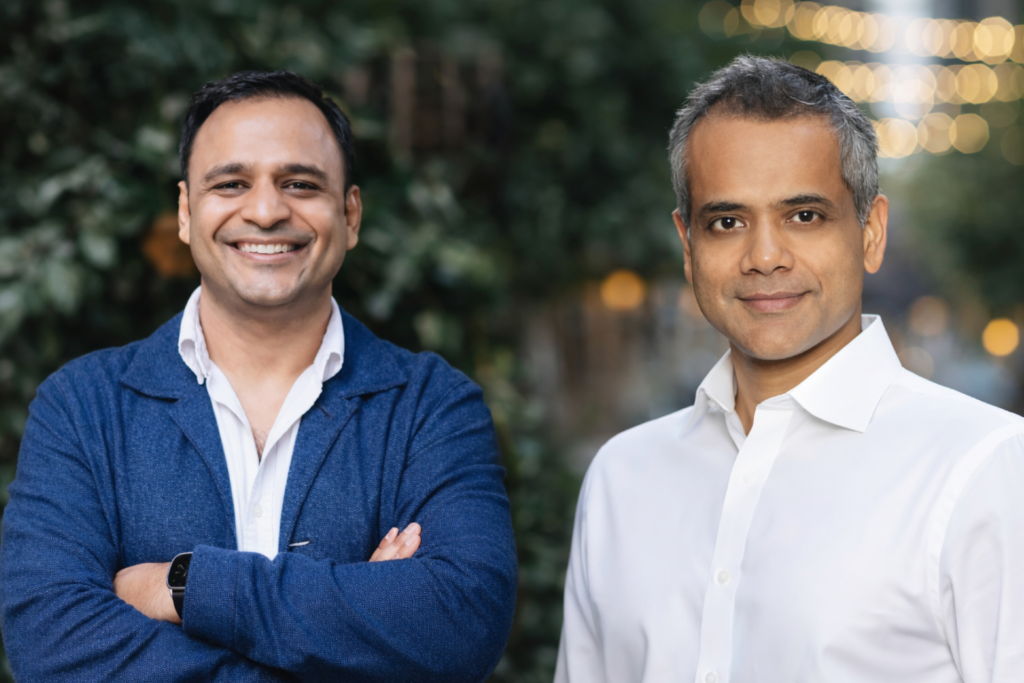
Pratik Agarwal, Partner at Accel, explained the philosophy: “More than capital, they require time to make those breakthroughs” . Ashutosh Sharma, Head of India Ecosystem at Prosus, added: “Innovation in India is not constrained by ideas or inspiration. It is constrained by the right backing at the right time” .
Meet the Six Startups: A Spectrum of Deep-Tech Ambition
The six startups selected for the inaugural Atoms X cohort represent the extraordinary diversity of India’s deep-tech ecosystem .
Praan: Building Full-Stack Air Infrastructure
Mumbai and San Francisco-based Praan is developing advanced air purification systems designed to improve indoor air quality to near-mountain conditions . Unlike traditional systems that use replaceable paper filters, Praan’s filterless technology uses electricity and multi-needlepoint ionization to capture particles 166 times smaller than traditional systems can manage . The startup has previously raised funding from Social Impact Capital, Aera VC, and Avaana Capital .
QOSMIC: Optical Communications for Space
Bengaluru-based QOSMIC is building optical communication systems for data transfer between satellites and Earth . By using laser technology instead of traditional radio frequency systems, the startup aims to increase bandwidth by 100x while reducing latency in space-based networks . Founded in 2024 by Shreyaans Jain, Rohit Ramakrishnan, and Aloke Kumar, the company is creating a network of optical ground stations and satellite payloads to enable faster, more secure communication for space missions .
Ethereal Exploration Guild (EtherealX): Reusable Orbital Launch Vehicles
Also based in Bengaluru, EtherealX is developing fully reusable medium-lift launch vehicles designed to dramatically reduce the cost of accessing space . The startup’s flagship rocket is designed to return both booster and upper stages after launch, aiming to bring launch costs down to $500 per kilogram . Founded in 2022 by Manu J Nair, Shubhayu Sardar, and Prashant Sharma, the company previously raised a $20.5 million Series A round led by TDK Ventures and BIG Capital at an $80.5 million valuation .
Dognosis: Breath-Based Cancer Detection
Bengaluru-based Dognosis is working on a remarkable intersection of biology and technology: detecting multiple cancers from a person’s breath . The startup uses trained dogs’ sense of smell—a natural cancer detection mechanism far more sensitive than any existing technology—combined with robotics and artificial intelligence . Their product, BreatheEasy, involves patients breathing into a mask; the sample is later analyzed in a lab to detect cancer-linked markers, offering a non-invasive, low-cost diagnostic alternative .
Ferra: Strength Training for Longevity
Ferra is developing a home-based strength-training system designed specifically for aging populations . The system uses adaptive resistance technology that automatically adjusts to the user’s performance, delivering safe and efficient workouts while reducing strain on joints . As a subsidiary of Chiratae Ventures-backed Aeroleap, Ferra is addressing the critical challenge of maintaining mobility and strength as people age .
Stealth Startup: Brain-Computer Interfaces
The sixth startup, operating in stealth mode, is developing brain-computer interface (BCI) technology to enable direct communication between the human brain and external systems . This frontier technology aims to push the boundaries of human-computer interaction by allowing devices to be controlled through thought alone . The startup represents perhaps the most audacious bet in the cohort, entering a space where global players like Neuralink have captured public imagination.
The Strategy: Why Accel and Prosus Are Betting on Off-the-Map Ideas
The launch of Atoms X comes at a time when India’s startup ecosystem is undergoing a fundamental transformation. For more than a decade, venture capital in India was dominated by consumer internet investments—companies that could scale quickly, acquire users cheaply, and demonstrate growth through metrics like Gross Merchandise Value (GMV) .
But as those markets have matured, investors are increasingly looking to deep-tech and science-led ventures as the next frontier . These companies require a different kind of capital—patient, long-term, and willing to underwrite technical risk rather than just market risk.
As Ashutosh Sharma noted: “Our role alongside Accel is to clear the path—whether that’s capital, global networks, or operational muscle—so these founders can think in decades, not quarters” .
The initiative also reflects a growing recognition that India’s deep-tech talent pool is world-class. The quality of applications—over 2,000—exceeded expectations, demonstrating that Indian founders are increasingly attempting to commercialize scientific breakthroughs and build entirely new categories .
The Bigger Picture: Decentralizing India’s Innovation Story
Atoms X is more than just a new investment programme. It is a bet on the decentralization of India’s startup ecosystem. By backing startups that operate outside traditional hubs and focus on sectors that require deep scientific expertise, Accel and Prosus are helping to create a more diverse and resilient innovation landscape.
The six selected startups span Mumbai, Bengaluru, and beyond, working on problems that have global relevance. Praan’s air purification technology addresses a universal urban challenge. QOSMIC and EtherealX are positioning India as a serious player in the new space economy. Dognosis’s approach to cancer detection could transform diagnostics worldwide. Ferra’s focus on aging populations speaks to a global demographic shift. And the stealth BCI startup is entering one of the most exciting frontiers in technology.
The Road Ahead
Applications for future Atoms X cohorts are under active evaluation, with the programme continuing to seek founders developing breakthrough technologies capable of addressing foundational global challenges . The initiative builds on Accel’s broader Atoms platform, which has become a key feeder into the firm’s early-stage pipeline .
For the six startups selected, the journey is just beginning. With backing from two of the world’s most respected technology investors, they now have the capital, mentorship, and global networks to pursue their ambitious visions. The technical road ahead is long—developing reusable rockets, optical space communications, and brain-computer interfaces takes time. But for the first time, India has a structured programme designed specifically to support that kind of journey.
The Final Word
Accel and Prosus’s inaugural Atoms X cohort is a landmark moment for India’s deep-tech ecosystem. By backing six “off-the-map” startups spanning climate, space, healthcare, and longevity, the firms are signaling that India’s innovation story is no longer confined to consumer internet. It is expanding into the frontiers of science and engineering.
For founders working on breakthrough technologies, the message is clear: there is now a programme designed specifically for you. One that understands that progress depends on achieving key technical breakthroughs, not on steady growth. One that provides not just capital, but the time and space to build.
As Pratik Agarwal put it: “LeapTech requires conviction to build companies years before there is consensus” . With Atoms X, Accel and Prosus are putting that conviction into practice.