
Dream Sports Enters Stockbroking with Dream Street: Can AI Help 90% of Investors Win?
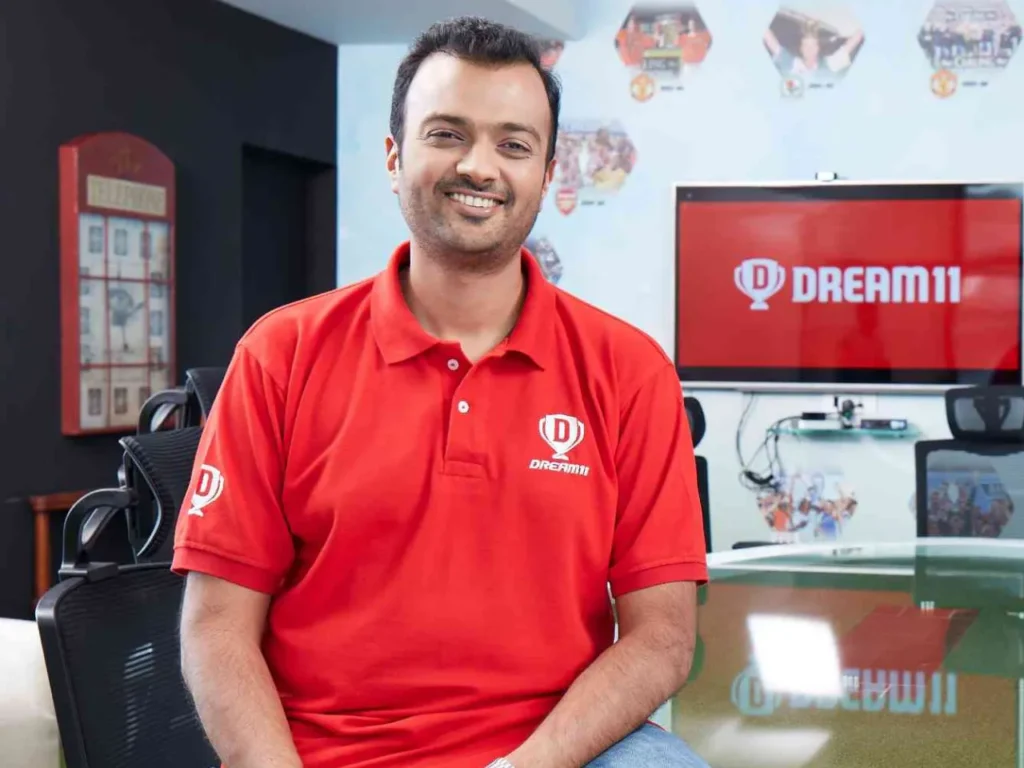
For over a decade, Dream Sports has been synonymous with fantasy sports. Its flagship product, Dream11, built a massive user base of over 250 million registered users by allowing cricket fans to create virtual teams and compete based on real-life player performances . At its peak, the company was valued at $8 billion and had raised over $800 million from marquee investors .
Then came the regulatory earthquake.
India’s Promotion and Regulation of Online Gaming Act (PROGA) 2025 effectively banned real-money gaming, wiping out more than 95% of Dream Sports’ revenue overnight . Profits vanished. The core business model that had built a unicorn was no longer viable.
But rather than fold, Dream Sports pivoted. In December 2025, the company restructured itself into eight independent business units, shifting into what CEO Harsh Jain described as “startup mode” . The portfolio now spans sports streaming (FanCode), sports travel (DreamSetGo), mobile gaming (Dream Cricket), AI athlete intelligence (Dream Play), open-source initiatives (Dream Horizon), philanthropy (Dream Sports Foundation), and crucially, financial services .
The fintech push began in May 2025 with Dream Money, offering gold and fixed deposit investments, later expanding into mutual funds and loans through partnerships with Augmont, ICICI Prudential, and Incred Finance . Now, Dream Sports is making its boldest move yet: stockbroking.
Dream Street: An AI-First Brokerage for the Masses
On March 24, 2026, Dream Sports announced its entry into India’s competitive stockbroking space with the launch of Dream Street . The platform is currently in internal testing, with all necessary regulatory approvals secured, and a public rollout expected soon .
The leadership team is drawn from within Dream Sports. Rahul Mirchandani, the company’s Chief Product Officer, will serve as CEO of Dream Street, with Dream11 product leaders Karan Bansal and Nikhil Lalwani joining as co-founders .
The Problem: 90% of Investors Lose Money
What sets Dream Street apart from existing discount brokers like Groww, Zerodha, and Angel One? According to Harsh Jain, the answer lies in who they are building for.
“The problem today is that 90 percent of the market loses money, and nobody is helping them in a deep and personalized way,” Jain told Moneycontrol in an exclusive interview . “We see everyone focusing on the 10 percent of the people that make money and stay on the platform.”
This insight is the foundation of Dream Street’s strategy. Instead of catering to active traders who already understand the markets, Dream Street aims to serve two underserved groups:
- The hesitant: People who are interested in investing but don’t know where to start.
- The losers: The vast majority of retail investors who consistently lose money due to lack of guidance .
“We believe that with AI, we have the capability, the brand, and the user base to grow the market by bringing in people who are hesitant about investing,” Jain explained .
AI as the Great Equalizer
The core of Dream Street’s value proposition is AI-driven personalization. Jain’s vision is ambitious: to give every user the equivalent of having a Goldman Sachs, Morgan Stanley, or JP Morgan analyst monitoring their portfolio 24/7 and providing real-time guidance .
The platform will offer:
- Personalized investment insights tailored to individual risk profiles and goals
- Real-time portfolio monitoring with actionable recommendations
- Simplified, intuitive interfaces designed for first-time investors, particularly in smaller cities
By using AI to democratize access to high-quality investment advice, Dream Street aims to solve a fundamental problem in retail investing: the asymmetry between institutional investors who have teams of analysts and individual investors who operate alone.
Targeting Tier-2 and Tier-3 India
Like many successful Indian startups, Dream Street is focusing on Tier-2 and Tier-3 cities as its primary growth engine . These markets represent the next frontier for retail investing. Household participation in equities remains relatively low, but awareness is growing, and digital infrastructure is rapidly improving.
Dream Sports’ existing user base of over 250 million registered users—many from smaller cities—gives the company a massive distribution advantage . Cross-selling financial services to users already familiar with the Dream11 brand could provide a significant tailwind for customer acquisition.
The Competitive Landscape: A Crowded Field
Dream Street enters a market that is already crowded and fiercely competitive. The dominant players include:
Adding to the competition, a new wave of fintech and consumer internet companies are also entering the space. MobiKwik has secured regulatory approvals to launch broking, while Flipkart-backed Super.money and Kunal Shah-led CRED are developing investment offerings . The stockbroking sector is becoming a battleground for India’s largest consumer internet platforms, all vying for a share of the country’s rapidly expanding retail investor base.
Regulatory Headwinds and Market Shifts
Dream Street’s launch comes at a time of significant regulatory change in India’s derivatives market. Stricter measures—including tighter margin requirements, reduced weekly expiries, higher capital thresholds, and increased taxation—are making futures and options (F&O) trading less attractive for retail participants .
This regulatory shift aligns with Dream Street’s focus on long-term investing rather than speculative trading. By emphasizing personalized advice and AI-driven insights, the platform is positioned to appeal to investors looking for sustainable wealth creation rather than quick gains.
The Strategic Rationale: Diversification and Ecosystem Stickiness
For Dream Sports, the move into stockbroking is about more than just adding a new revenue stream. It’s about deepening user engagement and creating ecosystem stickiness .
The company’s structure now resembles a hybrid of “private equity meets incubation,” with each business unit having its own funding requirements and operating independently . This allows Dream Sports to deploy capital strategically across its portfolio while maintaining focus on each venture’s unique needs.
“A brokerage business requires a higher marketing budget because you’re going against incumbents,” Jain noted . The company is offering ESOPs to founding teams to attract and retain talent, signaling a long-term commitment to building these new ventures.
The Road Ahead: Can Dream Street Succeed?
Dream Street’s success will depend on several factors:
- Execution: Can the platform deliver on its promise of AI-driven personalization that genuinely helps retail investors make better decisions?
- Distribution: Will Dream Sports’ massive user base convert to financial services customers?
- Trust: Can a company known for fantasy sports build credibility in the sensitive domain of personal finance?
- Competition: In a crowded field with established players and deep-pocketed new entrants, can Dream Street carve out a distinct position?
The opportunity is immense. India’s broking industry continues to see steady user additions, with retail investor participation in capital markets still far below its potential . If Dream Street can successfully tap into the “hesitant” and the “losers”—the 90% of investors who currently struggle—it could not only build a substantial business but also democratize access to quality investment advice in a way that few platforms have achieved.
The Final Word
Dream Sports’ launch of Dream Street is a defining moment in the company’s history. Born from the ashes of a regulatory ban that wiped out its core business, the company is reinventing itself as a diversified technology platform spanning sports, entertainment, and now, financial services.
By targeting the underserved majority of retail investors with AI-driven personalization, Dream Street has the potential to disrupt India’s stockbroking market. Its success would not only validate Dream Sports’ pivot but also demonstrate how Indian startups can adapt and thrive in the face of regulatory uncertainty.
As Harsh Jain put it: “We want to give them the capabilities of having a Goldman Sachs analyst at their fingertips” . If Dream Street delivers on that promise, it could change how millions of Indians invest—and in doing so, redefine what it means to be a fintech platform in India.