Voice-First, India-First: How Indian Startups Are Building the Sonic Architecture of a Digital Nation
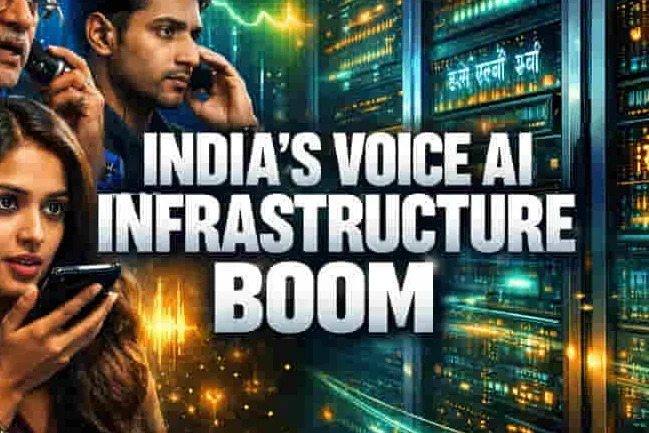
While global AI discourse often orbits around text-based large language models, a quiet, profound revolution is unfolding across India. In 2026, Indian startups have claimed a definitive global leadership position in a domain uniquely suited to the nation’s complexity: Voice AI. This isn’t about replicating Western models with an Indian accent; it’s about pioneering a sovereign stack of voice technology, built from the ground up for the linguistic, cultural, and infrastructural reality of over a billion people who prefer speaking over typing. This movement is transforming voice from a feature into the default digital interface for India’s next half-billion users.
The Perfect Storm: Why India Is the Voice AI Crucible
India’s ascendancy in this field is no accident. It is the product of a unique convergence of factors that create an unparalleled innovation ecosystem:
- The Complexity as a Moat: India’s staggering linguistic diversity—22 official languages, hundreds of dialects, pervasive code-mixing (like Hinglish), and a kaleidoscope of accents—presents a problem of such complexity that generic, global models fail. This “moat” of complexity has forced and enabled Indian innovators to build deeply specialized solutions.
- Data as the New Natural Resource: Initiatives like the IndiaAI Mission and the Bhashini platform are not just policy statements; they are catalyzing the creation of massive, real-world, consented datasets. Startups are training models on millions of hours of diverse audio—from noisy marketplaces and busy call centers to rural homes—capturing the authentic sonic texture of India.
- Infrastructure for the Real World: Recognizing that deployment often happens on low-end smartphones in areas with patchy networks, Indian voice AI is engineered for efficiency. The focus is on creating lightweight, fast, and affordable models that work offline or in low-bandwidth conditions, ensuring true last-mile accessibility.
The Vanguard: Building Blocks of a Voice-First Future
A constellation of startups is engineering this future, each tackling a critical layer of the voice stack:
- The Foundation Model Builders: Companies like Sarvam AI are building the bedrock—multilingual LLMs and voice-first foundational models purpose-trained for Indian languages. Their work on text-to-speech (TTS) and speech-to-text (STT) with authentic, expressive Indian accents is moving beyond robotic output to creating truly natural digital interactions.
- The Enterprise Powerhouses: Gnani.ai, with its massive Vachana STT model trained on 1M+ hours of Indic speech, exemplifies B2B depth. It powers sophisticated voice agents for banks and telecom giants, handling complex, context-sensitive queries in local languages, thereby redefining customer service at scale.
- The Hyper-Local Agents: Startups like Y Combinator-backed Bolna AI are building the application layer. Their platform enables businesses to deploy hyper-local voice agents for customer support, sales, and recruitment across a spectrum of languages and dialects, making automated conversations feel familiar and effective.
- The Infrastructure Innovators: Players like Smallest.ai are solving the crucial deployment challenge. By delivering the world’s fastest, GPU-light TTS, they enable low-latency, privacy-first, and cost-effective voice integration for millions of concurrent users, making advanced voice tech viable for mass-market products.
Beyond Technology: The Democratization of Digital India
The impact of this voice AI surge transcends technical achievement; it is a powerful force for social and economic inclusion.
- Bridging the Literacy Divide: For communities with low literacy or those uncomfortable with text-based interfaces, voice becomes a empowering bridge to the digital world.
- Localizing Essential Services: Voice AI is transforming access to critical services. A farmer in Odia can query a government agri-scheme, a grandmother in Tamil can get a health diagnosis via a symptom-checking bot, and a small shopkeeper in Marathi can access microloans—all through natural speech.
- Preserving Linguistic Heritage: By making digital interactions possible in native languages, this technology helps preserve linguistic diversity in the digital age, countering the homogenizing pressure of global platforms.
Conclusion: The Unstoppable Sonic Revolution
The rise of Indian voice AI signifies a monumental shift in the country’s tech narrative. It proves that India is no longer just a vast market for global technology but a sovereign innovator, solving its own most intricate problems and, in doing so, building world-leading expertise.
This #VoiceAI revolution is #IndicFirst in its data, its design, and its purpose. It is dismantling the last great barrier to a truly inclusive digital economy—the language and literacy barrier. As these models grow more sophisticated and ubiquitous, the very notion of “going online” in India will increasingly mean speaking to an intelligent, understanding, and responsive digital ecosystem in one’s mother tongue. The future of digital India doesn’t just look bright; it sounds profoundly familiar, accessible, and unstoppable.