Month: February 2026

Jensen Huang’s AI Jobs Prophecy: Why Data Centers Are India’s New Economic Engine

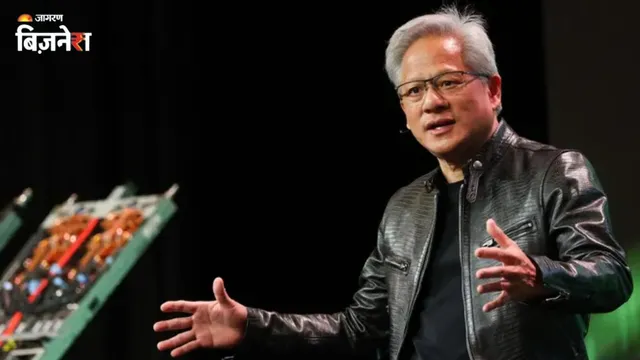
In a powerful endorsement of India’s strategic direction, Nvidia CEO Jensen Huang has framed the nation’s AI infrastructure build-out not merely as a technological necessity, but as the cornerstone of its next great employment boom. Speaking at 3DExperience World 2026 in Houston, Huang drew a direct parallel to the internet’s transformative impact, predicting that the construction and operation of AI data centers could generate job creation on an “incredible” scale. This vision, coming from the architect of the global AI hardware revolution, reframes the conversation: AI is not just a potential job displacer; it is the foundation for a massive, multi-layered jobs pyramid.

Read More
The Great Unlock: How India’s New Startup Policy Fuels the Long Game of Innovation

In a masterstroke of policy foresight, the Government of India has fundamentally redesigned its Startup India framework to nurture not just fast-growing companies, but enduring technological sovereignty. The February 4, 2026 DPIIT notification, which introduces a dedicated ‘Deep Tech Startup’ category with a 20-year horizon and a ₹300 crore turnover cap, while also doubling the limit for regular startups to ₹200 crore, is a strategic declaration. It recognizes that building a social commerce app and building a quantum computer are fundamentally different endeavors requiring distinct timelines, capital structures, and policy support.

Read More

India’s Startup Policy 2.0: A Dual-Track Framework for Scale-Ups and Deep-Tech Pioneers

The Indian government has executed a sophisticated, dual-track recalibration of its flagship Startup India initiative, unveiling a policy framework that now distinctly serves two critical constituencies: the scaling commercial startup and the frontier deep-tech pioneer. The February 4, 2026 DPIIT gazette notification, by doubling the turnover ceiling for regular startups to ₹200 crore and creating a bespoke ‘Deep Tech Startup’ category with a 20-year horizon and ₹300 crore cap, reflects a mature understanding that a one-size-fits-all approach stifles the very innovation it seeks to promote.

Read More

A Policy Masterstroke: India’s New ‘Deep Tech’ Definition Fuels the Long Game of Innovation

In a decisive move to align policy with the realities of frontier innovation, the Government of India has introduced a dedicated ‘Deep Tech Startup’ category under the Startup India initiative. Announced via a DPIIT gazette notification on February 4, 2026, this is not a minor tweak but a fundamental recalibration of support for ventures building in sectors like AI, semiconductors, quantum computing, biotech, robotics, and space. By doubling the recognition period to 20 years and raising the turnover cap to ₹300 crore, the government has effectively acknowledged that building sovereign technological capability is a marathon, not a sprint.

Read More

India’s Public Market Coming of Age: The 2026 IPO Wave and the Rise of the Profitable, Proven Startup

Following the record-shattering performance of 2025, India’s startup ecosystem is poised for an even more monumental leap. The IPO pipeline for 2026 is not just robust; it is historically deep and qualitatively superior, with over 44 companies in active preparation for a potential collective raise of ₹50,000 to ₹70,000 crore. This impending wave—featuring giants like PhonePe, Zepto, OYO, and Fractal Analytics—signals a profound maturation: India’s public markets are no longer an experimental exit route but the primary destination for scaled, profitable, and governance-ready new-age companies.

Read More

India’s Global AI Mandate: The India AI Impact Summit 2026 and the Dawn of Southern-Led Innovation

The stage is set for a defining moment in the global narrative of artificial intelligence. From February 16–20, 2026, New Delhi’s Bharat Mandapam will host the India AI Impact Summit 2026, a landmark event announced by Prime Minister Narendra Modi at the France AI Action Summit. This is not merely another conference; it is a strategic declaration. As the first global AI summit hosted in the Global South, it represents a deliberate pivot—a move to shift the epicenter of the AI conversation from safety-focused dialogues in the West to impact-driven, inclusive innovation led by the nations that stand to gain or lose the most from this technology.

Read More

Uttar Pradesh’s “Triple-S” Gambit: A Bold Blueprint to Become India’s Next Startup Powerhouse

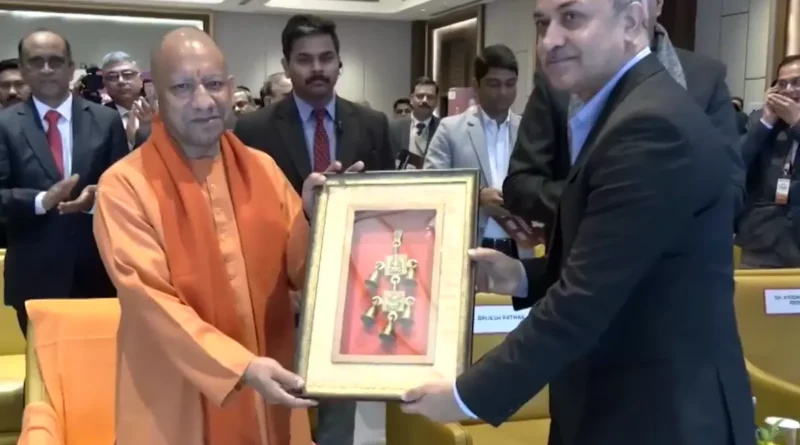
In a strategic move poised to reshape India’s economic geography, the Uttar Pradesh government has unveiled its “Triple-S Guarantee”—a bold, investor-centric framework built on Safety, Stability, and Speed. This isn’t merely a new industrial policy; it’s a declaration of intent and a competitive playbook designed to systematically dismantle the traditional barriers to large-scale investment and position UP as the premier destination for the next wave of startups, particularly in deep-tech and advanced manufacturing.

Read More

The Blueprint is Working: How Policy & Capital Are Forging India’s Deep-Tech Sovereignty

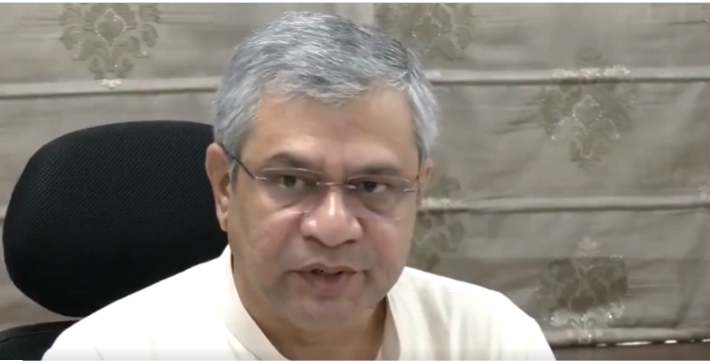
Union Minister Ashwini Vaishnaw has laid out a compelling progress report on India’s most critical economic mission: building sovereign technological capability. The data points he highlighted are not isolated wins; they are interconnected results of a deliberate, multi-pronged national strategy that is finally yielding tangible momentum. With 80% of new startups now AI-led and the Design-Linked Incentive (DLI) scheme nurturing two dozen semiconductor design firms, India is demonstrating that its deep-tech ambitions are moving decisively from PowerPoint to production.

Read More

Record $12.1 Billion Dry Powder: The Rocket Fuel for India’s Next Startup Surge

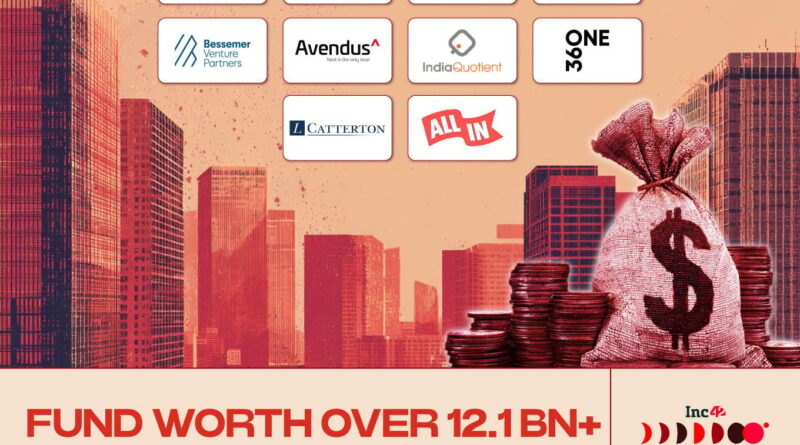
The most powerful signal for India’s entrepreneurial future just flashed on the dashboard. In 2025, investors committed a staggering $12.1 billion (approx. ₹1.01 lakh crore) to new venture capital and private equity funds dedicated to Indian startups—a 39% year-on-year surge from 2024. This isn’t money already spent; it’s record “dry powder,” a war chest of patient capital now sitting in fund managers’ accounts, actively searching for the next generation of founders. Crucially, a dominant 58% of this capital is earmarked for early-stage (seed & pre-seed) ventures, ensuring the pipeline of innovation remains robust for years to come.

Read More