A Blueprint for Bhopal: How Madhya Pradesh is Building a Startup Hub from the Ground Up
While the spotlight on India’s startup revolution often shines on coastal metros and tech-savvy southern states, a significant and determined
Read More
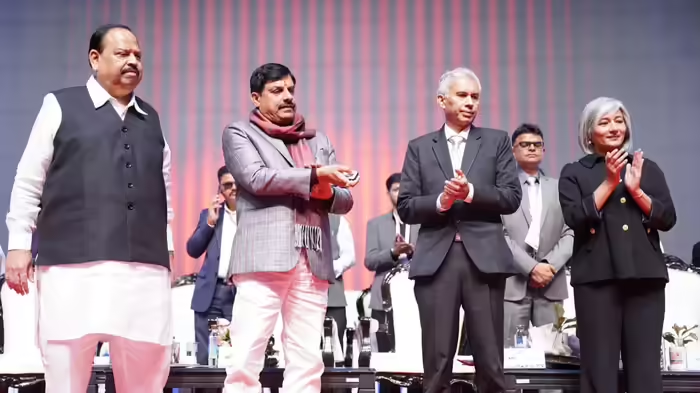
While the spotlight on India’s startup revolution often shines on coastal metros and tech-savvy southern states, a significant and determined
Read More
For decades, Kerala’s narrative has been shaped by a paradox: renowned for producing world-class professionals, yet watching them leave for opportunities abroad or in other Indian metros. Now, the state is launching a strategic and symbolic counter-offensive. The Kerala Startup Mission (KSUM) has unveiled the ‘Thirike’ campaign—a powerful, emotionally resonant call meaning “return” in Malayalam. More than a recruitment drive, Thirike is a visionary state-building initiative aimed at transforming Kerala’s famed “brain drain” into a sustainable “brain gain,” using its returning talent as the primary fuel for its ambitious startup economy.
Read More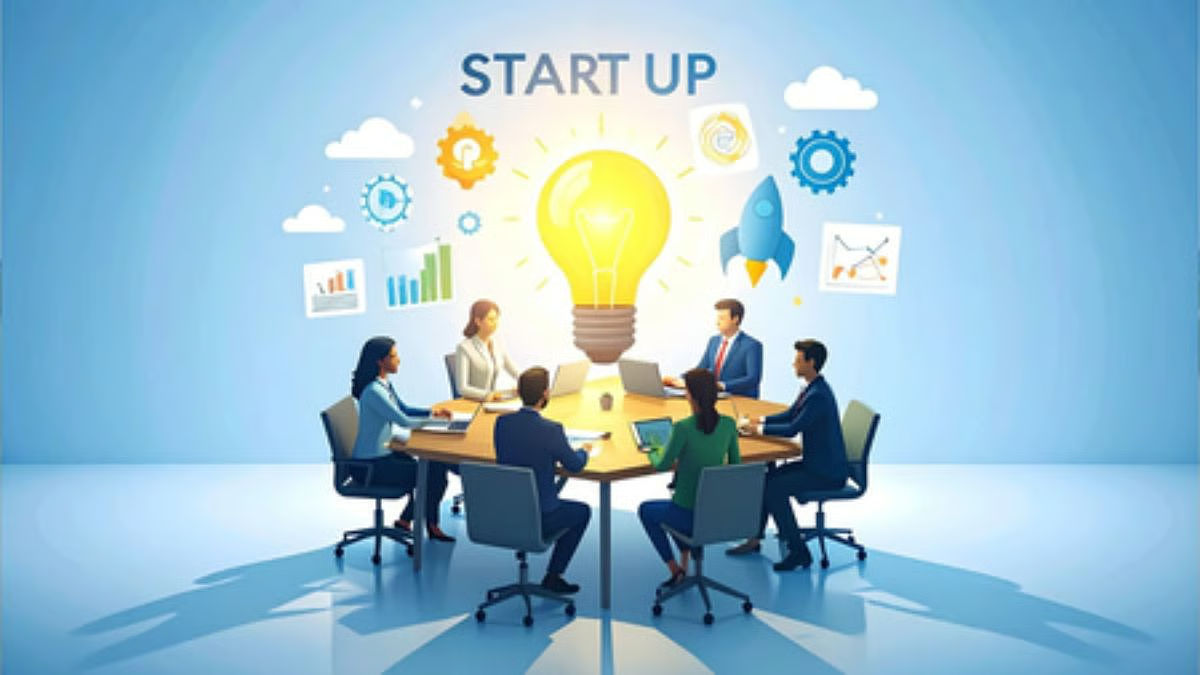
A profound transition is complete. India’s startup narrative, long fueled by private capital and the promise of a vast market, has achieved its most significant validation: the unwavering confidence of the public markets. The data is historic. In 2025, India emerged as the world’s most active startup IPO market, with a landmark 20 venture-backed companies making the leap to public listings. This deluge of debuts, chronicled in the Orios Venture Partners 2025 report, has propelled India’s total tech ecosystem value to a staggering $419 billion, cementing its place as the third-largest tech startup ecosystem globally. This is not merely growth; it is the arrival of a mature, self-sustaining innovation economy on the world stage.
Read More
While global AI discourse often orbits around text-based large language models, a quiet, profound revolution is unfolding across India. In 2026, Indian startups have claimed a definitive global leadership position in a domain uniquely suited to the nation’s complexity: Voice AI. This isn’t about replicating Western models with an Indian accent; it’s about pioneering a sovereign stack of voice technology, built from the ground up for the linguistic, cultural, and infrastructural reality of over a billion people who prefer speaking over typing. This movement is transforming voice from a feature into the default digital interface for India’s next half-billion users.
Read More
In the annals of entrepreneurial audacity, a new chapter is being drafted—not in Silicon Valley, but aimed squarely at the Sea of Tranquility. GRU Space (Galactic Resource Utilization Space), a startup so young its founder, 22-year-old Skyler Chan, launched it just last year, has announced a vision that redefines the phrase “thinking big”: building the world’s first permanent hotel on the Moon. This isn’t science fiction fan art; it’s a venture with a tangible roadmap, heavyweight backing, and a business model that starts with a $250,000 deposit. It represents the boldest frontier yet in the fusion of private capital, deep-tech innovation, and humanity’s timeless desire to explore.
Read More
For years, the question lingered in boardrooms and policy circles: Could India’s high-flying, venture-fueled startup ecosystem transition from a story of private valuation to one of public market validation? The resounding answer arrived in 2025. According to the seminal Orios Venture Partners ‘India Tech Unicorns & Exits Report 2025,’ India didn’t just participate in the global public markets—it led them. By becoming the world’s most active IPO market by volume for VC-backed startups, with 20 successful listings, India’s innovation landscape crossed its most significant Rubicon yet. This historic achievement is not a flash in the pan; it is the definitive signal of an ecosystem that has matured, disciplined itself, and built the foundational pillars for long-term, sustainable wealth creation.
Read More
On the vibrant campus of the Indian Institute of Management Ahmedabad (IIMA), a pivotal message for the nation’s future was delivered. Union Minister of State for Science & Technology, Dr. Jitendra Singh, addressing a powerhouse gathering at the IIMA Ventures Summit 2026, articulated a fundamental shift: India is moving decisively from technology adoption to genuine technology leadership. His keynote wasn’t merely aspirational; it was a strategic blueprint, identifying deep-tech innovation as the core engine of this transition, powered by robust institutions and seamless research translation.
Read More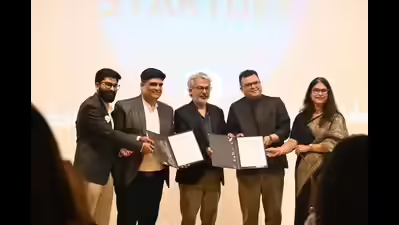
On January 12, 2026, the energy at Navrachana University was not that of a quiet academic campus, but of a vibrant marketplace of the future. Coinciding with National Startup Day, the Navrachana Innovation Foundation successfully hosted NUVenture ’26—a flagship event that did more than just celebrate entrepreneurship; it powerfully amplified Gujarat’s rising stature as a serious, scalable hub in the #StartupIndia narrative. This was not merely a fest; it was a dynamic convergence where ambition met capital, ideas met execution, and Gujarat’s student-founders met their future partners.
Read More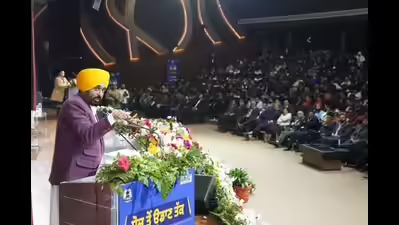
Chandigarh wasn’t just a host city today; it became the epicenter of a bold new declaration for Punjab’s economic destiny. With the historic inauguration of the first-ever Startup Punjab Conclave, Chief Minister Bhagwant Mann sent an unambiguous message: the future of the state will be built by its youth, powered by innovation. Under the compelling theme “Update & Create,” this initiative moves beyond rhetoric, placing youth-led entrepreneurship squarely at the heart of Punjab’s economic vision.
Read More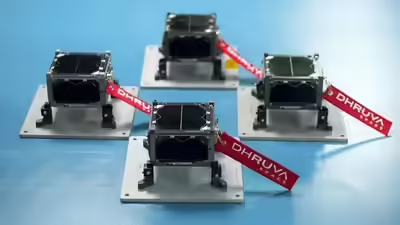
The silence that followed the PSLV-C62 mission’s anomaly was palpable. On a day meant to showcase the burgeoning strength of #NewSpaceIndia, a deviation in the rocket’s third stage resulted in the loss of its entire payload: 16 satellites representing years of innovation, investment, and ambition from India’s private space sector. This incident is undeniably a significant setback, but to understand its true impact, we must look beyond the immediate loss to the ecosystem’s inherent resilience and the critical lessons it must now absorb.
Read More