India’s ‘Bodyguard Satellites’: Private Startups to Protect National Assets in Orbit
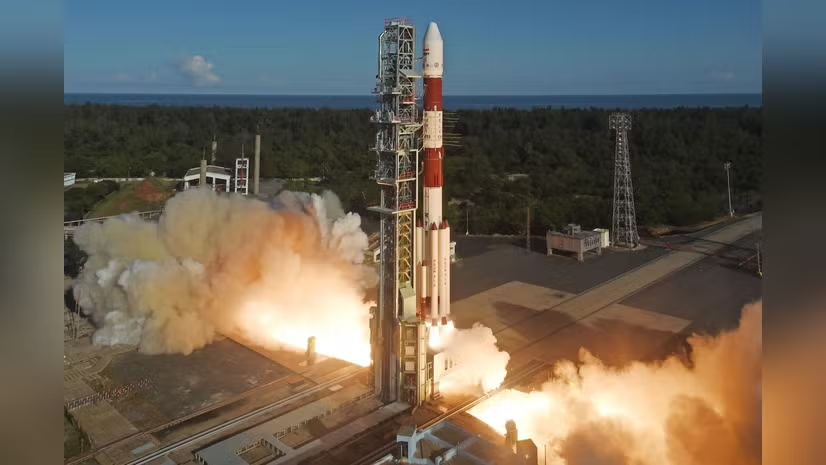
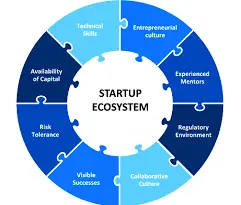
In a landmark move that signals the maturation of India’s private space ecosystem, the government is collaborating with domestic startups to develop “bodyguard satellites”—orbital guardians designed to protect critical national assets from emerging threats in space.
According to multiple reports, security agencies are in advanced discussions with private companies to build satellites capable of escorting, protecting, and countering orbital threats to high-value Indian spacecraft . The initiative represents a significant milestone in India’s evolving space policy, shifting from purely government-led missions to deep public-private collaboration in national security applications .
Private players are now being trusted with sensitive, high-stakes defence-adjacent technologies, reflecting growing confidence in the domestic New Space ecosystem. The first test satellite is expected to launch in the first half of 2026, with additional launches planned by the end of this year or early next year .
Why India Needs Orbital Guardians
The Growing Threat Environment
A Near-Miss Wake-Up Call: In 2024, an Indian satellite performing tasks with potential military applications—such as mapping and monitoring ground objects—experienced a close encounter with a spacecraft from an unidentified neighboring country that came within just 1 kilometer . Such proximity events raise serious concerns about surveillance, electronic interference, or even kinetic threats.
Geopolitical Tensions: Following last year’s border conflict with Pakistan, India became increasingly concerned about national security threats posed by foreign spacecraft. During those hostilities, China provided Pakistan with satellite support, helping Islamabad adjust its radar and air defense systems more effectively .
China’s Advancing Capabilities: China has been experimenting with “bodyguard” or “dogfighting” satellites for quite some time and has likely developed capabilities to physically disrupt or connect with other satellites. The country currently operates more than 1,100 active satellites compared to India’s just over 100, according to tracking site N2YO.com .
The Value of India’s Space Assets
India today operates more than 50 satellites across communication, navigation, Earth observation, and strategic applications, collectively valued at over ₹50,000 crore . These assets support:
- Secure military communications
- Defence reconnaissance and surveillance
- Navigation (IRNSS/NavIC)
- Remote sensing and Earth observation
Protecting these high-value assets requires timely awareness of other satellites’ proximity, maneuvers, and intent, particularly during periods of heightened geopolitical tension .
The Bodyguard Satellite Concept
What Are Bodyguard Satellites?
These specialized spacecraft would act as orbital guardians, monitoring suspicious activity, detecting potential collisions or anti-satellite risks, and providing defensive capabilities to safeguard India’s strategic assets .
Key Functions
| Capability | Description |
|---|---|
| Threat Monitoring | Real-time detection of adversarial satellites, space debris risks, or electronic interference attempts |
| Proximity Operations | Close inspection of suspicious spacecraft |
| Protective Functions | Non-kinetic countermeasures including jamming, dazzling, or repositioning threats |
Two Proposed Models
According to sources familiar with the discussions, Indian startups are looking to develop two distinct types of bodyguard satellites :
Type 1: Robotic Arm Equipped
This model features a robotic arm that can hook into and physically move spacecraft that India views as undertaking hostile actions. This capability would allow for the repositioning of threatening satellites away from critical Indian assets.
Type 2: Enclosure Mechanism
The second type is designed to tackle smaller satellites that might attack Indian space assets by enclosing them—forming a box around them—and then moving them away. This non-destructive approach neutralizes threats without creating additional space debris.
Private Sector Takes the Lead
Advanced Discussions Underway
According to people familiar with the matter, discussions between government bodies and startups are in advanced stages. The private companies are aiming to launch their first test satellite in the first half of 2026 .
Additional launches are expected by the end of this year or early next year, with the technology likely to be acquired by government agencies, which will then develop more of these protective satellites .
Which Startups Are Involved?
While specific companies haven’t been officially named, leading contenders likely include those with proven capabilities in small satellite manufacturing, propulsion systems, and payload integration :
Digantara’s Strategic Positioning
Bengaluru-based Digantara has already secured multiple contracts from US defence agencies, including the Air Force and Space Force, and is working on programmes led by the Space Rapid Capability Office and Space Systems Command . The startup plans to launch a total of 15 space surveillance satellites over 2026-27, including two dedicated missile-warning satellites—marking a deeper move into defence and national security applications .
Anirudh Sharma, CEO at Digantara, has projected that by March 2027, the company would generate over ₹250 crore, of which 80% will come from government-backed clients .
Pixxel’s Defence Pivot
Google-backed satellite imaging startup Pixxel expects 40-50% of its revenue to come solely from defence clients in the coming years . The company has already secured a private satellite contract with the Indian Air Force, where it is building and maintaining a surveillance satellite for their usage .
The Technological Foundation: Space Situational Awareness
Azista’s Breakthrough Achievement
A critical precursor to India’s bodyguard satellite capability came in early February 2026, when Ahmedabad-based Azista Industries demonstrated a foundational space situational awareness (SSA) capability .
Using its 80-kilogram Earth-observation satellite AFR, Azista successfully captured images of the International Space Station from approximately 245-300 kilometres away. This marked the first time an Indian private company had demonstrated non-Earth imaging—the ability to image an object in orbit from another satellite .
The experiment validated:
- Indigenous tracking algorithms
- Electro-optical imaging precision
- Real-time tasking capability
- Sensor performance under challenging conditions
According to Azista Managing Director Srinivas Reddy, these technologies form the backbone of non-Earth imaging and SSA payloads, enabling precise tracking and characterisation of objects in orbit .
Why SSA Matters
Space Situational Awareness—the ability to detect, track, and understand the behaviour of objects in space—has become a core requirement for spacefaring nations. As satellite congestion and competition increase, monitoring what happens above the planet has become as critical as observing what happens on its surface .
Brigadier Adarsh Bharadwaj, Executive Director at Azista, noted that the demonstration provides India with a much-needed ability to observe activity in orbit at a time when space platforms are becoming more vulnerable to interference .
Strategic Context: India’s Broader Space Security Push
Space-Based Surveillance Programme
The bodyguard satellite project is part of a larger effort by the Modi government to develop more security assets in orbit. India has fast-tracked its Space-Based Surveillance program, which aims to :
- Launch more than 50 spy satellites
- Add night-time and all-weather imaging capabilities
- Deploy up to 150 new satellites in the longer term
- Ensure a comprehensive “eye in the sky” over the nation’s borders
Ground Infrastructure Expansion
India is simultaneously expanding its ground infrastructure by building stations at home and in strategic overseas locations to monitor foreign spacecraft and ensure near-instantaneous data transfers .
International Cooperation
India has been discussing space cooperation, including real-time tracking and monitoring of satellites, with countries including France and the United Arab Emirates .
Expert Perspectives
Military Leadership
Anil Bhatt, a former chief of military operations who is now Director General at the Indian Space Association, emphasized the strategic imperative :
“The probability of satellites being disrupted is definitely there. Every nation that wants to be a serious player in the critical space domain will need to build kinetic and non-kinetic capabilities to protect its own assets.”
Strategic Analysis
Chaitanya Giri, space fellow at policy think-tank Observer Research Foundation, noted that instead of chasing commercial contracts alone, space firms should focus on defence contracts, diversify worldwide, or set up independent entities solely focused on defence applications .
Policy Perspective
IN-SPACe chairperson Pawan Kumar Goenka confirmed that ministries are being urged to turn to homegrown space players. Former ISRO chief S. Somanath echoed the strategy, noting that government demand is essential to building a globally competitive space industry .
Global Precedents
India is not alone in pursuing protective satellite capabilities:
Industry Impact: From Experimental to Strategic
This initiative marks a significant evolution for India’s private space sector—from experimental ventures to trusted partners in national security.
Growth Trajectory
India’s private space economy revenue is expected to surge more than fivefold over the next eight years from $8.5 billion to $44 billion, growing at an annualized rate of 23% . Defence contracts are expected to be a primary driver of this growth.
Policy Reforms Enabling Participation
Key reforms have enabled private sector participation in strategic space activities :
- 2018: iDEX challenge launched to encourage private startups for defence applications
- 2020: Space sector formally thrown open to private players
- IN-SPACe establishment to facilitate private access to ISRO facilities
- Liberalized FDI norms for space sector
The Challenge Ahead
Industry stakeholders note that private space startups can’t simply piggyback on ISRO—they must prove their products in space . Engineering satellites and rockets takes years and millions of dollars in investment to get right, but successful demonstrations like Azista’s ISS imaging show that Indian startups are rising to the challenge .
What This Means for India’s Space Ecosystem
For Startups
- Strategic trust: Private players are now being trusted with national security applications
- Revenue diversification: Defence contracts offer long-term, high-value revenue streams
- Technology validation: Success in strategic applications validates technical capabilities for commercial markets
- Global positioning: Indian startups can emerge as global players in space domain awareness
For National Security
- Reduced dependence: Indigenous capabilities reduce reliance on foreign space assets
- Deterrence: Protective capabilities deter potential adversaries from hostile actions
- Resilience: Distributed capabilities across multiple satellites enhance overall system resilience
- Situational awareness: Enhanced ability to monitor and understand activities in orbit
For Innovation
- Cross-sector spillovers: Defence technologies often find commercial applications
- Talent development: High-stakes projects attract top engineering talent
- Ecosystem deepening: More players, more capabilities, more competition
Conclusion: A New Frontier for India’s Space Story
India’s collaboration with private startups to develop bodyguard satellites represents a watershed moment for the nation’s space program. It signals that the private space sector has graduated from experimental to strategic—trusted to protect the nation’s assets in orbit.
The initiative builds on impressive foundations: breakthrough SSA demonstrations by Azista, advanced satellite manufacturing by Pixxel and Digantara, and proven launch capabilities from Skyroot and Agnikul. It responds to genuine strategic threats highlighted by near-miss incidents and growing regional space capabilities.
For the startups involved, it opens a new frontier of high-value, mission-critical work. For national security, it provides an essential layer of protection for assets worth tens of thousands of crores. And for India’s space ecosystem, it proves that public-private collaboration can deliver at the highest levels of strategic importance.
As Anil Bhatt of the Indian Space Association noted, every serious spacefaring nation must develop capabilities to protect its assets. With this initiative, India is doing exactly that—and entrusting its private sector with the mission.
The stars (and orbits) are aligning for India’s New Space story.