

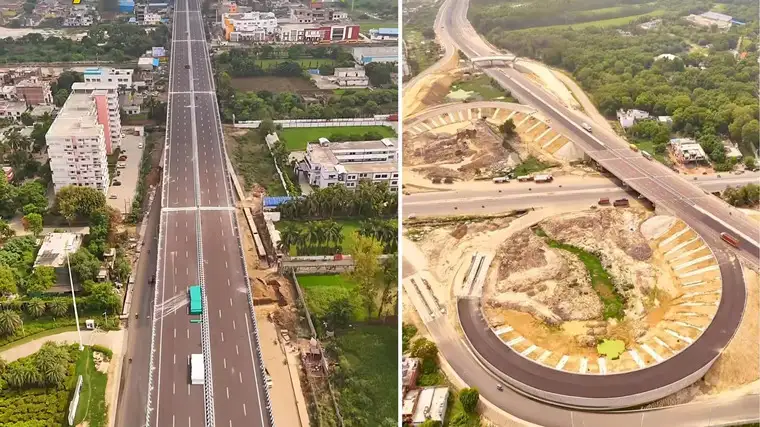
The impending completion of the Kanpur-Lucknow Expressway marks a pivotal moment in the economic geography of North India. Scheduled for 2026-27, this 63-km, six-lane corridor is far more than an infrastructure project; it is a strategic blueprint designed to fuse two dynamic cities into a single, powerful innovation ecosystem. By slashing travel time from two hours to under an hour, the expressway directly addresses the critical challenge of connectivity, aiming to transform the Lucknow-Kanpur region into a formidable deep-tech and startup powerhouse capable of rivaling established hubs like Bengaluru. This development is the physical manifestation of Uttar Pradesh’s ambitious “Viksit Uttar Pradesh @ 2047” vision, leveraging state policy, academic excellence, and private investment to build the future of Indian innovation.
The Strategic Rationale: Why Connectivity is the Ultimate Catalyst
In the knowledge economy, physical proximity and seamless connectivity are not conveniences—they are prerequisites for rapid innovation. The Kanpur-Lucknow Expressway is engineered to dismantle barriers and accelerate the virtuous cycle of startup growth through three primary channels:
- Unlocking Synergistic Potential: The expressway creates a unified economic zone by connecting Lucknow’s burgeoning administrative and IT ecosystem (including HCL’s campus and the proposed AI City) with Kanpur’s unparalleled academic and industrial base, anchored by IIT Kanpur. This synergy allows startups to commercialize cutting-edge research from IIT labs at an unprecedented pace, particularly in sectors like agri-tech, drones, and advanced robotics.
- Enhancing Business Efficiency and Access: For entrepreneurs, time is the most valuable currency. The dramatic reduction in commute time enables frequent, in-person collaboration between founders, developers, and researchers. It also streamlines logistics and supply chains, making it feasible to manage operations across both cities seamlessly. Crucially, it provides Lucknow-based ventures with vastly improved access to the dense network of venture capital firms, global corporations, and talent concentrated in the National Capital Region (NCR).
- Attracting Investment and Talent: Major infrastructure is a powerful signal to investors and professionals. The expressway demonstrates a long-term, high-commitment bet on the region’s future, boosting investor confidence. For talent, it expands career horizons, allowing professionals to access opportunities across a wider region without relocation, making the Lucknow-Kanpur belt a more attractive destination.
Current Momentum: Building on a Foundation of Growth
The expressway is not launching in a vacuum; it arrives as the capstone of significant, ongoing momentum within Uttar Pradesh’s startup ecosystem.
- Policy-Driven Foundation: The state has laid a robust policy groundwork with its Uttar Pradesh Startup Policy, a dedicated ₹1,000 crore Deep Tech Fund, and the highly successful One District One Product (ODOP) program. These initiatives have already nurtured over 18,500 DPIIT-recognized startups, including 8 unicorns and more than 8,000 women-led ventures.
- Major Corporate Validation: A decisive vote of confidence came in July 2025 when global ad-tech unicorn InMobi launched its deep-tech operations in Lucknow. Establishing a technology centre focused on Generative AI and MLOps, with plans to hire 500 experts, InMobi’s move proves that global players see the region as a viable and strategic base for high-value innovation.
- Grassroots Innovation Surge: Beyond metros, Uttar Pradesh has witnessed a remarkable rise in rural and semi-urban entrepreneurship, driven by digital penetration and schemes like ODOP. The expressway will integrate these distributed innovators into the mainstream ecosystem, providing them with enhanced access to mentors, markets, and capital.
The Roadmap to 2047: Challenges and Critical Success Factors
While the vision is compelling, its realization depends on addressing several interdependent factors:
- Timely and Holistic Infrastructure Development: The expressway’s benefits will only be fully realized with the concurrent development of supporting infrastructure. This includes the planned IT parks, Special Economic Zones (SEZs), and industrial clusters along the corridor, which must provide ready-to-use, high-quality physical space for growing companies.
- Ecosystem Density and Depth: Physical connectivity must be matched with “ecosystem connectivity.” The region needs to cultivate a denser network of specialized early-stage investors (angel networks, micro-VCs), experienced founder-mentors, and providers of key professional services (legal, IP, marketing) tailored to startups. Building a vibrant, collaborative community culture is equally important.
- Talent Development and Retention: Attracting talent is one challenge; retaining it is another. The region must focus on creating a high quality of life, competitive opportunities, and clear career growth pathways to prevent brain drain to more established hubs. Continued investment in higher education and specialized skill development programs will be crucial.
Conclusion: Paving the Way for a New Indian Tech Epicenter
The Kanpur-Lucknow Expressway is a transformative infrastructure project with the clear potential to redefine Uttar Pradesh’s economic destiny. By strategically connecting nodes of governance, industry, and academia, it aims to create a synergistic corridor where ideas move as fast as people. This project exemplifies how visionary infrastructure, aligned government policy, and private sector confidence can converge to build a new center of gravity for innovation.