
Author: shreyanshkhandelwal3961@gmail.com

Clash of the Anthropics: A Bengaluru IT Firm Takes on an AI Giant in a High-Stakes Trademark Battle

A landmark legal confrontation has emerged in India’s rapidly evolving tech landscape, pitting a long-standing Bengaluru software services company against one of the world’s most prominent AI giants. Anthropic Software Private Limited, founded in 2013, has filed a suit in the Karnataka High Court against Anthropic PBC, the U.S.-based creator of the Claude AI models, alleging trademark infringement and passing off. This dispute is more than a corporate squabble; it is a microcosm of the tensions between global technological hegemony and established local intellectual property rights in one of the world’s most critical digital markets.

Read More

The Architects of Ambition: Meet India’s Top Early-Stage Investors Powering the 2026 Startup Surge

As India’s startup ecosystem transitions from explosive growth to strategic depth, a distinct cohort of early-stage investors has emerged as the critical architects of this next chapter. These are not merely financiers; they are foundation layers, talent scouts, and strategic co-pilots who specialize in identifying and nurturing raw ambition before it becomes a headline. In a landscape now defined by profitability, deep-tech sovereignty, and global competitiveness, these top-tier early-stage VCs are the essential catalysts, deploying not just capital but conviction, networks, and operational wisdom into the ventures that will define India’s economic future.

Read More

The Roots of Resilience: How Homegrown Founders Are Redefining Success in India’s Startup Arena

A compelling new narrative is solidifying in India’s entrepreneurial chronicles: the ascendancy of the homegrown founder. Building upon the landmark Saxenian-Wadhwa study, fresh analysis confirms that founders with purely domestic experience are consistently outmaneuvering their “returnee” counterparts in the most telling metrics of enduring success—sustainable revenue growth, deep market penetration, and operational resilience. This “Indian Startup Paradox” isn’t a fleeting anomaly; it’s the culmination of a decade of ecosystem evolution, signaling that India’s most potent competitive advantage is now its own native, context-rich entrepreneurial genius.

Read More

The Homegrown Advantage: How Indian Domestic Founders Are Outscaling the “Returnee” Myth

A paradigm-shifting study by AnnaLee Saxenian and Vivek Wadhwa, analyzing 596 Indian high-tech startups, has delivered a powerful counter-narrative to a long-held belief in India’s entrepreneurial ecosystem. The research reveals that founders with purely domestic backgrounds—no overseas education or work experience—are now statistically outperforming their “returnee” counterparts in the most critical metrics of long-term success: higher survival rates, greater employee growth, and superior valuation and revenue outcomes.

Read More

The Brave Ark: An Indian Startup’s Bold Bid to Redefine the 2-in-1 Computing Experience

In a dynamic move within India’s consumer electronics landscape, homegrown tech startup Brave has launched the Brave Ark, a versatile 2-in-1 Android device that seamlessly transitions from a high-performance tablet to a productivity-focused laptop. Priced aggressively at ₹34,999 and powered by the flagship Qualcomm Snapdragon 8s Gen 3 processor, the Ark is more than just another gadget; it’s a strategic statement about Indian companies’ ability to innovate, assemble, and compete in the fiercely contested global market for personal computing.

Read More

Jensen Huang’s AI Jobs Prophecy: Why Data Centers Are India’s New Economic Engine

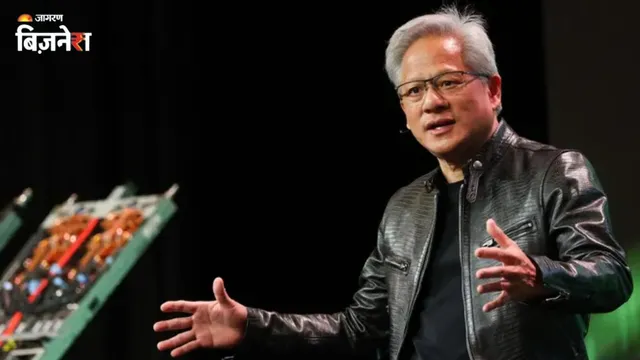
In a powerful endorsement of India’s strategic direction, Nvidia CEO Jensen Huang has framed the nation’s AI infrastructure build-out not merely as a technological necessity, but as the cornerstone of its next great employment boom. Speaking at 3DExperience World 2026 in Houston, Huang drew a direct parallel to the internet’s transformative impact, predicting that the construction and operation of AI data centers could generate job creation on an “incredible” scale. This vision, coming from the architect of the global AI hardware revolution, reframes the conversation: AI is not just a potential job displacer; it is the foundation for a massive, multi-layered jobs pyramid.

Read More

The Great Unlock: How India’s New Startup Policy Fuels the Long Game of Innovation

In a masterstroke of policy foresight, the Government of India has fundamentally redesigned its Startup India framework to nurture not just fast-growing companies, but enduring technological sovereignty. The February 4, 2026 DPIIT notification, which introduces a dedicated ‘Deep Tech Startup’ category with a 20-year horizon and a ₹300 crore turnover cap, while also doubling the limit for regular startups to ₹200 crore, is a strategic declaration. It recognizes that building a social commerce app and building a quantum computer are fundamentally different endeavors requiring distinct timelines, capital structures, and policy support.

Read More

India’s Startup Policy 2.0: A Dual-Track Framework for Scale-Ups and Deep-Tech Pioneers

The Indian government has executed a sophisticated, dual-track recalibration of its flagship Startup India initiative, unveiling a policy framework that now distinctly serves two critical constituencies: the scaling commercial startup and the frontier deep-tech pioneer. The February 4, 2026 DPIIT gazette notification, by doubling the turnover ceiling for regular startups to ₹200 crore and creating a bespoke ‘Deep Tech Startup’ category with a 20-year horizon and ₹300 crore cap, reflects a mature understanding that a one-size-fits-all approach stifles the very innovation it seeks to promote.

Read More

A Policy Masterstroke: India’s New ‘Deep Tech’ Definition Fuels the Long Game of Innovation

In a decisive move to align policy with the realities of frontier innovation, the Government of India has introduced a dedicated ‘Deep Tech Startup’ category under the Startup India initiative. Announced via a DPIIT gazette notification on February 4, 2026, this is not a minor tweak but a fundamental recalibration of support for ventures building in sectors like AI, semiconductors, quantum computing, biotech, robotics, and space. By doubling the recognition period to 20 years and raising the turnover cap to ₹300 crore, the government has effectively acknowledged that building sovereign technological capability is a marathon, not a sprint.

Read More

India’s Public Market Coming of Age: The 2026 IPO Wave and the Rise of the Profitable, Proven Startup

Following the record-shattering performance of 2025, India’s startup ecosystem is poised for an even more monumental leap. The IPO pipeline for 2026 is not just robust; it is historically deep and qualitatively superior, with over 44 companies in active preparation for a potential collective raise of ₹50,000 to ₹70,000 crore. This impending wave—featuring giants like PhonePe, Zepto, OYO, and Fractal Analytics—signals a profound maturation: India’s public markets are no longer an experimental exit route but the primary destination for scaled, profitable, and governance-ready new-age companies.

Read More