
Author: shreyanshkhandelwal3961@gmail.com

IIT Bombay to Host Bharat Innovates 2026: 137 Deep-Tech Startups, Global Investors, and a Vision for India’s Innovation Future

On March 21 and 22, 2026, the Indian Institute of Technology (IIT) Bombay will transform into the epicenter of India’s deep-tech ambitions. The institute is set to host the Bharat Innovates 2026 Deep-Tech Pre-Summit, a landmark two-day event that will bring together 137 of the most promising deep-tech startups from across the country, along with investors, policymakers, and academic leaders .

This is not just another startup event. It is the culmination of a rigorous, multi-stage national selection process that began with over 3,000 applications, narrowed down through theme-specific bootcamps and a National Basecamp at IIT Gandhinagar . The startups chosen represent the very best of India’s research-backed innovation, spanning 13 critical technology themes .

Read More

UP Government Unveils ₹100 Cr U-Hub Initiative: Lucknow and Noida to Become New Startup Powerhouses

The latest and most ambitious step in this journey is the announcement of the U-Hub initiative.

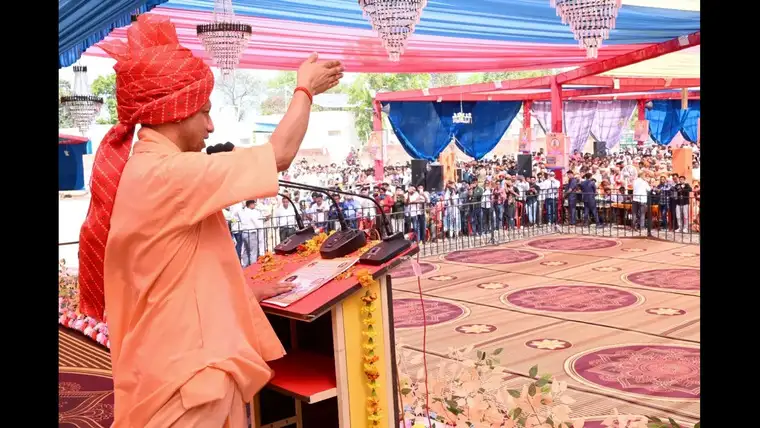
As part of the 2026–27 state budget, the Uttar Pradesh government has committed ₹100 crore to establish two state-of-the-art innovation centres—one in Lucknow and another in Gautam Buddh Nagar (Noida) . These hubs are designed to function as comprehensive support systems for startups, providing infrastructure, mentorship, research assistance, and investor access to entrepreneurs at every stage of their journey, from early ideation to scaling operations .

Read More

Velmenni Raises ₹30 Cr to Bring Li-Fi to India: Lighting the Path to 6G and Secure Connectivity

For decades, the invisible airwaves around us—radio frequencies—have been the workhorses of wireless communication. Wi-Fi, 4G, 5G, Bluetooth: all rely on a spectrum that is increasingly congested, interference-prone, and vulnerable to interception.

But what if the very lights in our offices, homes, and streets could also carry the internet? What if a beam of light, invisible to the naked eye, could deliver speeds of 10 Gbps with absolute security?

This is not science fiction. This is the reality being built by Velmenni, a Delhi-based deep-tech startup that has just raised ₹30 crore (approximately $3.3 million) in a pre-Series A funding round to scale its pioneering Li-Fi (Light Fidelity) and Free Space Optics (FSO) technologies .

Read More

Chennai’s Aheesa Digital Secures ₹20 Cr to Commercialize India’s First Indigenous RISC-V Networking Chip

In every Indian home or office that enjoys high-speed fiber broadband, there is a small, unassuming white box. It terminates the optical cable and converts light into data, enabling our video calls, streaming, and work. Inside that box, historically, sits an imported chip—a piece of silicon designed and manufactured far from Indian shores.

A Chennai-based deep-tech startup is on a mission to change that.

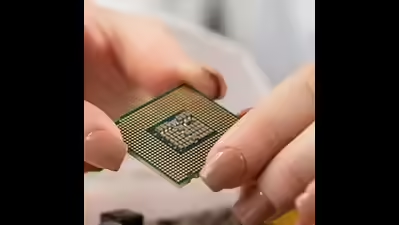
Aheesa Digital Innovations Pvt. Ltd. , a fabless semiconductor company, has secured a ₹20 crore investment from the Tamil Nadu Infrastructure Fund Management Corporation (TNIFMC) to commercialize its indigenously designed networking chip, VIHAAN-I . Built on the open-standard RISC-V architecture, this chip represents a significant stride toward reducing India’s reliance on imported telecom hardware, a sector long dominated by global giants .

Read More

India’s Deep-Tech Revolution: Government Extends Startup Benefits to 20 Years, Raises Revenue Cap to ₹300 Crore

Building a semiconductor fabrication plant, developing a new cancer therapy, or launching a rocket into space takes time—often a decade or more. The traditional 10-year startup recognition window meant that these ventures would “age out” of crucial government benefits just as they were nearing commercialization.

That has now changed.

In a landmark move announced via a DPIIT gazette notification on February 4, 2026, the Government of India has introduced a dedicated ‘Deep Tech Startup’ category under the Startup India initiative . The new framework extends the eligibility period for deep-tech startups to 20 years and raises the turnover cap to ₹300 crore .

Read More

 Resilience in Action: Velmenni, Canvaloop, and Zoomies Lead a Diverse Week for Indian Startup Funding

In a startup ecosystem often defined by headlines about mega-rounds and unicorn valuations, it’s the steady drumbeat of early-stage innovation that truly builds the future. The past week offered a perfect illustration of this truth, with three distinct startups from three very different sectors announcing fresh capital infusions.

From a deep-tech company using light to transmit data, to a sustainable textile innovator turning agricultural waste into fabric, to a direct-to-consumer (D2C) brand redefining pet nutrition, the diversity of ideas finding investor backing is a powerful signal of the ecosystem’s maturity and resilience.

Read More

Udaan to Reverse Flip from Singapore to India, Targets IPO in 9-18 Months

In the annals of Indian startup history, 2026 may well be remembered as the year of the “great homecoming.” After years of incorporating in friendlier offshore jurisdictions, a wave of Indian unicorns is charting a course back to their homeland.

Leading this charge is Udaan, the B2B e-commerce giant founded by former Flipkart executives.

In a significant development, Udaan is preparing to initiate the process to move its domicile from Singapore back to India in the coming weeks . This “reverse flip” is a critical precursor to its long-anticipated Initial Public Offering (IPO), which the company now aims to launch within the next 9 to 18 months .

Read More

The Next AI Unicorns Will Come from India: Google AI Fund Chief Backs India’s Deep-Tech Rise

Jonathan Silber, co-founder and director of the Google AI Futures Fund, made a bold declaration that is reverberating through the country’s startup corridors: “The next unicorn founder in GenAI will come from India.” 

This isn’t just empty optimism. It is a bet grounded in the unique confluence of factors that India brings to the AI table—world-class engineering talent, a massive and diverse market, and a policy environment that is increasingly supportive of deep-tech innovation.

As Silber himself noted, Google deliberately chose India for its first-ever global collaboration of this nature: “This is the first time that Google’s AI futures fund has done such a collaboration anywhere in the world. We didn’t do it randomly; we very intentionally chose India because we think there’s tremendous opportunity here.”

Read More

Startup Mafia 2.0: How Zomato, Zoho, and Freshworks Alumni Are Building India’s Next 360 Ventures

In Silicon Valley, the PayPal Mafia became legendary—a group of former employees and founders who went on to build YouTube, Tesla, LinkedIn, and Yelp, forever changing the technology landscape. India is now witnessing its own version of this story, not once, but in successive waves.

The latest data is staggering. According to an analysis by Longhouse for the Economic Times, the second generation of India’s startup mafia—alumni from companies built between roughly 2014 and 2025—have now launched around 360 startups cumulatively . This marks a sharp increase from 253 companies reported in 2023, demonstrating the accelerating pace of this entrepreneurial spillover .

Read More

Startup Hiring Set to Surge 8-15% in FY26: AI, Product, and Engineering Roles Lead the Charge

According to multiple recruitment platforms and industry reports, startup hiring is projected to grow 8 to 15 percent in the coming fiscal year . This isn’t a return to the irrational exuberance of 2021, but a cautiously optimistic recovery—one driven not by generalist hiring sprees, but by a sharp focus on the roles that will define the next phase of growth: AI, product, and engineering.

Read More