

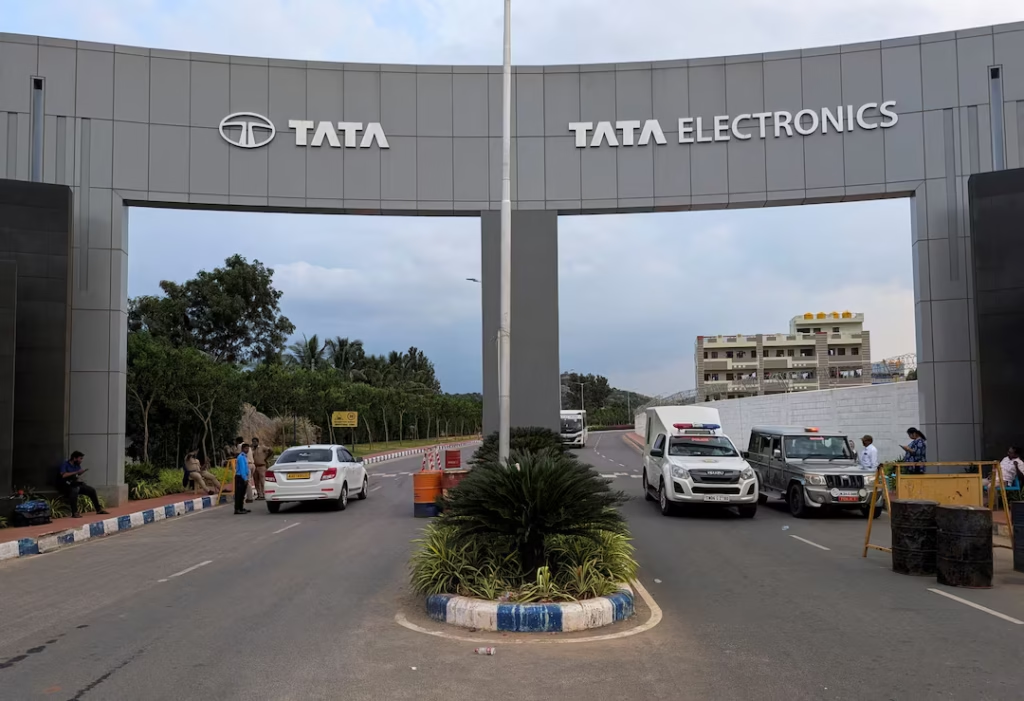
In a single, decisive move that could reshape India’s technological destiny, Tata Electronics has signed a historic Memorandum of Understanding (MoU) with global semiconductor titan Intel Corporation. Announced on December 8, 2025, this strategic partnership secures Intel as the first major customer for Tata’s audacious $14 billion (₹1.18 lakh crore) semiconductor venture, providing the commercial bedrock for India’s most ambitious foray into advanced electronics manufacturing.
The Blueprint: Building a Complete Silicon Ecosystem in India
The partnership is structured around Tata’s two-pillar semiconductor plan:
- OSAT Facility in Assam (Packaging & Testing): Slated to commence operations by mid-2025, this facility will handle the crucial back-end process of assembling and testing finished semiconductor chips. This is a faster-to-market project that will immediately create high-tech jobs and establish Tata’s operational credibility.
- Semiconductor Fab in Dholera, Gujarat (Manufacturing): The crown jewel, a full-scale fabrication plant (fab) targeted for 2027. This is where raw silicon wafers will be transformed into complex integrated circuits (ICs). Intel’s commitment to explore manufacturing its products here provides the foundational demand that de-risks this colossal capital investment.
The Strategic Synergy: What Intel Gets, What India Gains
For Intel:
- A Resilient, Diversified Supply Chain: In an era of US-China tensions and geopolitical friction, Intel gains a new, large-scale manufacturing partner in a stable, democratic ally, reducing geographic concentration risk.
- Access to a Booming Market: India is projected to be a top-5 global semiconductor consumer by 2030. Partnering with a local manufacturing giant like Tata provides Intel with a powerful channel to serve the explosive demand from India’s AI, automotive, and consumer electronics sectors with tailored solutions, including the burgeoning AI PC market.
For India & Tata:
- An Anchor Customer of Unparalleled Credibility: Securing Intel as the first customer is the ultimate vote of confidence. It assures other potential clients, investors, and partners of the facilities’ world-class quality and reliability from day one.
- Technology Transfer & Skill Development: The collaboration will involve deep knowledge sharing, accelerating the development of a highly skilled Indian workforce in the most advanced manufacturing domain.
- Reducing Crippling Import Dependency: India currently imports over $15 billion worth of semiconductors annually. This venture, backed by the ₹76,000 crore India Semiconductor Mission (ISM), is the most concrete step yet toward building domestic capacity and strategic autonomy in a component as critical as oil.
The Bigger Picture: A Watershed for Atmanirbhar Bharat
This deal is the most significant milestone to date for the Atmanirbhar Bharat (Self-Reliant India) vision in the technology sector. It moves self-reliance from a slogan to a concrete, multi-billion-dollar industrial project with a clear path to global integration.
As Natarajan Chandrasekaran stated, the collaboration is “pivotal for a resilient, India-based supply chain.” This resilience is not about isolation, but about India becoming a indispensable node in the global technology supply web.
Catalyzing the Broader Ecosystem
The ripple effects extend far beyond Tata and Intel:
- For Startups: A domestic fab and OSAT create a fertile ground for Indian semiconductor design startups (fabless companies). They can now design chips with the confidence of having a local, advanced manufacturing partner, reducing time-to-market and logistical complexity.
- For the Electronics Ecosystem: It will attract a constellation of suppliers, material science companies, and equipment vendors, creating a holistic electronics manufacturing cluster.
- For Global Perception: Following Tata’s earlier JV with Powerchip Semiconductor Manufacturing Corp (PSMC), this Intel deal tells the world that India is open for business in high-tech manufacturing and has the partners to prove it.
Conclusion: The Fab is Calling, and India is Answering
The Tata-Intel $14 billion pact is more than a business deal; it is the laying of a cornerstone for India’s technological sovereignty. It proves that with the right policy support (ISM), credible industrial execution (Tata), and global partnership (Intel), India can overcome the historic barriers to entering the semiconductor elite.