
In a resounding endorsement of India’s climate-tech potential, Bengaluru-based startup Varaha has secured a monumental $30.5 million (€26.4 million) investment from Mirova, a leading French sustainable asset manager. This isn’t just another venture round; it’s a landmark transaction that represents Mirova’s first carbon project deal in India and the largest single carbon transaction ever for the fund, backed by global giants Kering and Natixis.
The Varaha Model: Turning Soil into a Carbon Sink
Founded in 2022 by Madhur Jain (CEO), Siddharth Unnithan, Ashutosh Goel, and Neel Pawar, Varaha operates at the critical intersection of agriculture and climate technology. The company designs, develops, and operates high-integrity carbon removal projects primarily through:
- Regenerative Agriculture: Promoting practices that restore soil health.
- Agroforestry: Integrating trees into farming landscapes.
- Biochar: Converting agricultural waste into a stable form of carbon that can be added to soil.
Varaha’s genius lies in its operational framework. It partners with a vast network of 48 local implementation partners who work directly with smallholder farmers. The entire process is monitored and verified by Varaha’s proprietary software platform, which measures climate impacts (carbon sequestered) and social impacts (improved farmer livelihoods) in real-time, bringing unprecedented transparency and credibility to the carbon credit market.
The Deal Breakdown: A Non-Dilutive Capital Masterstroke
What makes this $30.5 million deal particularly noteworthy is its structure. This is not a standard equity investment where VCs get a share of the company. Instead, it is a project finance deal.
- Mirova’s Role: The French asset manager is providing capital to fund the specific rollout of Varaha’s projects.
- Varaha’s Benefit: It receives massive, non-dilutive capital to scale its operations without giving up any ownership.
- The Return for Mirova: In exchange for its investment, Mirova will receive a share of the high-quality verified carbon credits generated by the projects it funds.
This model aligns the interests of all parties and allows Varaha to scale its impact rapidly while preserving value for its equity investors and founders.
On the Ground: The “Kheti” Project’s Massive Scale
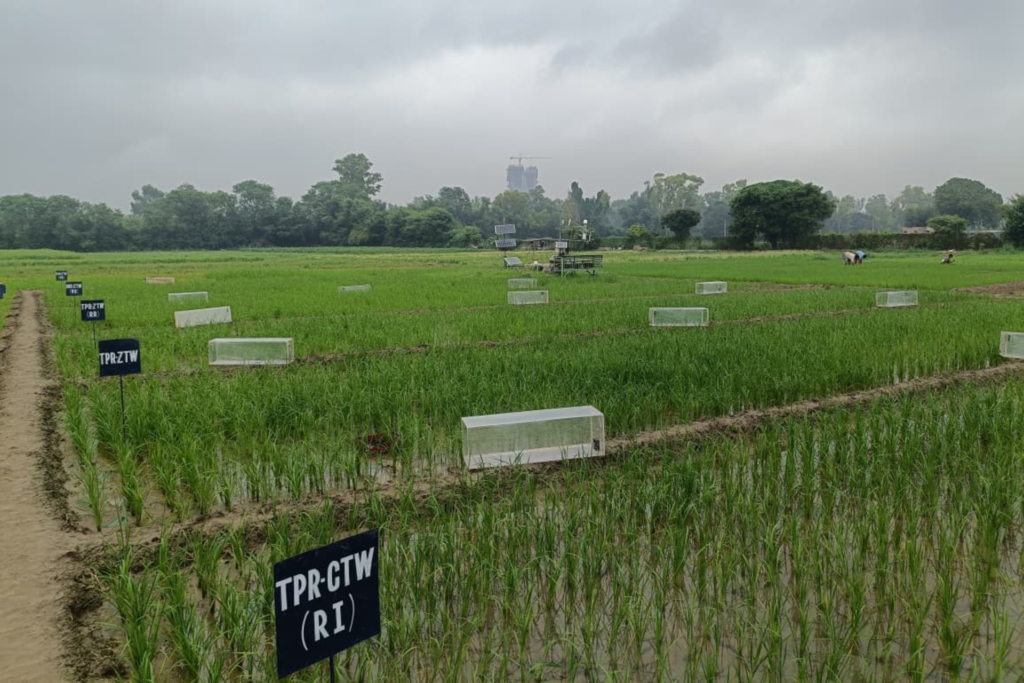
The capital will be directly deployed into Varaha’s “Kheti” project in Haryana and Punjab. The ambitions are vast and impactful:
- Land Area: 675,000 hectares of farmland.
- Farmers Empowered: 337,000 smallholder farmers.
- Practices Implemented: Introduction of low-emission practices like reduced tillage and direct seeding.
For the farmers, this is a transformative opportunity. They receive training and support to adopt climate-resilient practices that boost soil health and increase yields, while also earning supplemental income from the sale of carbon credits—a direct financial reward for their role in combating climate change.
Strategic Momentum and a Path to Profitability
This deal builds on formidable momentum for Varaha. The startup had already raised $12.7 million in venture capital from top-tier firms like RTP Global, Omnivore, Orios, and Norinchukin Bank. Furthermore, it secured a massive biochar offtake agreement with Google for 100,000 tons of CO2 removals by 2030.
Crucially, CEO Madhur Jain confirmed that Varaha is already profitable in FY25. This new capital from Mirova, dedicated to project expansion, will be used to procure machinery and build crop-specific models, putting the company on a path to sustained profitability without the need for further equity fundraising.
The Bigger Picture: A Microcosm of India’s Climate-Tech Boom
Varaha’s success is a flagship story within the larger $1.95 billion climate-tech funding surge in India (a 40% YoY jump). It exemplifies several key trends:
- Decarbonizing Hard-to-Abate Sectors: Agriculture contributes nearly 30% of India’s emissions. Varaha’s work directly tackles this $400+ billion sector, aligning with national missions like the National Green Hydrogen Mission and Atmanirbhar Bharat.
- Global Demand for High-Quality Carbon Credits: As corporations worldwide scramble to meet net-zero targets, the demand for verified, high-integrity carbon removal credits is exploding. Varaha is positioning India as a premier supplier.
- Blended Finance Models: The deal showcases how venture capital, project finance, and corporate offtake can blend to create a sustainable and scalable business model for climate action.
Conclusion: Sowing the Seeds for a Greener, More Prosperous Future
Varaha’s landmark deal with Mirova is more than a funding announcement; it is a blueprint for the future of climate finance. It proves that environmental sustainability and economic viability are not mutually exclusive but can be powerfully synergistic.