
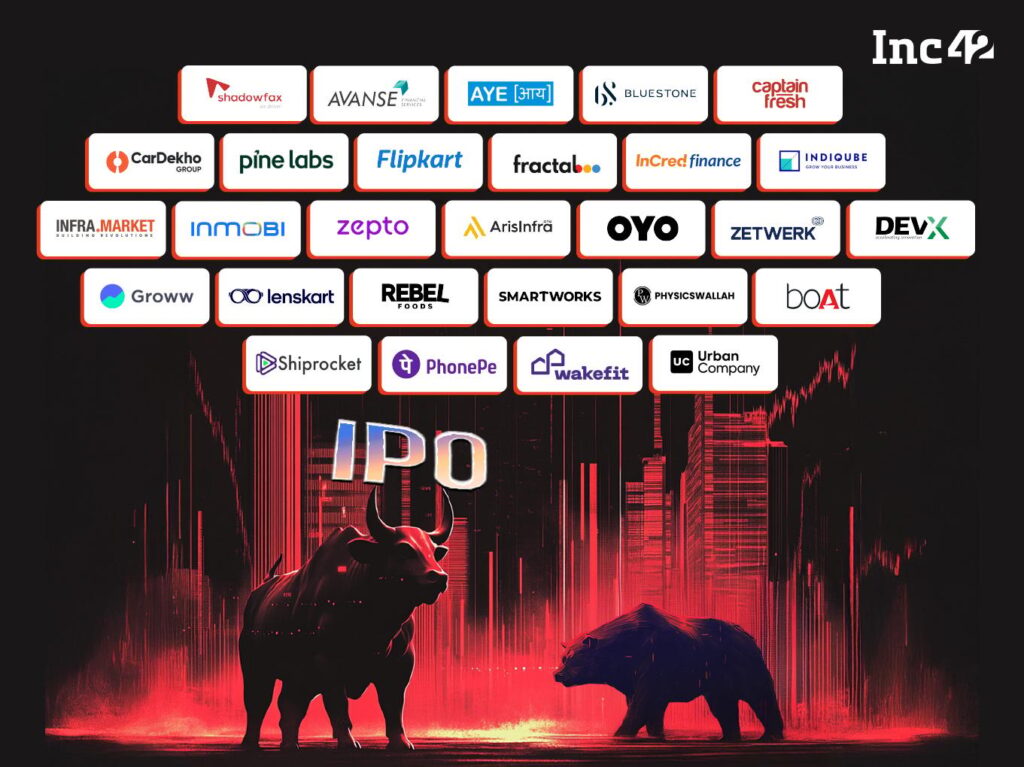
The Indian startup ecosystem is experiencing its most definitive coming-of-age moment, not in a private boardroom, but on the public market floor. In a watershed year, over 20 new-age tech companies are preparing to launch Initial Public Offerings (IPOs) aiming to raise a staggering ₹55,000 crore (over $6.4 billion). This monumental surge—nearly doubling the capital raised in 2024—signals a profound maturation: a transition from a market driven by private venture capital to one where public investors have unwavering faith in the long-term viability and governance of homegrown technology giants.
The Fuel Behind the Frenzy: Why 2025 is the Perfect Storm
Several powerful, interlinked factors have converged to create this historic IPO wave:
1. Proven Success Breeds Confidence: The stellar post-listing performance of 2024’s IPOs like Swiggy (up 30%) and the astronomical 30x returns delivered by FirstCry to its early backers have provided a tangible, powerful proof-of-concept. Success begets success, giving retail and institutional investors the confidence to back the next wave.
2. The VC Liquidity Flywheel Kicks In: For venture capital firms like SoftBank, Peak XV, and Accel, successful exits are not the end—they are the beginning. The capital and returns from these IPOs are being “recycled” into new pre-IPO rounds and fresh funds, creating a virtuous cycle of investment that strengthens the entire ecosystem.
3. Profitability Takes Center Stage: The era of “growth at all costs” is decisively over. Companies like OYO, which reported a 172% jump in FY25 profit, are coming to market with a clear path to sustainable earnings. This shift to profitability and robust governance is what mature public markets demand and reward.
4. Domestic Capital Steps Up: A critical pillar of this boom is the immense buying power of Domestic Institutional Investors (DIIs) like mutual funds and insurance companies. In October 2024 alone, DIIs made ₹1 lakh crore+ in net buys, confidently absorbing any sell-offs by Foreign Institutional Investors (FIIs) and providing a stable, deep pool of domestic capital.
The Powerhouse Pipeline: A Who’s Who of Indian Tech
The IPO pipeline for 2025 is a showcase of India’s diversified digital economy. Here are some of the marquee contenders:
- Groww: The fintech behemoth and India’s first AI unicorn to file for an IPO, eyeing a $700M-$1B raise at a valuation of $7-8 billion.
- Meesho: The social commerce giant has already captured headlines with its IPO fully subscribed on Day 1, driven by massive retail investor demand.
- Zepto: The quick-commerce leader is preparing for a potential $1.6B round ahead of its filing, validating the hyper-fast delivery model.
- boAt: The consumer electronics champion has secured SEBI approval for its $225M IPO, aiming to fuel global expansion.
- OYO: The hospitality tech pioneer is staging a remarkable turnaround, with a $500M+ IPO planned post its profitability milestone.
- Lenskart, Ather Energy, PhysicsWallah: Representing the depth across eyewear, electric vehicles, and edtech, each with strong omnichannel or offline-heavy strategies.
With 21 Draft Red Herring Prospectuses (DRHPs) already filed, this pipeline could push total listing value beyond $20 billion, making India Asia’s hottest IPO market.
The Strategic Significance: More Than Just Exits
This IPO boom transcends financial transactions. It represents:
- Ecosystem Maturity: It validates the entire Indian startup model, from idea to IPO.
- Wealth Creation & Democratization: It allows millions of retail investors to participate in the growth story of companies they use daily.
- Strategic Alignment: It is a direct outcome of the Atmanirbhar Bharat and Digital India visions, showcasing a self-reliant, digital-first economy capable of producing world-class public companies.
Conclusion: The Listings Are Lit, and the Future is Public
The ₹55,000 crore IPO boom of 2025 is the defining chapter in India’s startup story so far. It marks the moment when the ecosystem’s potential is being ratified by the most rigorous judge of all—the public shareholder.